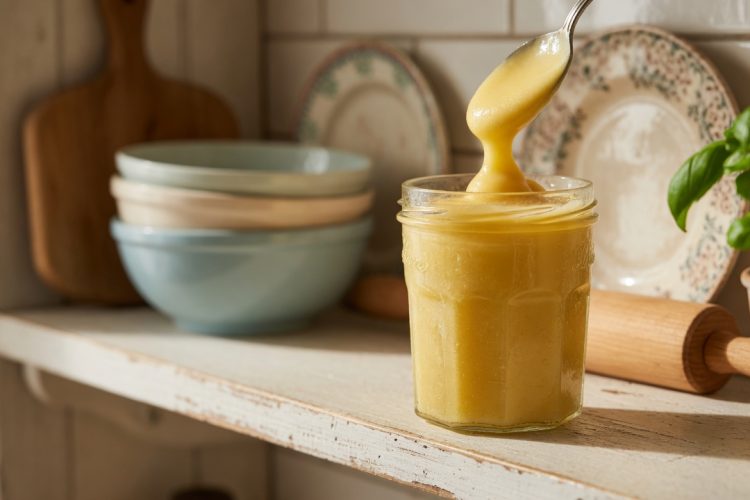
Homemade lemon curd is a smooth, rich, and tangy lemon spread that can make simple desserts taste special. Made with egg yolks, sugar, fresh lemon zest, lemon juice, salt, and butter, this easy lemon curd recipe comes together on the stovetop with a gentle cooking method. The finished curd has a creamy texture, bright citrus flavor, and a balanced taste that works beautifully with scones, toast, pancakes, cakes, waffles, tarts, and pastries.
What Is Lemon Curd?
Lemon curd is a thick, creamy citrus spread prepared by gently cooking eggs, sugar, lemon juice, and lemon zest until the mixture thickens. Butter is then whisked in to give the curd its smooth and rich texture. It has a stronger lemon flavor than many ordinary jams and a softer texture than a traditional fruit preserve. Fresh lemon juice gives homemade lemon curd its sharp citrus taste, while sugar keeps the tartness pleasantly balanced.
Why Make Lemon Curd From Scratch?
Making lemon curd from scratch allows you to control the ingredients and the balance between sweet and tart flavors. Fresh lemons provide a much brighter flavor than bottled lemon juice, while butter gives the curd a smooth finish. The process is also straightforward once the double boiler is prepared. Although the mixture needs regular whisking while it cooks, the actual preparation requires only a few basic ingredients and does not involve complicated baking techniques.
Fresh Lemons Make a Difference
Fresh lemon juice and finely grated lemon zest are important for achieving a strong natural lemon flavor. Lemon zest contains concentrated citrus oils that add depth to the curd, while freshly squeezed juice provides the sharp acidity that defines the recipe. When zesting the lemon, use only the yellow outer layer and avoid taking too much of the white pith underneath, as the pith can have a bitter taste.
Understanding the Egg Yolks
Egg yolks are responsible for much of the thick, creamy texture in homemade lemon curd. They help the lemon juice and butter come together into a smooth mixture while also giving the finished spread its rich consistency. The recipe uses four large egg yolks. The supplied notes also give an alternative for a thicker curd: two egg yolks combined with one whole egg. This adjustment changes the egg balance while keeping the rest of the recipe the same.
The Role of Granulated Sugar
Sugar does more than make lemon curd sweet. It helps balance the strong acidity of fresh lemon juice and allows the finished spread to taste bright without becoming overwhelmingly sour. The recipe uses 2/3 cup, or 134g, of granulated sugar. Combining the sugar with the egg yolks, lemon zest, lemon juice, and salt before cooking allows the ingredients to become evenly distributed throughout the curd.
Why Lemon Zest Is Added
Lemon zest gives this easy lemon curd recipe an especially noticeable citrus aroma. While lemon juice provides acidity, the finely grated zest contributes concentrated lemon oils that make the flavor more fragrant. One tablespoon of zest is used in the recipe, which comes from about one lemon. Grate the zest finely so it blends into the curd rather than leaving large pieces of peel throughout the finished spread.
The Importance of Fresh Lemon Juice
Freshly squeezed lemon juice is recommended because it gives the curd a cleaner and more vibrant flavor. The recipe calls for 1/3 cup, or 80ml, of fresh lemon juice, which generally comes from two to three lemons depending on their size and juiciness. Straining the juice before adding it can help remove seeds and larger pieces of pulp, making it easier to achieve the smooth texture expected from homemade lemon curd.
Why Salt Is Included
Although the recipe uses only 1/8 teaspoon of salt, this small amount helps balance the sweetness and sharpness of the other ingredients. Salt can make individual flavors more noticeable without making the lemon curd taste salty. It is added with the egg yolks, sugar, zest, and lemon juice before cooking. Because the amount is small, measuring it accurately helps maintain the intended balance of flavors.
Preparing a Double Boiler
A double boiler provides gentle indirect heat, which is useful when cooking egg-based mixtures such as lemon curd. Fill the bottom pot with about 1–2 inches of water and bring it to a boil. Once boiling, reduce the heat so the water remains at a gentle simmer. The upper pot sits above the water, allowing steam to provide controlled heat rather than placing the lemon mixture directly over the burner.
Making a Homemade Double Boiler
You do not need a special double boiler to make this recipe. A heatproof glass bowl can be placed over a saucepan containing simmering water. The important point is that the bottom of the bowl should not touch the water. This creates the same type of indirect heat needed for gently cooking the egg yolks. Choose a bowl that fits securely over the saucepan so it remains stable while you whisk the curd.
Combining the Ingredients
Once the double boiler is ready, add the egg yolks, granulated sugar, lemon zest, fresh lemon juice, and salt to the top pot or heatproof bowl. Whisk the ingredients together until the mixture is smooth and evenly combined. At this stage, the mixture will still be quite thin. The thickening happens gradually as the egg yolks cook gently over the simmering water.
Why Constant Whisking Matters
Constant whisking is one of the most important parts of making smooth lemon curd. The egg yolks are exposed to heat while the mixture cooks, so they need to be moved continuously to prevent them from setting into scrambled pieces. Whisking also helps distribute the heat and ingredients evenly. Continue whisking throughout the cooking stage rather than leaving the mixture unattended, especially as it begins to thicken.
How Long Lemon Curd Takes to Thicken
The curd generally begins to thicken after approximately 10 minutes of cooking and whisking. The exact time can vary slightly depending on the heat level, cookware, and quantity being prepared. As the mixture thickens, it should become noticeably creamy and begin to resemble a thick sauce. If the curd is not thickening as expected, the heat can be increased slightly while you continue whisking carefully.
Knowing When Lemon Curd Is Ready
Properly cooked lemon curd should be thick enough to coat a spoon rather than remaining completely liquid. It will continue to become thicker as it cools, so it does not need to become extremely firm while still over the heat. Once the desired consistency has been reached, remove the mixture from the heat before adding the softened butter. This prevents unnecessary cooking and allows the butter to blend smoothly into the warm curd.
Adding the Butter
Unsalted butter gives lemon curd its smooth, creamy texture and rich flavor. The recipe calls for 6 tablespoons, or 85g, of softened butter cut into pieces. Add the butter gradually after removing the curd from the heat. Whisk in one piece at a time, allowing each piece to melt into the warm mixture before adding more. This gradual method helps create a smooth and evenly blended lemon curd.
Why Softened Butter Works Best
Softened butter incorporates more easily into warm lemon curd than very cold butter. Cutting the butter into smaller pieces also helps it melt quickly and evenly. The warm curd provides enough heat to melt the butter without requiring the mixture to return to the stove. Continue whisking until there are no visible pieces of butter remaining and the curd looks smooth, glossy, and evenly mixed.
Cooling Homemade Lemon Curd
After the butter has been fully incorporated, transfer the lemon curd to a clean jar or bowl. The curd will still be warm and relatively soft at this point. As it cools, the egg yolks and butter mixture will become thicker. Allow it to cool to room temperature before moving it into the refrigerator. Cooling is an important part of the process because the final texture becomes easier to judge once the curd has chilled.
Preventing a Skin From Forming
A skin can develop on the surface of lemon curd while it cools. To help prevent this, place plastic wrap directly against the surface of the curd rather than simply covering the top of the container. The plastic should touch the curd across the surface. Once the lemon curd has cooled, it can be refrigerated. Remove the plastic wrap when you are ready to use the curd.
Storing Fresh Lemon Curd
Homemade lemon curd can be stored in the refrigerator for up to 10 days according to the supplied recipe. Keep it in a clean, covered container and refrigerate it after cooling. Because this recipe contains eggs and butter, proper refrigeration is important. The curd can be used throughout the storage period as a spread, topping, or dessert filling. Always check the appearance and smell before using stored homemade food.
Freezing Lemon Curd
The supplied notes state that lemon curd can also be frozen for up to six months. Freezing can be useful when you make a larger amount or want to prepare the curd ahead of time for future desserts. Store it in a suitable freezer-safe container, leaving appropriate space if needed. Thaw it in the refrigerator before using. The texture may need a gentle stir after thawing to bring the curd back together.
Serving Lemon Curd With Scones
One of the easiest ways to enjoy fresh lemon curd is to spread it over warm scones. The rich, creamy curd pairs especially well with the soft texture of a freshly baked scone. Its tart lemon flavor also provides a pleasant contrast to the mild taste of the baked dough. Serve a small spoonful on the side or spread it directly over the scone just before eating.
Using Lemon Curd on Pancakes and Waffles
Lemon curd can be used as a topping for pancakes and waffles when you want something different from traditional syrup. Its thick texture allows it to sit on top while its citrus flavor adds freshness to the breakfast dish. A small amount is often enough because the lemon flavor is concentrated. It can be spread directly over warm pancakes or waffles, where the heat softens the curd slightly.
Lemon Curd as a Cake Filling
Homemade lemon curd makes a useful filling for cakes because its thick texture can sit between layers of sponge or other baked cakes. The tart lemon flavor can balance sweeter cakes and creamy frostings. Allow the curd to cool completely before using it as a filling. Chilled curd is easier to spread and is less likely to become runny when placed between cake layers.
Using Lemon Curd in Pastries
Lemon curd can also be used in pastries and other baked desserts. Its smooth consistency works well as a filling for tart shells, pastry cases, and similar desserts. It can be spooned into a baked pastry base after cooling, depending on the dessert being prepared. Because the flavor is concentrated, lemon curd can provide a strong citrus element without requiring a large quantity.
Lemon Curd on Toast and Other Baked Goods
For a simple serving idea, spread lemon curd over toast or another plain baked item. The creamy texture makes it easy to spread, while the lemon flavor adds sweetness and acidity at the same time. This is an easy way to use leftover curd without preparing another dessert. It can also be served with other baked goods when you want a fresh citrus topping.
Notes for a Smooth Lemon Curd
The most important detail is to keep whisking while the curd is cooking. Gentle indirect heat gives the eggs time to thicken without exposing them to intense direct heat. Use fresh lemon juice and finely grated zest for the best flavor. If you notice the mixture becoming too hot or beginning to form small cooked egg pieces, remove it from the heat temporarily while continuing to whisk until the mixture becomes smooth again.
Notes About the Double Boiler
If you are using a glass bowl instead of a traditional double boiler, make sure it fits securely over the saucepan. The bottom of the bowl should remain above the simmering water rather than sitting directly in it. Too much heat can cause the egg yolks to cook too quickly. A gentle simmer is enough to provide the indirect heat needed to thicken the curd gradually.
Notes About the Finished Texture
Freshly cooked lemon curd will be softer than refrigerated curd. Do not assume it has failed simply because it looks loose immediately after the butter is incorporated. The curd thickens as it cools and becomes more spoonable once chilled. This is why the recipe includes cooling time in its total preparation period. Give the curd enough time to cool before deciding whether its final consistency is correct.
Notes About Making a Thicker Curd
The supplied recipe notes that a thicker version can be made using two egg yolks and one whole egg. This is an optional variation provided with the original recipe. The main recipe uses four large egg yolks. If you prefer the original texture and ingredient proportions, follow the main recipe exactly. For either version, the cooking process remains focused on gentle heat and constant whisking until the mixture thickens.
Notes About Lemon Curd Flavor
The finished curd should have a clear lemon flavor balanced by sugar and rounded out by butter. If you enjoy a stronger citrus taste, the fresh zest plays an important role because it adds concentrated lemon aroma. The salt is present in a very small quantity and helps balance the overall flavor. Freshly squeezed lemon juice is preferred because it gives the curd the clean, sharp citrus character expected from a homemade lemon dessert spread.
Notes About Preparation Time
The recipe lists a preparation time of 5 minutes and a cooking time of 10 minutes, while the total time is approximately 1 hour and 15 minutes because cooling is included. The active cooking itself is therefore quite short. Most of the remaining time is simply allowing the freshly cooked curd to cool and thicken before refrigeration or serving.
Notes for Using Lemon Curd in Desserts
When using lemon curd in cakes, pastries, or other desserts, allow it to cool completely first. Warm curd is softer and can move or spread more easily than chilled curd. Refrigerating it gives the mixture a firmer texture that is easier to control. This makes it particularly useful when layering it inside cakes or spooning it into pastry shells.
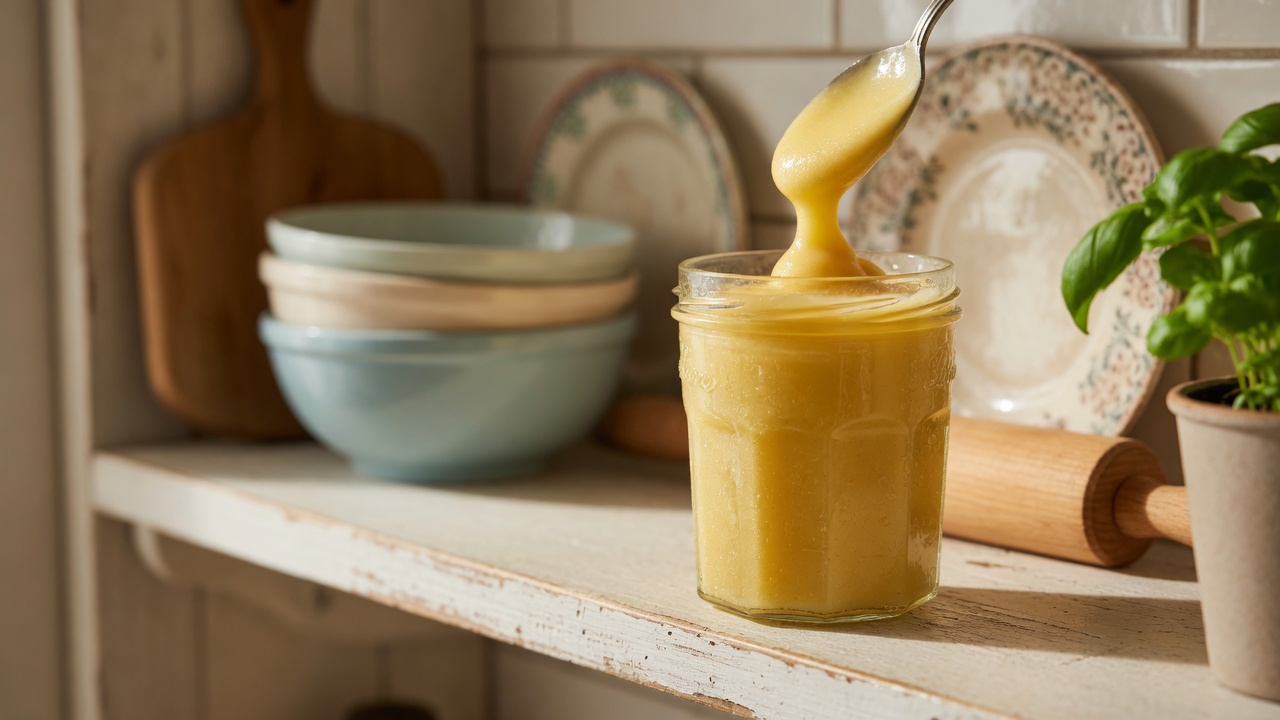
Lemon Curd
This easy homemade lemon curd is a smooth and creamy citrus spread made with fresh lemon juice, lemon zest, egg yolks, sugar, salt, and butter. It has a bright lemon flavor and rich texture that makes it ideal for scones, pancakes, waffles, cakes, pastries, tarts, and toast.
5
minutes10
minutes15
minutesIngredients
- Lemon Curd
4 large egg yolks
2/3 cup (134g) granulated sugar
1 tablespoon lemon zest (from about 1 lemon)
1/3 cup (80ml) fresh lemon juice (from 2–3 lemons)
1/8 teaspoon salt
6 tablespoons (85g) unsalted butter, softened and cut into pieces
Directions
- Fill the bottom pot of a double boiler with 1–2 inches of water. Bring the water to a boil, then reduce the heat to low so it remains at a gentle simmer. If you do not have a double boiler, use a heatproof glass bowl over a saucepan, making sure the bottom of the bowl does not touch the water.
- Add the egg yolks, granulated sugar, lemon zest, fresh lemon juice, and salt to the top pot or heatproof bowl. Whisk the ingredients together until the mixture is smooth and evenly combined.
- Continue whisking constantly while the lemon mixture cooks over the gentle heat. Cook for about 10 minutes, or until the curd becomes noticeably thicker and reaches a creamy consistency. If it is not thickening, increase the heat slightly while continuing to whisk.
- Remove the thickened curd from the heat. Add the softened butter pieces one at a time, whisking after each addition until the butter melts completely and the curd becomes smooth and glossy.
- Transfer the lemon curd to a clean jar or bowl. Place plastic wrap directly on the surface of the curd to help prevent a skin from forming. Allow it to cool to room temperature, then refrigerate for up to 10 days.
- Use the chilled lemon curd as a spread or topping for scones, toast, pancakes, waffles, cakes, tarts, and pastries. For a thicker version, the supplied notes recommend using 2 egg yolks and 1 whole egg. The curd can also be frozen for up to 6 months.


