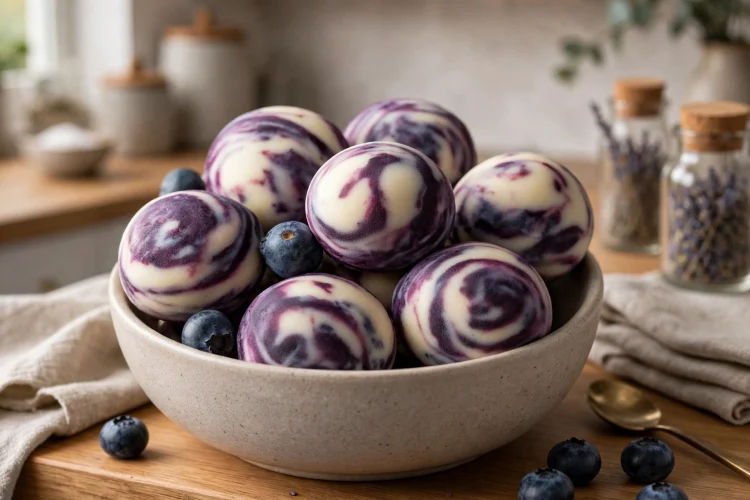
Frozen Yogurt Blueberry Bites are an easy homemade snack for anyone who wants something sweet, cold, and simple. Fresh blueberries are covered with vanilla non-fat Greek yogurt and a small amount of stevia, then frozen until firm.
The result is a creamy fruit bite that can be eaten straight from the freezer. This recipe needs very little hands-on work, so it fits easily into a busy weekday. The combination of blueberries and Greek yogurt gives these frozen bites a pleasant balance.
Blueberries provide natural fruit flavor and a juicy center, while the yogurt creates a smooth coating that freezes around each berry. Stevia adds sweetness to the yogurt without taking over the taste. Because there are only a few ingredients, the individual flavors remain clear and easy to enjoy.
Why These Frozen Yogurt Bites Work
The main reason this recipe works is the contrast between fruit and creamy yogurt. Blueberries have enough structure to hold their shape during coating and freezing, while Greek yogurt is thick enough to cling to the fruit. Once frozen, the yogurt forms a cool outer layer that makes each berry feel like a small frozen dessert.
Another advantage is the short ingredient list. You do not need a blender, food processor, oven, or ice cream machine. A bowl, a baking sheet, and freezer space are enough. This makes the recipe useful for beginners and for anyone who wants a homemade snack without a long preparation process.
Choosing the Right Blueberries
Fresh, firm blueberries are the best choice for this recipe. Look for berries that have smooth skins and feel firm when gently pressed. Avoid fruit that is soft, bruised, leaking, or badly wrinkled because extra moisture can make the yogurt coating harder to manage.
Smaller or medium berries are easy to coat and eat in one or two bites. Try to use berries of a similar size when possible so the frozen bites have an even appearance.
Preparing the Fruit Properly
If the blueberries need washing, rinse them gently and remove any damaged fruit or small stems. The most important step after washing is drying them thoroughly. Water left on the surface can thin the Greek yogurt and make it slide away from the berry. A dry surface gives the yogurt a better chance to cling evenly.
Spread the clean blueberries on a towel or paper towel and gently pat them dry. Give them a little time to air-dry as well if they still feel damp. This small step can make a noticeable difference when you begin coating the fruit. Do not rush directly from washing to mixing if the berries are still wet.
Making the Yogurt Coating
Place the vanilla non-fat Greek yogurt in a bowl and add the stevia. Stir gently until the sweetener is evenly distributed through the yogurt. The mixture should remain thick and smooth. Since the yogurt already contains vanilla flavor, there is no need to add extra flavoring unless you are changing the recipe.
The yogurt should be cold when you begin. A chilled coating is easier to work with and helps the fruit move quickly toward the freezer. If the yogurt becomes too loose while you are preparing the berries, place the bowl in the refrigerator for a short time before continuing.
Coating the Blueberries
Work with a small batch of blueberries at a time rather than adding all of the fruit to the bowl. Gently fold the berries through the yogurt so that the coating covers their surfaces without crushing the fruit. Vigorous stirring can break delicate berries and leave uneven patches of yogurt.
A fork can help lift each coated blueberry from the bowl. Allow extra yogurt to drip back into the bowl before placing the berry on the prepared baking sheet. This simple technique helps prevent thick puddles of yogurt beneath the fruit and gives the finished bites a cleaner shape.
Preparing the Baking Sheet
Line a baking sheet with parchment paper or use a nonstick baking mat. Arrange each coated blueberry with a little space around it. Keeping the berries separate while they freeze makes it much easier to store and serve them later.
Do not pile coated blueberries on top of one another. If they touch heavily as the yogurt freezes, they can form a larger frozen cluster. Individual spacing is especially useful if you plan to transfer the finished bites to an airtight container for meal preparation.
Freezing the Bites
Once the coated blueberries are arranged, place the baking sheet in the freezer. Leave the berries undisturbed until the yogurt is completely firm. The exact freezing time can vary with the freezer, the size of the berries, and the amount of yogurt on each one, so focus on firmness rather than a fixed clock time.
Avoid opening the freezer repeatedly during this stage. A stable cold temperature helps the coating freeze more evenly. When the bites are firm to the touch, they can be moved from the baking sheet into an airtight freezer container.
How to Store Frozen Blueberry Bites
After the bites are fully frozen, transfer them carefully into an airtight container. A freezer-safe container with a secure lid works well because it helps protect the yogurt coating from freezer air. You can also arrange them in a single layer if your container is large enough, or use layers with parchment between them.
Keeping the bites stored in the freezer means you can enjoy a small portion whenever you want. Take out only the amount you plan to eat and return the container to the freezer promptly. For the best texture and flavor, enjoy the stored bites within a couple of weeks.
A Convenient Make-Ahead Snack
These frozen blueberry bites are especially useful for meal preparation. You can make a batch when you have a few free minutes and keep the finished snacks ready for later. There is no daily mixing, baking, or portioning once the bites have been frozen and stored.
Their small size also makes portioning simple. You can remove a few bites for a quick snack or serve more for dessert. Because they are already separated, you do not have to thaw the entire batch. This makes them practical for households where different people may want a snack at different times.
Serving Ideas for Different Occasions
The easiest way to serve the bites is straight from the freezer. Place them in a small chilled bowl and eat them while the yogurt is firm. They can also be arranged with fresh fruit on a snack board for a simple presentation that needs very little preparation.
For a family snack, place a small selection in individual bowls. Their bite-sized shape makes them easy to pick up, with no cutting or scooping required.
Using Other Fruits
Blueberries are the main fruit in this recipe, but the yogurt coating can also work with other fruits that freeze well. Raspberries provide a slightly sharper fruit flavor and can be coated in the same basic way. Handle them gently because their structure is more delicate than blueberries.
Grapes are another option. They become firm and juicy when frozen and pair well with a creamy yogurt coating. Choose seedless grapes and dry them carefully before coating. Their larger size may make them a little more substantial than the blueberry version.
Strawberries can also be used, although their size changes the process. Small whole strawberries can be dipped into the yogurt mixture and frozen until firm. Larger strawberries may be easier to serve as individual pieces rather than trying to create small bite-sized portions.
Optional Toppings for More Texture
The basic recipe is complete without toppings, but a few simple additions can change the texture. A small amount of granola can add crunch to the yogurt coating. Press it gently onto the yogurt before freezing so it stays attached as the coating becomes firm.
Mini chocolate chips can provide a mild chocolate flavor with the fresh taste of blueberries. Use only a small amount if you want the fruit and yogurt to remain the main flavors. Fresh mint can also be placed beside the finished bites when serving for a clean and refreshing presentation.
These additions are optional and should not replace the original three main ingredients. They are best treated as serving ideas for occasions when you want a slightly different texture or appearance.
Keeping the Coating Smooth
The texture of the yogurt matters when preparing these frozen bites. Thick vanilla non-fat Greek yogurt generally coats the berries more easily than a very thin yogurt. If the yogurt is loose, keep it chilled and work quickly so the coating does not become runny.
Avoid adding extra liquid to the yogurt mixture. Additional liquid can make the coating less stable and may create a thinner frozen layer. Stir only enough to combine the stevia with the yogurt, then move directly to coating the berries.
Keeping the Berries Separate
Spacing is one of the simplest ways to improve the final result. Place the coated blueberries on the baking sheet so they are not touching. This allows the yogurt to freeze around each berry separately and makes the pieces easier to remove later.
If two berries touch slightly, separate them gently before the yogurt becomes completely hard. Do not force apart fully frozen pieces because the coating may crack or break. A little attention while arranging the berries can prevent this problem.
Common Preparation Mistakes
One common mistake is coating berries that are still wet. Moisture can cause the yogurt to slip and leave bare areas. Drying the blueberries thoroughly before coating is one of the most useful steps in the whole recipe.
Another mistake is stirring the fruit too aggressively. Blueberries may look firm, but their skins can split if handled roughly. Gentle folding keeps the berries whole and gives the yogurt a smoother finish.
Adding too much yogurt at once can also create thick patches around the fruit. Lifting each berry with a fork and letting excess yogurt drip away helps keep the coating more even. Finally, avoid overcrowding the baking sheet because touching berries are harder to separate after freezing.
Notes for Better Results
For the cleanest frozen yogurt blueberry bites, prepare the baking sheet before mixing the fruit and yogurt. This lets you move the coated berries into the freezer without delay. Have the parchment paper, bowl, fork, and storage container ready before starting.
If you are making a larger batch, coat the berries in smaller groups. This keeps the yogurt mixture manageable and reduces the chance of crushing the fruit. It also makes it easier to place each blueberry separately on the baking sheet.
If the bites feel too firm directly from the freezer, let one sit briefly at room temperature before eating. Do not leave the whole batch out for an extended period. Return unused bites to the freezer so their texture remains consistent.
Freezer Storage Tips
Use an airtight container after the yogurt has fully frozen. A secure container helps reduce exposure to freezer air and keeps the bites from picking up unwanted odors from other foods. Labeling the container with the preparation date can also help you remember when the batch was made.
Keep the container toward the back or in another stable part of the freezer rather than repeatedly moving it in and out. Frequent temperature changes can affect frozen food texture. Take out the portion you need, close the container, and return it to the freezer.
A Simple Snack for Children and Adults
The small size of these bites makes them easy to serve to both children and adults. They offer fruit, creamy yogurt, and a sweet flavor in a simple frozen form. For younger children, serve them in an appropriate size and make sure they are comfortable with the texture of frozen foods.
For adults, the bites can work as a light dessert after a meal or a quick afternoon snack. They are also useful when you want something sweet without turning on the oven or preparing a full dessert.
Why Fresh Ingredients Matter
With only a few ingredients, the quality of each one is noticeable. Fresh blueberries provide the main fruit flavor, while the vanilla Greek yogurt forms most of the creamy coating. Stevia is used to increase sweetness, so there are no complicated flavors competing with the fruit.
Choose yogurt that you enjoy eating on its own because its flavor remains noticeable after freezing. The same is true for the blueberries. Fresh, flavorful berries will give a better result than fruit that is already soft or past its best.
An Easy Recipe to Repeat
Frozen Yogurt Blueberry Bites are useful because the method is simple enough to repeat without much planning. Once you know how dry the fruit should be, how much yogurt is needed to coat a small batch, and how to arrange the berries, preparation becomes quick and familiar.
The recipe can fit into a weekly snack routine, a summer dessert plan, or a freezer meal-prep session. It does not require special equipment, complicated cooking skills, or a long list of ingredients. The freezer handles the final step while you move on to other tasks.
A Refreshing Everyday Treat
The appeal of these bites comes from their straightforward combination of fruit and creamy yogurt. The frozen blueberries remain pleasantly firm, while the yogurt coating gives them a cool, smooth outside. Stevia adds sweetness without changing the basic character of the snack.
Because the bites can be made ahead and stored, they are useful whenever you need a quick homemade option. Prepare them once, freeze them separately, store them in an airtight container, and take out only what you need. This simple routine makes them easy to keep available.
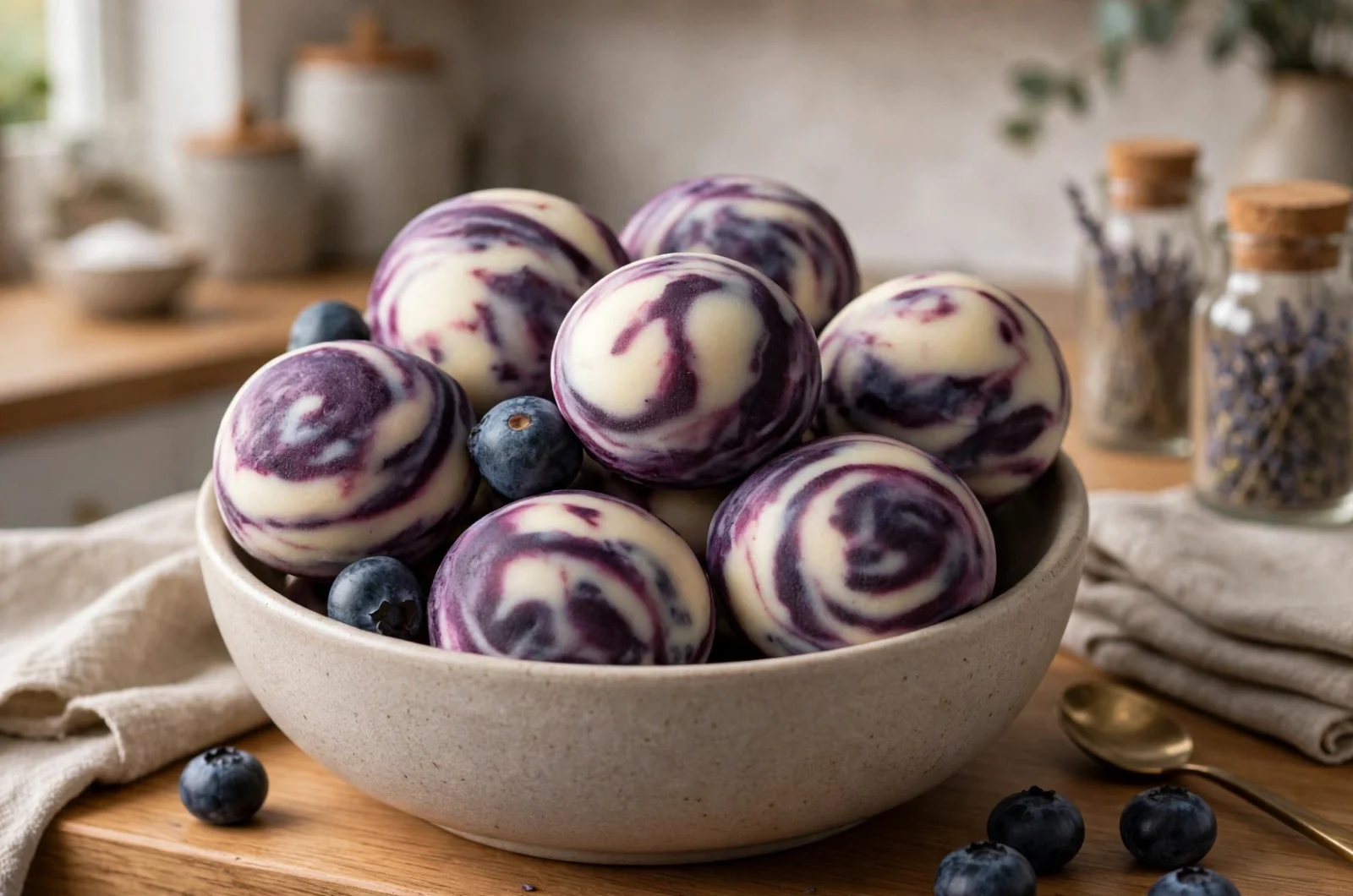
Blueberry Greek Yogurt Bites
Frozen Yogurt Blueberry Bites are a refreshing homemade snack made with fresh blueberries coated in creamy vanilla non-fat Greek yogurt and lightly sweetened with stevia.
10
servings10
minutes1
hour45
kcal11
minutesIngredients
1 pint blueberries (about 125 blueberries)
1 cup vanilla non-fat Greek yogurt
1 tablespoon stevia
Directions
- Line a baking sheet with parchment paper or a nonstick baking mat and set it aside.
- In a medium mixing bowl, combine the vanilla non-fat Greek yogurt and stevia. Stir until the sweetener is evenly mixed into the yogurt.
- Divide the blueberries into two batches. Gently fold the first batch into the yogurt until every berry is coated.
- Using a fork, lift the coated blueberries from the bowl and lightly tap the fork against the side of the bowl to remove any excess yogurt.
- Arrange the coated blueberries on the prepared baking sheet, leaving a little space between each one so they do not stick together while freezing.
- Repeat the coating process with the remaining blueberries.
- Place the baking sheet in the freezer and freeze for about 1 hour, or until the yogurt coating is completely firm.
- Transfer the frozen blueberry bites to an airtight container and store them in the freezer until ready to enjoy.
Notes
- Dry the blueberries thoroughly before coating them to help the yogurt stick evenly.
- Coating the blueberries in two batches makes them easier to handle and prevents them from sticking together.
- Leave space between each blueberry on the baking sheet for the best freezing results.
- Store the frozen bites in an airtight container in the freezer.
- For the best texture and flavor, enjoy within 2 weeks.
Nutrition Facts
- Calories: 45kcal
- Fat: 0.2g
- Saturated Fat: 0.01g
- Polyunsaturated Fat: 0.1g
- Monounsaturated Fat: 0.02g
- Cholesterol: 1mg
- Sodium: 7mg
- Potassium: 57mg
- Carbohydrates: 11g
- Fiber: 1g
- Sugar: 7g
- Protein: 2g
- Vitamin A: 26mcg
- Vitamin C: 5mg
- Calcium: 3mg
- Iron: 0.1mg


