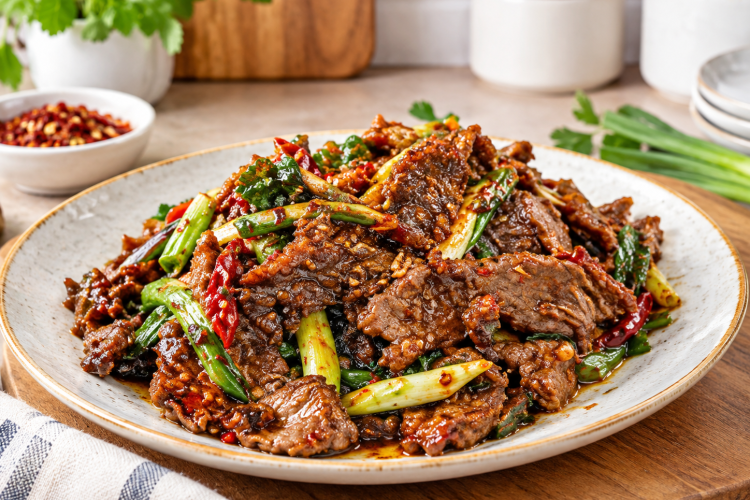
Mongolian Beef is a popular Chinese-American dish made with thinly sliced beef, garlic, ginger, scallions, and a sweet and savory soy sauce. The beef is coated in cornstarch and seared until lightly crispy, then tossed in a glossy sauce that clings to every piece. Served with steamed rice, this homemade Mongolian Beef recipe makes a satisfying lunch or dinner.
Making Mongolian Beef at home allows you to control the sweetness, oil, and spice level while enjoying the flavors of your favorite takeout meal. This version uses brown sugar for a balanced sweetness, soy sauce for a rich savory taste, and fresh aromatics for extra flavor. The cooking process is straightforward, and preparing the ingredients beforehand makes it easier to get dinner on the table.
What Is Mongolian Beef?
Mongolian Beef is a restaurant-style dish commonly associated with Chinese-American cuisine. Despite its name, the familiar version is not a traditional Mongolian recipe. It is part of a wider collection of Westernized Asian dishes developed and popularized through restaurant menus and adapted to suit different tastes.
The dish is recognized for its tender beef, slightly crispy coating, and thick soy-based sauce. Flank steak is a popular choice because it can be sliced thinly and cooked quickly. Cornstarch helps create the crisp exterior, while brown sugar, garlic, ginger, and soy sauce provide the signature sweet and savory flavor.
The Origins of Mongolian Beef
Why Is It Called Mongolian Beef?
The name Mongolian Beef can be misleading because the familiar dish is generally associated with Chinese-American restaurant cooking rather than traditional Mongolian food. The name became part of the Western restaurant tradition of presenting Asian-inspired dishes with memorable names. It does not necessarily describe the dish’s geographical origin or traditional preparation.
Traditional Mongolian cooking has different culinary influences and methods. The popular restaurant version of Mongolian Beef, with its sweet soy glaze and quick-fried beef, is better understood as a modern restaurant creation than an authentic Mongolian stir-fry.
How It Became a Restaurant Favorite
Chinese-American restaurants have helped popularize many dishes that combine Chinese cooking techniques with flavors and serving styles familiar to local customers. Mongolian Beef became recognizable for its combination of crisp beef, sweet sauce, garlic, and scallions. Its bold flavor and quick cooking method make it suitable for takeout and homemade meals alike.
Different restaurants prepare the dish in different ways. Some versions are noticeably sweet, while others emphasize soy sauce, garlic, ginger, or chili. Preparing it at home gives you the flexibility to adjust the balance and make a version that suits your preferences.
This Homemade Mongolian Beef Recipe
This easy Mongolian Beef recipe combines tender beef with a lightly crisp coating and a flavorful sauce. Searing the beef separately before preparing the sauce helps develop its texture and prevents it from becoming soggy too early. When the beef is returned to the wok, the thickened sauce coats the pieces and creates the glossy finish associated with restaurant-style Mongolian Beef.
Another reason to make this dish at home is that it uses familiar ingredients. Flank steak, soy sauce, brown sugar, garlic, ginger, scallions, and cornstarch are the main components. Shaoxing wine adds an optional savory note to the marinade, while dried red chilies provide extra heat if desired.
The recipe is also convenient for weeknight dinners. The beef needs time to marinate, but the cooking itself takes approximately ten minutes. Preparing the sauce and chopping the aromatics before heating the wok helps the cooking process move smoothly and makes it easier to avoid overcooking the meat.
Ingredients for Mongolian Beef
Flank Steak
Flank steak is the main ingredient in this recipe. It has a rich beef flavor and works well when sliced thinly for quick cooking. Cut the steak against the grain into pieces approximately one-quarter inch thick. This shortens the muscle fibers and helps the cooked beef feel more tender when you bite into it.
Soy Sauce and Brown Sugar
Soy sauce provides the salty, savory foundation of Mongolian Beef sauce. Light soy sauce is used in the marinade and sauce, while optional dark soy sauce adds depth and a darker appearance. Brown sugar balances the saltiness and gives the sauce its familiar sweetness without making it overpowering.
Garlic, Ginger, and Scallions
Garlic and ginger create the fragrant base of the dish. They are briefly cooked in the wok to release their aromas before the sauce is added. Scallions contribute a mild onion flavor and freshness. Separating their white and green parts helps ensure that each portion is cooked for the appropriate amount of time.
Cornstarch and Dried Chilies
Cornstarch is important for both the beef’s crispy coating and the sauce’s thickness. The beef is dredged in cornstarch before searing, while a separate cornstarch slurry is used to thicken the sauce. Dried red chilies are optional, making it easy to prepare either a mild or spicy version.
How to Prepare Tender Mongolian Beef
The first step is slicing the flank steak properly. Look for the direction of the muscle fibers and cut across them rather than parallel to them. Thin, evenly sized slices cook quickly and consistently, helping the beef develop a browned exterior without becoming tough.
Combine the sliced beef with neutral oil, Shaoxing wine, soy sauce, cornstarch, water, and baking soda. Mix until the marinade covers the meat evenly, then let it rest for one hour. The baking soda helps soften the beef, while the other marinade ingredients season the slices and prepare them for frying.
After marinating, check that the beef is still moist. If it looks too dry, add a tablespoon of water and mix again. The moisture helps the coating adhere and supports a better texture during cooking. Keep the beef ready to coat with cornstarch shortly before searing.
How to Make the Mongolian Beef Sauce
A balanced sauce is essential for delicious Mongolian Beef. This recipe combines brown sugar, hot water or stock, light soy sauce, and optional dark soy sauce. Dissolving the brown sugar in the hot liquid first helps it blend evenly and prevents undissolved sugar from collecting at the bottom of the bowl.
Mix the sauce ingredients in advance and keep the mixture close to the stove. Once the beef has been seared and the aromatics have cooked, the prepared sauce can be added directly to the wok. A separate cornstarch slurry is then stirred in gradually to create a thick, glossy consistency.
The sauce should be thick enough to coat the back of a spoon without becoming overly dense. Adding the slurry slowly gives you more control over the final texture. The finished sauce should cling to the beef instead of leaving a large amount of thin liquid on the plate.
The Secret to Crispy Mongolian Beef
Coat the Beef Evenly
Dredging the marinated beef in cornstarch creates the light coating that becomes crisp during searing. Make sure the slices are separated and coated on all sides. An even layer helps the beef brown more consistently and gives the finished dish a surface that holds onto the sauce.
Coat the beef shortly before cooking rather than leaving it sitting for a long time. If the starch absorbs too much moisture, the coating can become sticky instead of dry. Preparing the wok and other ingredients before dredging helps you move directly into the searing stage.
Use High Heat
High heat helps the beef develop a browned exterior in a short amount of time. Heat the neutral oil in the wok, then spread the beef evenly across the cooking surface. Sear for about one minute on each side, adjusting as necessary for the thickness of the slices and the heat of your stove.
Avoid overcrowding the wok. If too much beef is added at once, the temperature can drop and the meat may release moisture instead of crisping. Cooking in batches gives each piece more room and helps maintain the high heat needed for good browning.
Step-by-Step Mongolian Beef Cooking Method
Step 1: Marinate the Beef
Combine the sliced flank steak with neutral oil, Shaoxing wine, soy sauce, cornstarch, water, and baking soda. Mix thoroughly, cover, and marinate for one hour. Check the meat before cooking and add a little water if the marinade has become too dry.
Step 2: Prepare the Sauce
Dissolve the brown sugar in hot water or stock. Add the light soy sauce and optional dark soy sauce, then stir to combine. Set the sauce aside so it is ready when the aromatics have finished cooking.
Step 3: Coat and Sear
Dredge the marinated beef in the cornstarch until thoroughly coated. Heat the neutral oil in a wok over high heat and arrange the beef in an even layer. Sear for about one minute per side until crisp, then transfer the beef to a plate.
Step 4: Cook the Aromatics
Drain the excess oil from the wok, leaving approximately one tablespoon. Add the minced ginger and optional dried chilies over medium-high heat. Stir for about 15 seconds, then add the garlic and white scallion pieces. Cook for another 15 seconds, keeping everything moving to prevent burning.
Step 5: Simmer and Thicken
Pour the prepared sauce into the wok and let it simmer for approximately two minutes. Slowly stir in the cornstarch slurry, continuing to cook until the sauce thickens enough to coat the back of a spoon. Add the slurry gradually to avoid making the sauce too thick.
Step 6: Combine the Beef and Sauce
Return the seared beef to the wok and add the green scallion pieces. Toss everything together for approximately 30 seconds, allowing the sauce to coat the beef. The scallions should be just wilted, and the sauce should cling to the meat.
If excess liquid remains, increase the heat slightly and stir until the sauce thickens. Remove the wok from the heat once the beef is coated and the consistency is right. Serve immediately with steamed rice.
What to Serve with Mongolian Beef
Steamed rice is one of the easiest accompaniments for Mongolian Beef. Plain white rice has a mild flavor that balances the sweet and savory sauce, while jasmine rice adds a gentle fragrance. Rice also absorbs the extra glaze, making it a practical choice for serving this dish as a complete meal.
You can also serve Mongolian Beef with steamed broccoli, carrots, green beans, or bok choy. These vegetables add freshness and provide a contrast to the rich beef and glossy sauce. A simple vegetable side is often enough because the main dish already contains strong flavors from the garlic, ginger, and soy sauce.
Notes and Cooking Tips
Slice Against the Grain
Cutting the flank steak against the grain helps make the cooked beef easier to chew. Thin slices also cook quickly and are easier to coat evenly. Try to keep the pieces similar in thickness so that they sear at approximately the same rate.
Prepare Ingredients Before Heating the Wok
Mongolian Beef cooks quickly once the wok is hot. Prepare the sauce, cornstarch slurry, garlic, ginger, and scallions beforehand. This makes it easier to follow the cooking sequence without stopping to measure ingredients while the beef or aromatics are cooking.
Adjust the Sweetness and Spice
The brown sugar provides the traditional sweet flavor, but the overall balance also depends on the soy sauce and other ingredients. Dried chilies are optional and can be left out for a mild dish. Breaking one or two chilies before adding them releases more heat for those who prefer a spicier sauce.
Serve Straight Away
The beef is crispest immediately after searing, but the sauce softens the coating as soon as everything is combined. Toss the beef with the sauce just before serving and avoid leaving it in the wok longer than necessary. Serving promptly preserves the contrast between the beef’s coating and its tender interior.
Frequently Asked Questions
Is Mongolian Beef Really from Mongolia?
The familiar sweet and savory restaurant version is associated with Chinese-American cuisine, not traditional Mongolian cooking. Its name reflects restaurant menu traditions rather than establishing a direct link to a traditional Mongolian dish.
What Cut of Beef Is Best?
Flank steak is a suitable choice because it can be sliced thinly and cooked quickly. Cutting against the grain helps improve tenderness. The most important preparation details are consistent slicing, marinating, and searing over sufficiently high heat.
Why Is My Mongolian Beef Not Crispy?
The beef may not become crisp if the oil is not hot enough, the wok is overcrowded, or the coating becomes too wet before frying. Sear in batches if needed and avoid leaving the coated beef sitting for too long before cooking.
Can I Make Mongolian Beef Less Sweet?
Yes. You can adjust the amount of brown sugar to suit your taste, although changing the amount will affect the balance of the sauce. The soy sauce, ginger, garlic, and scallions contribute savory flavors that help keep the dish from tasting one-dimensional.
Can I Make This Recipe Spicy?
Yes. The dried red chilies are optional. Leave them whole for less heat or break one or two in half for a stronger spicy flavor. You can also omit the chilies completely if you prefer a mild, sweet-and-savory dish.
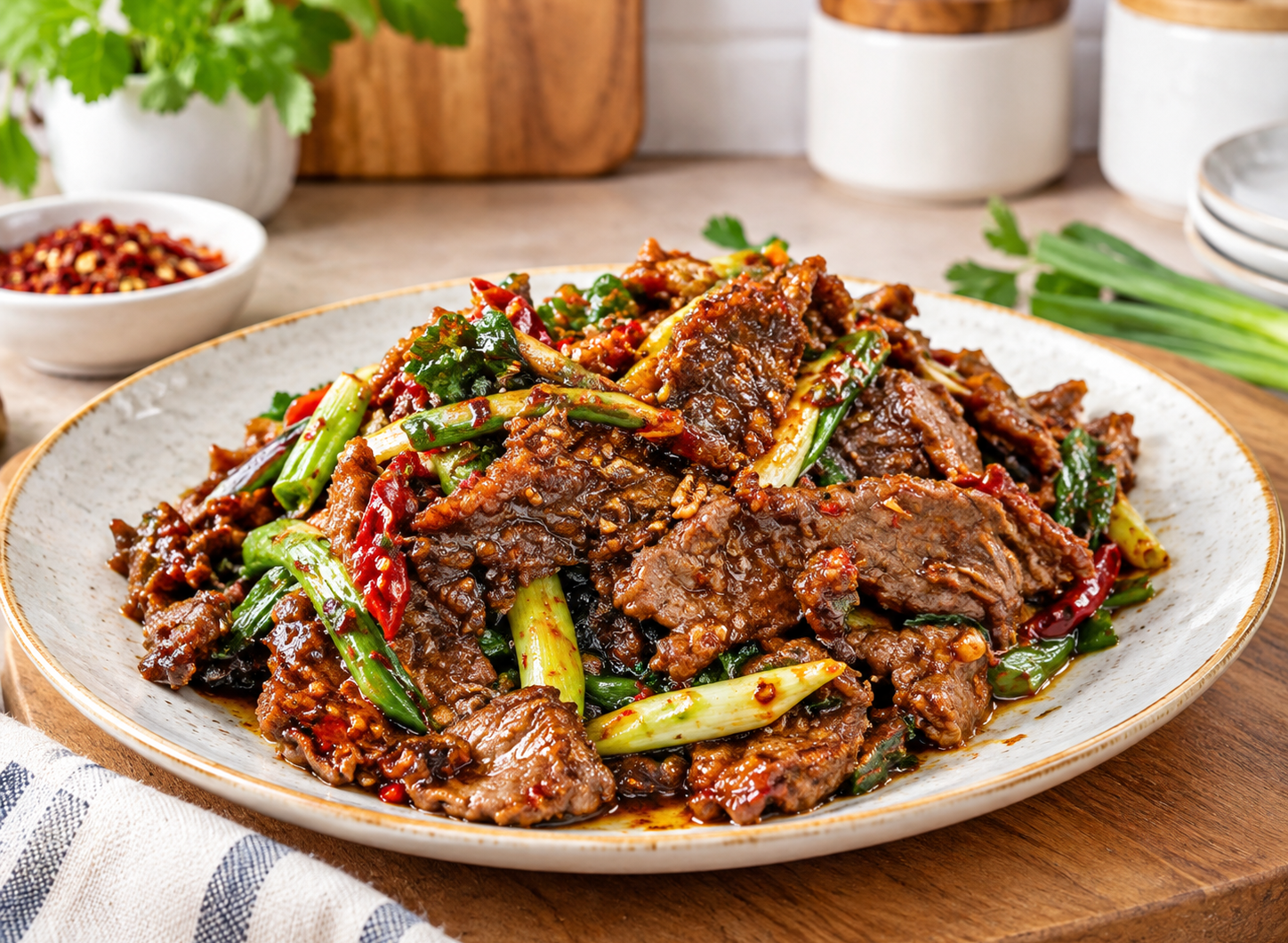
High Protein Savory Mongolian Beef
Crispy beef with a sweet and savory garlic soy sauce
4
servings35
minutes10
minutes383
kcal45
minutesIngredients
- For Marinating the Beef
1 pound flank steak, sliced against the grain into 1/4-inch (6 mm) thick slices
2 teaspoons neutral oil (vegetable, canola, or avocado oil)
2 teaspoons Shaoxing wine (or dry cooking sherry, optional)
1 teaspoon soy sauce
1 tablespoon cornstarch
1 tablespoon water
1/4 teaspoon baking soda
- For the Sauce
1/4 cup light brown sugar
3/4 cup hot water (or hot low-sodium chicken or beef stock)
1/4 cup soy sauce
1 teaspoon dark soy sauce (optional)
- For Coating and Searing the Beef
1/2 cup cornstarch
2/3 cup neutral oil
- For the Rest of the Dish
1 teaspoon minced ginger
8 dried red chili peppers (optional)
3 cloves garlic, finely chopped
4 scallions, white and green parts separated and cut diagonally into 2-inch (5 cm) pieces
1 1/2 tablespoons cornstarch mixed with 2 tablespoons (30 ml) water to make a slurry
Directions
- Combine the sliced flank steak with neutral oil, Shaoxing wine, soy sauce, cornstarch, water, and baking soda. Mix thoroughly and marinate for 1 hour. If the beef looks dry afterward, add a tablespoon of water.
- Dissolve the brown sugar in hot water or stock. Stir in the light soy sauce and optional dark soy sauce. Set aside.
- Dredge the marinated beef slices in the 1/2 cup cornstarch, making sure each piece is thoroughly coated.
- Heat 2/3 cup neutral oil in a wok over high heat. Spread the beef evenly in the wok and sear for about 1 minute on each side, until crisp. Transfer to a plate.
- Drain the oil, leaving 1 tablespoon in the wok. Over medium-high heat, add the ginger and optional dried chilies. Stir for 15 seconds, then add the garlic and white scallion pieces. Stir for another 15 seconds.
- Pour the prepared sauce into the wok and simmer for approximately 2 minutes.
- Slowly stir in the cornstarch slurry. Continue cooking until the sauce is thick enough to coat the back of a spoon.
- Return the beef to the wok and add the green scallion pieces. Toss for about 30 seconds, until the beef is coated and the scallions are just wilted. If excess sauce remains, increase the heat slightly and stir until it thickens.
- Transfer to a serving plate and enjoy hot with steamed rice.
Nutrition Facts
- Calories: 383kcal
- Fat: 16g
- Carbohydrates: 31g
- Fiber: 1g
- Sugar: 14g
- Protein: 26g


