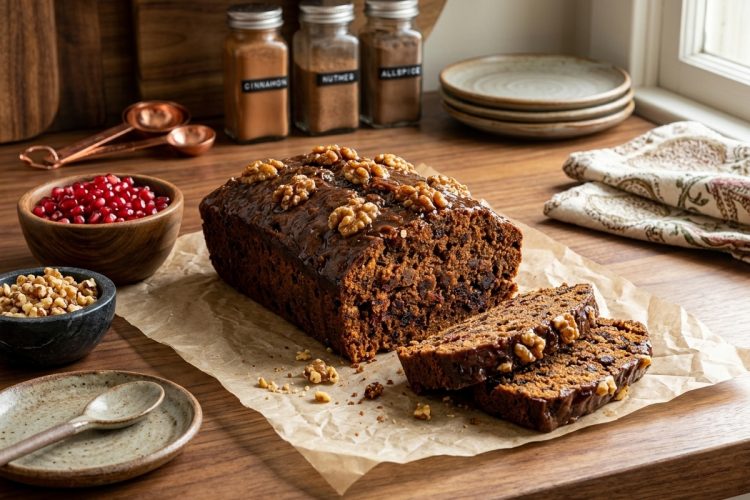
Gluten-free fruit cake is a rich, moist, and delicious holiday dessert filled with dried fruit, candied cherries, crunchy nuts, and warm spices. This homemade gluten-free Christmas cake has the traditional dense texture and sweet, fruity flavor of classic fruit cake without regular wheat flour. Cherry brandy, orange zest, cinnamon, and crystallized ginger give it a festive taste that makes it perfect for Christmas celebrations, holiday parties, and family gatherings.
This easy gluten-free fruit cake recipe uses simple baking techniques and everyday ingredients. Instead of needing a stand mixer or complicated preparation, you cook the butter, brown sugar, dried fruit, orange zest, and brandy together in a saucepan. After the mixture cools, combine it with the eggs, vanilla, flour, spices, and remaining ingredients. Bake everything in a loaf pan for a beautiful cake that can be prepared ahead of the holidays.
This Gluten-Free Fruit Cake
A traditional holiday cake without gluten
One of the best things about this recipe is that it brings the familiar flavor of traditional fruit cake to a gluten-free kitchen. Using gluten-free all-purpose flour with xanthan gum provides structure and helps hold the cake together. The result is a dense, tender loaf with plenty of fruit and nuts in every slice, making it a satisfying dessert for people who avoid gluten.
You do not need unusual baking equipment or advanced skills to prepare this cake. The ingredients are combined in a few straightforward stages, and the saucepan method helps soften the fruit before baking. Whether you are an experienced gluten-free baker or trying a gluten-free Christmas dessert for the first time, this recipe offers a practical way to make a festive homemade treat.
Full of fruit, nuts, and warm spices
A good fruit cake should have a generous mixture of flavors and textures. This recipe combines dates, cranberries, raisins, and candied cherries with walnuts, pecans, and crystallized ginger. The dried fruit adds sweetness and softness, the nuts provide crunch, and the ginger contributes a chewy texture with a pleasant spicy taste.
Cinnamon and allspice give the cake its warm holiday aroma, while cocoa powder adds a subtle chocolate note and a deeper color. Orange zest brightens the mixture, and cherry brandy brings fruity richness. These ingredients work together to create a balanced cake that tastes sweet, warmly spiced, and full of traditional Christmas character.
Ingredients You’ll Need
Butter, brown sugar, and mixed dried fruit
Unsalted butter provides richness and helps keep the cake moist. Light brown sugar sweetens the mixture while contributing a gentle caramel-like flavor that complements the dried fruit. Cooking the butter and sugar with the fruit allows the ingredients to blend before the flour and eggs are added.
The mixed dried fruit includes dates, cranberries, and raisins. Dates bring a soft, naturally sweet texture, cranberries add a slightly tart flavor, and raisins provide the familiar taste found in traditional fruit cake. Simmering the fruit with the other saucepan ingredients helps soften it and distributes its flavor throughout the loaf.
Orange zest and cherry brandy
Orange zest adds a fresh citrus aroma that balances the sweetness of the dried fruit and brown sugar. It also complements the cinnamon, allspice, and ginger, making the finished cake taste brighter and more fragrant. If you do not have an orange, lemon zest can be used as a substitute.
Cherry brandy contributes fruity depth and moisture. It is a traditional-style addition that works particularly well with candied cherries and dried fruit. If you prefer to avoid alcohol, orange juice is an alternative. The liquid helps soften the dried fruit during cooking and contributes to the cake’s flavor.
Eggs, vanilla, and gluten-free flour
Three large eggs bind the ingredients together and help the cake maintain its shape. They are especially important in gluten-free baking because the batter needs enough structure to support the heavy dried fruit, nuts, and candied cherries. Using the correct quantity helps prevent a crumbly texture.
Pure vanilla extract enhances the other flavors without overpowering them. Gluten-free all-purpose flour with xanthan gum provides the cake’s main structure, while baking powder helps it rise. Choose a gluten-free flour blend that already contains xanthan gum, as specified in this recipe, rather than assuming every gluten-free flour behaves the same way.
Spices, cocoa powder, and salt
Cinnamon and allspice give this Christmas fruit cake its familiar warm flavor. Cinnamon has a sweet, woody aroma, while allspice brings a deeper spice note. Together, they complement the dried fruit and make the cake smell wonderful as it bakes.
Cocoa powder adds a subtle chocolate flavor and darkens the loaf slightly. It does not make the cake taste like a chocolate dessert; instead, it adds another layer of richness. A small amount of salt balances the sweetness and helps the flavors of the fruit, butter, and spices come together.
Candied cherries, nuts, and crystallized ginger
Candied cherries add colorful pieces of sweetness and give the cake its classic fruit-cake appearance. Walnuts and pecans bring a rich, nutty flavor and a pleasant crunch. Chop both types of nuts into small or medium pieces so they are easier to distribute and do not make the cake difficult to slice.
Crystallized ginger adds a distinctive chewy texture and a sweet, spicy flavor. Its lively taste contrasts with the brown sugar and dried fruit, giving the cake a little more complexity. Folding these ingredients into the batter at the end helps keep them distributed throughout the finished loaf.
How to Make Gluten-Free Fruit Cake
Step 1: Cook the fruit mixture
Add the unsalted butter, light brown sugar, mixed dried fruit, orange zest, and cherry brandy to a saucepan. Place it over medium heat and bring the mixture to a low boil, stirring occasionally. As the butter melts and the sugar dissolves, the dried fruit becomes coated in the rich liquid.
Once the mixture begins to boil gently, reduce the heat to low and simmer for 10 minutes. This step softens the fruit and allows the flavors to blend. Avoid boiling it vigorously, as high heat can cause the liquid to evaporate too quickly or the sugar to stick to the bottom of the pan.
Step 2: Cool the mixture
Remove the saucepan from the heat and allow the fruit mixture to cool for 30 to 40 minutes. This cooling period is important because the eggs will be added later. If the mixture is too hot, the eggs may begin to cook before they are properly incorporated into the batter.
Use this time to measure the remaining ingredients and prepare your loaf pan. Having everything ready makes the mixing process easier and helps prevent delays once the fruit mixture has cooled. The mixture should be comfortably cool before you whisk in the eggs and vanilla.
Step 3: Prepare the oven and loaf pan
Preheat your oven to 350°F. Line a standard loaf pan with parchment paper, covering the bottom and sides so you can lift the cake out more easily after baking. Parchment paper is particularly helpful for dense cakes containing dried fruit and sugar because these ingredients can make a loaf stick to the pan.
Set the prepared pan aside while you finish mixing the batter. Make sure the oven has reached the correct temperature before placing the cake inside. A properly preheated oven helps the cake bake more consistently and makes it easier to follow the suggested baking time.
Step 4: Mix the wet ingredients
Transfer the cooled fruit mixture to a large mixing bowl. Add the three large eggs and pure vanilla extract, then whisk until the ingredients are evenly combined. The eggs provide binding and moisture, while the vanilla adds a gentle sweetness that complements the fruit, brandy, and spices.
Whisk until the eggs are distributed throughout the mixture, but do not worry about incorporating lots of air. This recipe is intended to produce a dense, moist fruit cake rather than a light sponge. The goal is a smooth, evenly mixed base that can support the dry ingredients and fruit additions.
Step 5: Add the dry ingredients
Add the gluten-free all-purpose flour with xanthan gum, baking powder, cinnamon, allspice, cocoa powder, and salt to the bowl. Whisk until the dry ingredients are incorporated and no large pockets of flour remain. Scrape the sides of the bowl if necessary to make sure the batter is mixed evenly.
The batter should be thick enough to hold the fruit and nuts without becoming dry. Avoid adding extra flour just because the mixture looks heavier than ordinary cake batter. Gluten-free fruit cake is naturally substantial, and following the original measurements helps maintain the intended texture.
Step 6: Fold in the fruit and nuts
Add the chopped candied cherries, walnuts, pecans, and crystallized ginger to the batter. Fold them in gently with a spatula or large spoon, distributing the pieces as evenly as possible. Folding helps combine the additions without unnecessarily working the batter.
Check that the nuts, cherries, and ginger are spread throughout the mixture rather than concentrated in one section. Even distribution makes the cake easier to slice and ensures that each serving contains a good variety of textures. The finished batter should look rich and full of colorful ingredients.
Step 7: Fill the pan and bake
Transfer the batter into the prepared loaf pan. Spread it into the corners and smooth the top so the cake has an even surface. Because this is a dense batter, take a moment to distribute it evenly rather than leaving one side noticeably higher than the other.
Bake for approximately 70 minutes at 350°F. The top should become golden brown and look set as the cake finishes baking. Check the center with a clean toothpick near the end of the baking time. If wet batter sticks to it, continue baking and check again after a short interval.
Step 8: Cool and serve
Remove the baked cake from the oven and let it cool in the pan for 15 minutes. This short resting period allows the loaf to settle and makes it easier to remove without breaking. Use the parchment paper to lift the cake from the pan and transfer it to a wire rack.
Allow the cake to cool completely before slicing. Gluten-free fruit cake can be delicate while warm, particularly because it contains so much fruit and nuts. Once it has cooled, the crumb will be more stable and the slices will hold together better. Brush with simple syrup if desired before serving.
Tips for Moist and Tender Gluten-Free Fruit Cake
Measure carefully and use the right flour
Accurate measurements help produce a cake that is moist rather than crumbly. Too much flour or too little liquid can affect the balance of the batter, especially when it contains substantial amounts of dried fruit and nuts. Use the specified amounts of butter, brandy, and eggs, and choose gluten-free flour containing xanthan gum.
Avoid overbaking
Bake the loaf for approximately 70 minutes, but use the appearance and toothpick test to judge when it is done. The top should be golden brown, and the center should not contain wet batter. Check near the end of the recommended baking period so the cake does not spend unnecessary time in the oven.
Use simple syrup if desired
A light brushing of simple syrup is optional but can help the cake retain moisture during storage. Apply it sparingly after baking so the surface does not become soggy. This is particularly useful if you are preparing the cake in advance for a holiday celebration.
Storage and Make-Ahead Instructions
How to refrigerate fruit cake
Let the cake cool completely before wrapping it tightly in plastic wrap. Place the wrapped loaf in an airtight container and refrigerate it for up to one month, following the recipe’s storage instructions. Keeping the cake covered helps protect it from drying out and absorbing odors from other refrigerated foods.
Making the cake ahead
Fruit cake is often prepared in advance for Christmas because its flavors can develop during storage. This recipe is suitable for making ahead, which can help reduce holiday baking on the day of your gathering. Keep it properly wrapped and chilled until you are ready to serve it.
Frequently Asked Questions
Can I change the dried fruit?
Yes. The recipe uses dates, cranberries, and raisins, but dried apricots or figs can also be used. Keep the overall quantity consistent so the batter retains its intended balance of fruit and cake.
Why is my fruit cake crumbly?
Crumbly fruit cake may result from incorrect measurements, insufficient moisture, or slicing before the cake has cooled. Check that you used the correct amount of eggs and gluten-free flour with xanthan gum. Allowing the loaf to cool completely also helps it hold together.
Can I replace the orange zest?
Yes. Lemon zest can replace orange zest and gives the cake a slightly sharper citrus flavor. Use the same amount specified in the recipe.
How do I know when it is baked?
Look for a golden-brown top and test the center with a clean toothpick. If it comes out without wet batter, the cake is ready to cool. If wet batter remains, continue baking and test again.
Is this cake suitable for gluten-free diets?
It is made with gluten-free all-purpose flour, but check the labels of all packaged ingredients, including candied cherries, dried fruit, crystallized ginger, and flour. Choose products that meet your gluten-free requirements and avoid cross-contamination during preparation.
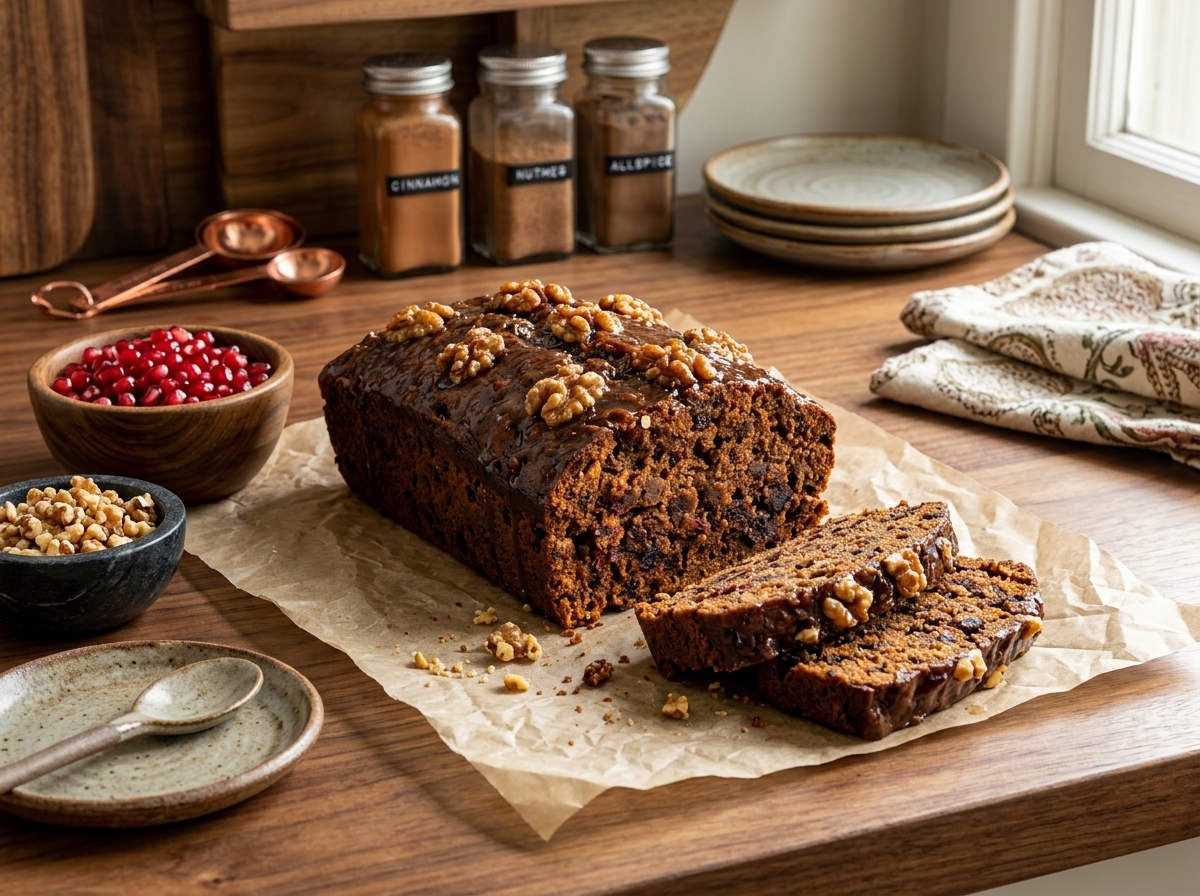
Gluten-Free Fruit Cake
A moist, dense holiday fruit cake with dried fruit, candied cherries, nuts, warm spices, and cherry brandy.
10
servings10
minutes1
hour10
minutes419
kcal30
minutes1
hour50
minutesIngredients
¾ cup (170.25 g) unsalted butter
1 cup (220 g) light brown sugar, packed
2 cups (80 g) chopped mixed dried fruit, such as dates, cranberries, and raisins
1 tablespoon orange zest
⅔ cup (157.73 ml) cherry brandy
3 large eggs
1 teaspoon pure vanilla extract
1¾ cups (218.75 g) gluten-free all-purpose flour with xanthan gum
¾ teaspoon baking powder
1 teaspoon cinnamon
½ teaspoon allspice
1 tablespoon cocoa powder
¼ teaspoon salt
¼ cup (42.5 g) chopped candied cherries
¼ cup (29.25 g) chopped walnuts
¼ cup (27.25 g) chopped pecans
3 tablespoons finely chopped crystallized ginger
Directions
- Add the butter, brown sugar, mixed dried fruit, orange zest, and cherry brandy to a saucepan.
- Bring the mixture to a low boil. Reduce the heat and simmer for 10 minutes, stirring as needed.
- Remove from the heat and let the mixture cool for 30 to 40 minutes.
- Preheat the oven to 350°F. Line a standard loaf pan with parchment paper.
- Transfer the cooled fruit mixture to a mixing bowl. Whisk in the eggs and vanilla extract.
- Add the gluten-free flour, baking powder, cinnamon, allspice, cocoa powder, and salt. Whisk until combined.
- Fold in the candied cherries, walnuts, pecans, and crystallized ginger.
- Transfer the batter to the prepared loaf pan and spread the top evenly.
- Bake for approximately 70 minutes, or until a toothpick inserted into the center comes out without wet batter.
- Cool in the pan for 15 minutes, then transfer to a wire rack to cool completely. Brush with simple syrup if desired.
Notes
- Lemon zest can replace orange zest.
- Other combinations of dried fruit, such as dried apricots or figs, can be used.
- Simple syrup is optional but can help the cake retain moisture.
- Chop the nuts into small to medium pieces for easier slicing.
- Wrap the completely cooled cake in plastic wrap and refrigerate in an airtight container for up to one month.
- Always check ingredient labels to confirm they are gluten-free.
Nutrition Facts
- Calories: 419kcal
- Fat: 20g
- Carbohydrates: 49g
- Fiber: 4g
- Sugar: 30g
- Protein: 5g


