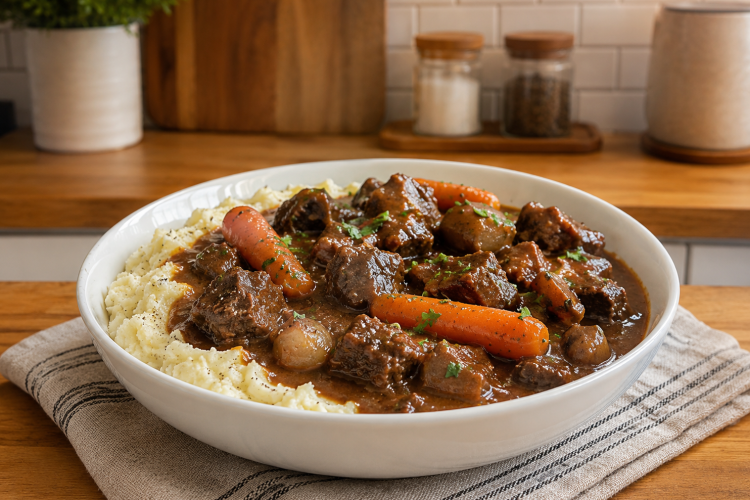
Homestyle beef stew with creamy loaded mashed potatoes is a hearty comfort food meal made for slow, relaxed dinners. Tender beef, sweet carrots, earthy turnips, onions, garlic, and rich gravy come together in one pot. The creamy mashed potatoes make the meal even more satisfying because they soak up the savory sauce. It is a classic beef dinner that works well for family meals, cold evenings, and casual gatherings.
Why This Beef Stew Is So Comforting
A good homemade beef stew depends on slow cooking and a flavorful base. The beef is browned first to create a deep savory flavor before it is gently simmered with broth and seasonings. As the beef cooks, it becomes tender and absorbs the surrounding flavors. The vegetables soften in the rich broth, while the gravy becomes full-bodied and perfect for spooning over creamy mashed potatoes.
Choosing Beef for Slow Cooking
Beef stew meat or chuck roast works especially well for this recipe. Chuck roast contains marbling and connective tissue that become tender during slow cooking. Rather than choosing a very lean cut, use beef that can handle several hours of gentle simmering. Cut the meat into reasonably sized chunks so the pieces remain juicy while cooking and are easy to serve with the vegetables and mashed potatoes.
Browning the Beef Properly
Browning the beef is one of the most important steps in making flavorful beef stew. Season the meat with salt and black pepper before placing it in the hot Dutch oven. Brown the beef in batches rather than filling the pot completely. Giving the pieces enough space allows them to develop a browned exterior instead of releasing too much moisture and steaming.
Building Flavor in the Pot
Once the beef has been browned and removed, the same pot is used to prepare the flavor base. Onions are softened in the remaining cooking fat, followed by garlic and tomato paste. Cooking the tomato paste for several minutes helps deepen its flavor. The browned bits left on the bottom of the pot also become part of the gravy when the liquid is added.
Using Tomato Paste
Tomato paste gives the stew concentrated tomato flavor without making it taste like tomato soup. It also adds color and helps create a richer-looking sauce. Stir it into the softened onions and garlic and cook it for several minutes before adding the liquid. This short cooking step removes some of the raw taste and allows the tomato paste to blend more naturally with the beef and aromatics.
Adding Red Wine
A half cup of red wine can be used to add another layer of flavor to the stew. It is listed as optional, so the recipe can be made without it. When wine is added, scrape the bottom of the pot while it simmers to loosen the browned pieces left behind by the beef. Allowing the wine to reduce before adding the broth keeps the finished gravy balanced and prevents a strong raw wine flavor.
Creating the Savory Gravy
Beef broth provides the main liquid for the stew, while Worcestershire sauce adds a deeper savory note. A small amount of sugar balances the other flavors without making the stew sweet. Once these ingredients are added, return the browned beef and its accumulated juices to the pot. The liquid should surround the beef and provide enough moisture for the long, gentle simmer.
Cooking Beef Until Tender
The beef should cook slowly over low heat for about one and a half to two hours before the vegetables are added. A gentle simmer is preferable to a rapid boil because strong boiling can make the meat less tender. During slow cooking, the connective tissue in the beef gradually breaks down. This produces the fork-tender texture expected from a traditional homemade beef stew.
Adding Turnips at the Right Time
Turnips are added before the carrots because they need additional time to become tender. Peel the small turnip and cut it into evenly sized pieces. Stir the turnips into the simmering stew and cook them for about 15 minutes. Their mild earthy flavor works well with the richness of the beef and gives the finished dish a pleasant contrast.
Adding the Carrots Later
Carrots are added after the turnips and cooked for approximately 30 minutes. Adding them later helps them maintain their shape and natural sweetness rather than becoming overly soft. Peel and dice the carrots into pieces of similar size so they cook evenly. As they simmer in the beef broth, they absorb the savory flavors while adding natural sweetness and color to the stew.
Checking the Stew
The finished beef stew should have tender beef and vegetables that can be easily pierced with a fork. Taste the gravy before serving and adjust the salt, pepper, or consistency as needed. If the sauce seems thinner than you prefer, continue simmering uncovered for a short time. The gravy should be rich enough to coat the beef and vegetables while still being fluid enough to pour over mashed potatoes.
Why Mashed Potatoes Pair So Well
Creamy mashed potatoes are an ideal partner for beef stew because they absorb the rich gravy. The potatoes provide a mild, buttery base that balances the strong savory flavor of the beef. Instead of serving the stew with plain boiled potatoes, this recipe combines russet potatoes with cream cheese, butter, and heavy cream for a richer side dish that can stand up to the hearty stew.
Choosing Russet Potatoes
Russet potatoes are a good choice for creamy mashed potatoes because their higher starch content helps create a light and fluffy texture. Peel the potatoes and cut them into quarters before boiling. Keeping the pieces similar in size helps them cook at the same rate. Start them in cold salted water and bring the pot to a boil gradually so the potatoes cook evenly from the center outward.
Cooking the Potatoes
Boil the quartered russet potatoes until they are tender enough to mash easily. Test them with a fork before draining. Once they are fully cooked, drain the potatoes thoroughly. Excess water can make mashed potatoes loose and watery, which is not ideal when serving them with gravy. After draining, mash them lightly to release excess steam before adding the dairy ingredients.
Making Creamy Mashed Potatoes
Add softened cream cheese, butter, and heavy cream to the drained potatoes. Mash until the ingredients are fully combined and the potatoes become smooth and creamy. Avoid excessive mixing because overworked potatoes can develop a gluey texture. The goal is a soft, rich mash that holds its shape on the plate but remains smooth enough for beef stew gravy to flow over it.
Seasoning the Potatoes
Salt and black pepper are used to season the mashed potatoes. The optional Montreal steak seasoning can add extra savory flavor if desired. Add seasoning gradually and taste before serving. Because the stew itself is richly seasoned, the potatoes should complement it rather than compete with it. A balanced amount of seasoning allows the cream cheese, butter, and potatoes to remain noticeable.
Preparing Both Components Together
The beef stew and mashed potatoes require different cooking times, so good timing helps. The stew should be started first because the beef needs time to become tender. While the stew is finishing with the vegetables, prepare the potatoes. This allows both parts of the meal to reach the table warm. The potatoes should ideally be finished close to serving time so they remain creamy.
Keeping the Stew Tender
Low heat is the key to tender beef. Once the stew reaches a gentle boil, reduce the heat and cover the pot. Keep the liquid at a quiet simmer rather than allowing it to bubble aggressively. Check the pot occasionally to make sure there is enough liquid, but avoid opening the lid repeatedly because this allows heat and moisture to escape and can lengthen the cooking process.
Avoiding Tough Beef
One common mistake with beef stew is cooking the meat too quickly. A fast boil can cause the exterior of the beef to tighten before the connective tissue has enough time to soften. Slow cooking gives the meat time to become tender. If the beef is still firm after the suggested cooking period, continue simmering gently until it reaches the desired texture rather than increasing the heat.
Getting Richer Gravy
The browned beef, tomato paste, beef broth, Worcestershire sauce, and cooking juices all contribute to the gravy. Scraping the bottom of the pot when adding the red wine helps recover the browned bits created during searing. If the gravy needs to become slightly thicker, allow the stew to simmer uncovered near the end. This reduces excess liquid while concentrating the existing flavors.
Balancing the Vegetables
Carrots and turnips bring different flavors to the stew. Carrots provide sweetness, while turnips contribute a mild earthy quality. Cutting the vegetables into similar bite-sized pieces makes the finished stew easier to eat. Their flavors become more integrated as they cook in the broth. Avoid cooking them for much longer than necessary because overly soft vegetables can lose their texture.
Serving the Beef Stew
For serving, spoon a generous amount of creamy mashed potatoes into each bowl. Ladle the beef stew beside the potatoes or directly over them, allowing the gravy to run across the potatoes. This presentation keeps the two components visible while bringing the flavors together. Make sure each serving contains a good mixture of beef, carrots, turnips, and gravy.
What to Serve With Beef Stew
This meal is filling on its own, but simple sides can complete the table. Crusty artisan bread is useful for soaking up extra gravy, while warm dinner rolls or buttered biscuits provide another soft accompaniment. A fresh green salad can add a lighter element to the meal. Roasted vegetables can also be served alongside the stew when a larger dinner is planned.
Making the Stew Ahead
Beef stew is well suited to advance preparation. After cooking, allow it to cool and store it in an airtight container in the refrigerator. The flavors can become even more developed after resting overnight. When reheating, warm the stew gently over medium-low heat. If the gravy has thickened too much in the refrigerator, add a small splash of beef broth while reheating.
Storing Leftover Beef Stew
Cooked beef stew can be stored in the refrigerator for up to four days when kept properly covered. Divide large amounts into suitable containers so the stew cools efficiently. When ready to eat, reheat it thoroughly and gently rather than using very high heat. The beef may become more tender after resting, while the vegetables and gravy remain flavorful when reheated carefully.
Freezing the Stew
The beef stew can be frozen for up to three months. Portioning it before freezing makes it easier to thaw only what you need. Place cooled stew in suitable freezer containers and leave appropriate space for expansion. Thaw overnight in the refrigerator before reheating. Warm it slowly on the stovetop and add a little broth if the gravy becomes too thick.
Reheating Mashed Potatoes
Creamy mashed potatoes can also be refrigerated for several days. When reheating, use gentle heat and stir occasionally. If the potatoes become thick or dry after chilling, a small amount of extra cream or milk can help restore their texture. Reheat until hot throughout, then adjust the seasoning if necessary. Keeping the potatoes covered during reheating can also help retain moisture.
Adding More Vegetables
The basic recipe can be adjusted with additional vegetables if desired, although the listed ingredients should remain unchanged when preparing the original version. Peas, mushrooms, celery, parsnips, and green beans are examples of vegetables that can work well in a beef stew. They can add different textures and flavors, but the original carrots and turnips already provide a balanced combination.
Adding Fresh Herbs
Fresh thyme, rosemary, or bay leaves can provide additional aroma during slow cooking. These are optional additions rather than replacements for the original ingredients. Herbs can be added while the stew simmers and removed before serving when appropriate. Their earthy flavors work naturally with beef and root vegetables, particularly when the stew is cooked slowly for several hours.
Making a Thicker Stew
If a thicker gravy is preferred, a cornstarch slurry can be added during the final minutes of cooking. This is an optional variation and is not required for the original recipe. The stew can also thicken naturally as it simmers and some liquid evaporates. Before adding any thickener, taste the gravy and consider whether reducing it slightly will provide the consistency you want.
Notes for Better Results
Brown the beef in batches, keep the stew at a gentle simmer, and allow enough time for the chuck roast to become tender. Add turnips before carrots so both vegetables finish at a good texture. Drain the potatoes thoroughly before mashing, and use softened cream cheese for easier mixing. Taste both the stew and potatoes before serving so the final seasoning is balanced.
Preparing the Meal for Six
The recipe is designed to serve six people, making it suitable for a family dinner or a small gathering. Use a large Dutch oven or heavy-bottomed pot so the beef has enough space for proper browning and the stew has room to simmer. Prepare the mashed potatoes in a large pot as well. Serving the meal in bowls makes it easy to combine the creamy potatoes with the rich beef gravy.
Course and Serving Style
This recipe is best served as a main course because it includes both protein and a substantial potato side. Its American comfort food style makes it suitable for family dinners and relaxed weekend meals. The combination of tender beef, vegetables, savory gravy, and creamy mashed potatoes creates a filling plate without requiring several separate side dishes.
Serving the Creamy Potatoes
For the best presentation, place the mashed potatoes in the center of each bowl and create a small space for the stew. Spoon tender beef and vegetables around or over the potatoes, then add plenty of gravy. The sauce will naturally move into the creamy potatoes. Serve while both components are hot so the butter-rich potatoes and savory stew remain at their best texture.
Leftover Meal Ideas
Leftover stew and mashed potatoes can be served together again for another dinner. The stew can also be reheated separately and spooned over freshly prepared potatoes if you want to improve the texture of the potato portion. Keeping the components stored separately can make reheating easier. Always keep leftovers properly chilled and reheat them gently before serving.
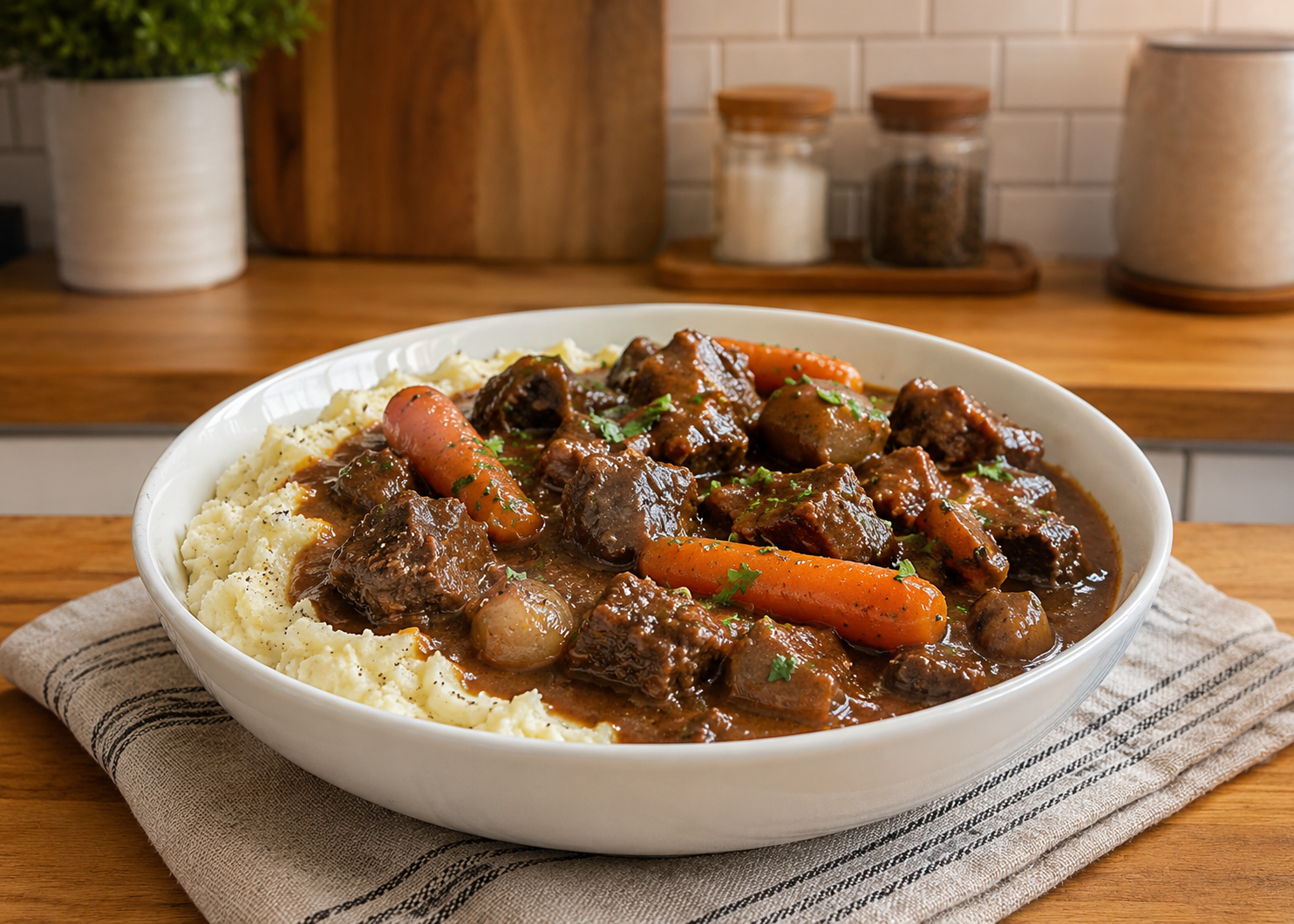
Beef Stew with Mashed Potatoes
A hearty homemade beef stew made with tender beef, carrots, turnips, onions, garlic, tomato paste, beef broth, and Worcestershire sauce.
6
servings30
minutes3
hours3
hours30
minutesIngredients
- For the Beef Stew
3 tablespoons olive oil
1 tablespoon butter
2 pounds beef stew meat or chuck roast, cut into chunks
Salt and black pepper, to taste
1 medium onion, finely diced
3 garlic cloves, minced
3 tablespoons tomato paste
½ cup red wine, optional
4 cups beef broth
2 tablespoons Worcestershire sauce
½ teaspoon sugar
4 to 5 carrots, peeled and diced
1 small turnip, peeled and diced
- For the Creamy Mashed Potatoes
5 pounds russet potatoes, peeled and quartered
½ cup butter
½ cup heavy cream
1 teaspoon Montreal steak seasoning, optional
8 ounces cream cheese, softened
Salt and black pepper, to taste
Directions
- Brown the beef: Season the beef with salt and black pepper. Heat olive oil in a large Dutch oven over medium-high heat. Add the butter, then brown half of the beef on all sides. Transfer it to a plate and repeat with the remaining beef.
- Build the stew base: Lower the heat to medium. Add the diced onion and cook until softened. Stir in the minced garlic and tomato paste and cook for 3 to 4 minutes. Add the red wine, if using, and scrape the browned bits from the bottom of the pot. Simmer until most of the wine has reduced.
- Slow-cook the beef: Add the beef broth, Worcestershire sauce, sugar, and a small pinch of salt. Return the beef and any collected juices to the pot. Bring the liquid to a gentle boil, then reduce the heat to low. Cover and simmer for 1½ to 2 hours.
- Cook the vegetables: Stir in the diced turnip and cook for 15 minutes. Add the diced carrots and continue cooking for about 30 minutes, or until the vegetables are tender and the beef is fork-tender. Taste and adjust the seasoning or consistency as needed.
- Make the mashed potatoes: Put the quartered russet potatoes in a large pot and cover them with cold salted water. Bring to a boil and cook until tender. Drain thoroughly and mash lightly to release excess steam. Add cream cheese, butter, heavy cream, and optional Montreal steak seasoning. Mash until smooth and creamy, then season with salt and pepper.
- Serve: Spoon the creamy mashed potatoes into serving bowls. Add the beef stew beside or over the potatoes, making sure each serving has plenty of rich gravy. Serve immediately.
Notes
- Brown the beef in batches to prevent steaming.
- The stew can be refrigerated for up to 4 days or frozen for up to 3 months.
- Reheat gently and add a splash of broth if the gravy becomes too thick.


