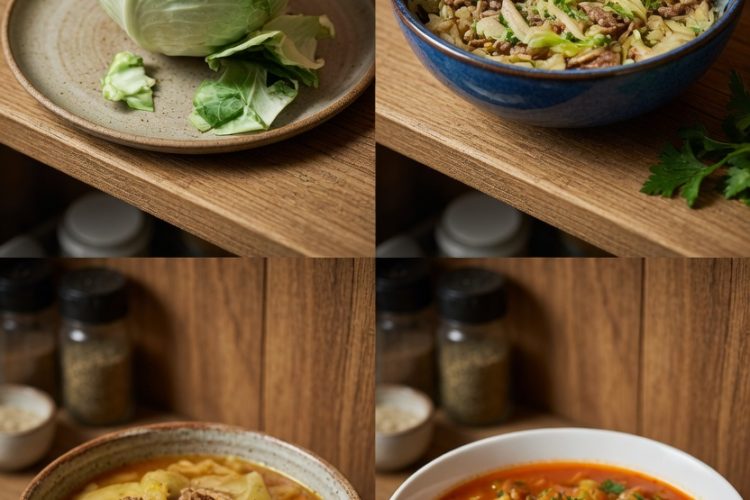
Beef and cabbage stew is a simple one-pot meal made with ground beef, fresh cabbage, tomatoes, carrots, onion, garlic, and broth. It is a filling dinner that comes together with basic ingredients and very little preparation. The vegetables become tender as they simmer with the seasoned beef, creating a warm and flavorful stew that works especially well on cold days when you want something hearty without a complicated cooking process.
A Hearty One-Pot Dinner
This easy beef stew is useful when you need a family meal that can be prepared in one pot. The ground beef cooks with the vegetables, while the tomatoes and broth create a light but flavorful cooking liquid. Green cabbage adds plenty of texture and makes the stew filling without requiring pasta, rice, or potatoes. Because everything cooks together, the flavors have time to combine while the cabbage softens and becomes tender.
Why Beef and Cabbage Work Well Together
Ground beef and cabbage are a natural combination because the rich flavor of the beef balances the mild sweetness of cooked cabbage. Carrots and onions add additional sweetness, while garlic and Italian seasoning give the broth a savory taste. Fresh tomatoes bring acidity and moisture to the pot, helping create a flavorful base. The result is a comforting beef and cabbage soup-style stew that feels substantial without requiring a long list of ingredients.
Choosing the Ground Beef
Ground beef is the main protein in this recipe and provides a rich, savory flavor throughout the stew. It is browned directly in the same pot used for the vegetables, which keeps the cooking process simple and allows the meat to develop a deeper taste. Breaking the beef into smaller pieces after browning helps distribute it evenly throughout the broth and vegetables. This means every serving contains a good mixture of beef, cabbage, carrots, and tomatoes.
Preparing the Vegetables
The vegetables should be prepared before cooking begins so they can be added to the pot without delay. Chop the yellow onion and carrots into manageable pieces, mince the garlic, and chop the ripe tomatoes. The green cabbage should also be chopped into pieces that are easy to eat with a spoon. Using a large head of cabbage provides plenty of vegetables for the stew, while the broth gives the cabbage enough moisture to soften during simmering.
Starting With Onion, Carrots, and Garlic
The first cooking stage begins by heating avocado oil in a large thick-bottomed pot. A Dutch oven works well because its heavy base distributes heat evenly. The onion, carrots, and garlic are sautéed together for about 3–5 minutes. They do not need to become fully cooked at this point. The goal is simply to soften them slightly and release their flavors before the ground beef is added to the pot.
Browning the Ground Beef
Browning the beef before adding the remaining ingredients gives the stew a fuller flavor. The vegetables can be moved to one side of the pot while the ground beef is added to the open space. Letting the meat sit untouched for about three minutes allows it to brown rather than immediately steaming. Turn the beef and brown it for another two to three minutes, then use a spatula to break it into smaller pieces and mix it with the vegetables.
Adding Tomatoes and Broth
Once the beef has browned, the chopped tomatoes and broth are added to the pot. Either chicken broth or beef broth can be used according to the original recipe. The broth provides the liquid needed to cook the cabbage and other vegetables, while the tomatoes add flavor and moisture. Adding the Italian seasoning, black pepper, and cabbage at this stage brings the main ingredients together so they can simmer as one dish.
Cooking the Cabbage
Cabbage can seem quite bulky when it is first added to the pot, especially when using six to eight cups of chopped cabbage. However, it quickly begins to wilt as it heats and absorbs the flavorful broth. Covering the pot helps trap steam and encourages the cabbage to soften. The stew is simmered for about 30 minutes, with occasional stirring, until the cabbage is wilted and tender and the vegetables are properly cooked.
Using Italian Seasoning
Italian seasoning is the main dried herb mixture used in this beef and cabbage stew. It gives the broth a familiar savory flavor without requiring several individual dried herbs. The recipe calls for one tablespoon, which is enough to season the large amount of vegetables, beef, cabbage, tomatoes, and broth. Black pepper is also added, while sea salt is adjusted according to taste near the end of cooking so the final seasoning can be balanced.
Adjusting the Seasoning
Broths can contain different amounts of salt, so it is better to taste the stew near the end of cooking before adding the final amount of sea salt. Once the cabbage has softened and the ingredients have simmered together, taste a spoonful of the broth. Add sea salt as needed and stir well. This simple step helps prevent the stew from becoming too salty while ensuring the vegetables and beef have enough seasoning.
The Texture of the Finished Stew
The finished beef and cabbage stew should have tender cabbage, soft carrots, cooked onions, and small pieces of browned ground beef throughout the broth. The tomatoes become softer during simmering and help give the cooking liquid its color and flavor. It is not meant to be a thick gravy-style stew. Instead, it has a hearty soup-like consistency with plenty of vegetables and beef in every serving.
A Practical Family Meal
With five servings, this ground beef and cabbage stew is well suited to family dinners or meal preparation. It can be served directly from the cooking pot, making it a convenient choice when you do not want to prepare several separate dishes. The combination of beef and vegetables also makes it filling enough to serve as a main course. A bowl can be enjoyed on its own without needing an additional starch.
Beef and Cabbage Stew for Cold Weather
Warm soups and stews are especially appealing during colder months, and this cabbage and beef stew is simple enough to prepare whenever the weather calls for a comforting meal. The hot broth, tender vegetables, and seasoned ground beef make each serving warming and satisfying. Although it is particularly suitable for chilly evenings, the recipe uses ingredients that are available throughout the year, so there is no need to reserve it for one particular season.
Notes for Better Results
Use a large pot because the chopped cabbage takes up considerable space before it wilts. Give the onion, carrots, and garlic enough time to soften slightly before adding the beef. When browning the meat, leave it undisturbed at first so it has a chance to develop color. Stir the stew occasionally during simmering to help the cabbage cook evenly, and always taste the broth before adding the final amount of sea salt.
Notes About the Broth
Both chicken broth and beef broth are included as options in the original recipe. Beef broth will give the stew a deeper beef flavor, while chicken broth creates a lighter-tasting base. Either works with the ground beef, tomatoes, cabbage, and vegetables. Use whichever broth you have available or prefer. The amount remains the same, so there is no need to change the other ingredients when selecting between the two broth options.
Notes About the Cabbage
The recipe uses one large head of green cabbage, which produces approximately six to eight cups once chopped. Cabbage reduces considerably as it cooks, so do not be concerned if the pot looks full when the cabbage is first added. Stir carefully to combine it with the broth and other ingredients. As it wilts, it will take up less space and become easier to mix with the beef, carrots, tomatoes, and seasonings.
Notes About Serving
Serve the stew hot once the cabbage has softened and the seasoning has been adjusted. A large bowl works well because the recipe contains both broth and plenty of solid ingredients. Each serving should include ground beef, cabbage, carrots, tomatoes, and some of the flavorful cooking liquid. Since the dish is already filling, it can be served by itself as a complete dinner. Keep the presentation simple and let the colorful vegetables provide the visual appeal.
Notes About Storage
If you have leftovers, allow the stew to cool appropriately before placing it into a covered container and refrigerating it. The flavors can continue to develop after cooking, making leftovers useful for another meal. When reheating, warm the stew thoroughly and stir occasionally so the heat is distributed throughout the beef, cabbage, vegetables, and broth. Store portions separately if you want convenient servings for later meals.
Notes About the Recipe
This beef and cabbage stew takes approximately 10 minutes to prepare and 40 minutes to cook, giving a total time of about 50 minutes. The recipe makes five servings and provides approximately 340 calories per serving according to the supplied nutrition information. It contains ground beef for protein, cabbage and carrots for vegetables, tomatoes for flavor and moisture, and avocado oil for cooking.
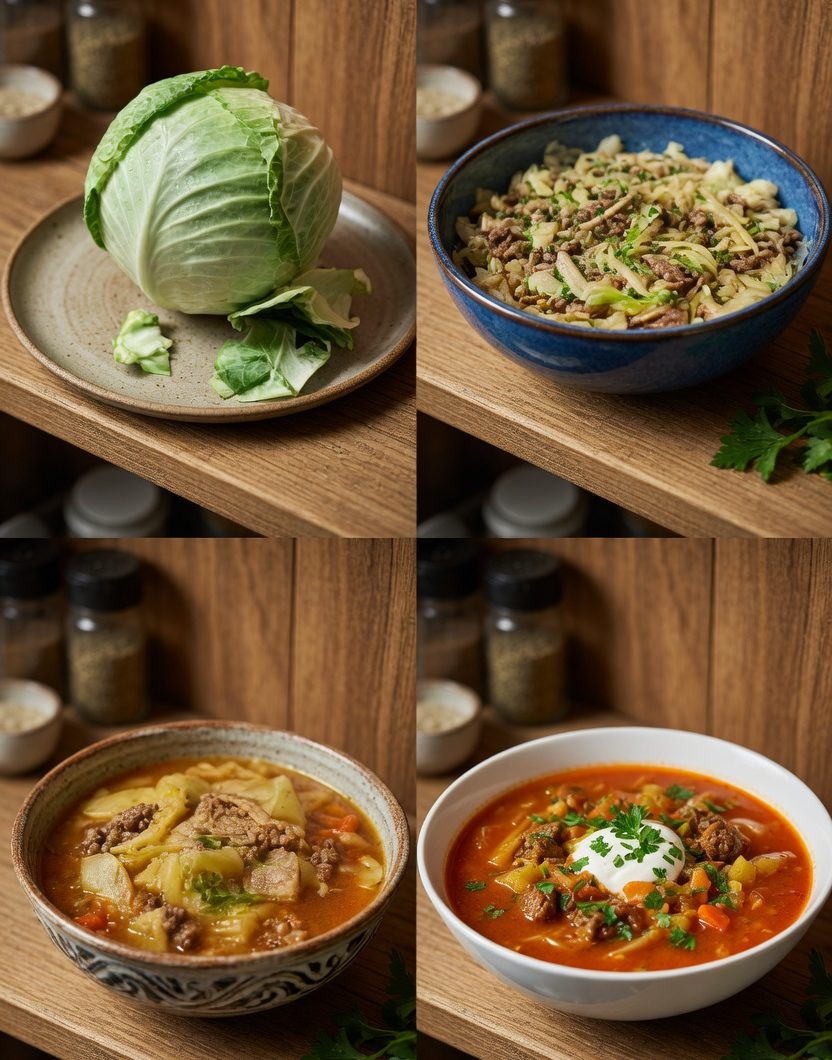
Cabbage and Ground Beef Soup.
A hearty one-pot beef and cabbage stew made with ground beef, green cabbage, carrots, tomatoes, onion, garlic, and broth. Italian seasoning and black pepper add simple savory flavor, while the vegetables simmer until tender. This easy ground beef stew makes five filling servings and is well suited to a warm family dinner.
5
servings10
minutes40
minutes340
kcal50
minutesIngredients
- Vegetables and Oil
2 Tbsp avocado oil
1 medium yellow onion, chopped
3 large carrots, chopped
4 cloves garlic, minced
4 large ripe tomatoes, chopped
1 large head green cabbage, chopped (about 6–8 cups)
- Beef and Broth
1 lb ground beef
4 cups chicken broth or beef broth
- Seasoning
1 Tbsp Italian Seasoning
¼ tsp black pepper, to taste
Sea salt to taste
Directions
- Heat the Oil and Soften the Vegetables
- Add the avocado oil to a large thick-bottomed pot or Dutch oven and heat over medium-high heat. Add the chopped yellow onion, carrots, and minced garlic. Sauté for about 3–5 minutes, stirring occasionally, until the vegetables begin to soften.
- Brown the Ground Beef
- Move the vegetables to one side of the pot and add the ground beef. Let it cook without stirring for about 3 minutes so it can brown. Turn the beef and cook for another 2–3 minutes. Break it into smaller pieces with a spatula, then stir it together with the softened vegetables.
- Add the Remaining Ingredients
- Add the chopped tomatoes, chicken broth or beef broth, Italian seasoning, black pepper, sea salt, and chopped green cabbage to the pot. Stir everything together carefully so the beef and vegetables are evenly distributed throughout the broth.
- Bring the Stew to a Boil
- Cover the pot and bring the mixture to a full boil. Once boiling, reduce the heat to a simmer. Keep the pot covered and cook for about 30 minutes, stirring occasionally. Continue until the cabbage has wilted and the vegetables are tender.
- Check the Seasoning
- Taste the broth once the cabbage and vegetables are cooked. Add additional sea salt according to your taste and stir well. If the cabbage needs a little more cooking time, continue simmering until it reaches the desired tenderness.
- Serve the Stew
- Ladle the hot beef and cabbage stew into serving bowls. Make sure each portion contains a mixture of ground beef, cabbage, carrots, tomatoes, and broth. Serve immediately while warm.
Nutrition Facts
- Calories: 340kcal
- Fat: 16g
- Carbohydrates: 20g
- Fiber: 7g
- Sugar: 11g
- Protein: 26g


