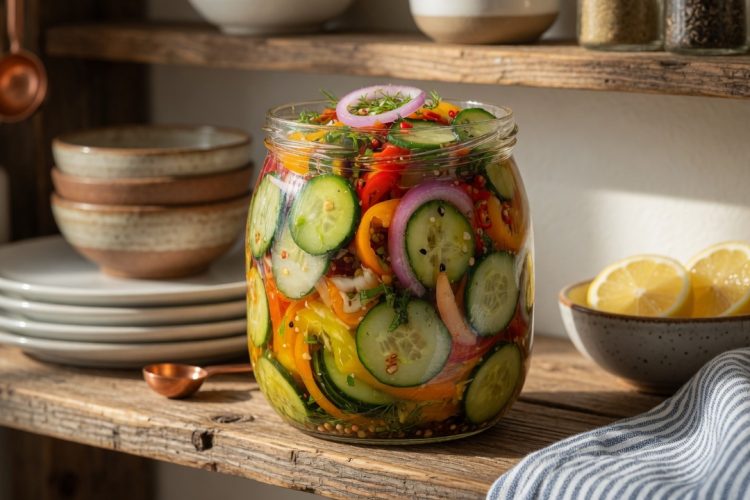
When you want a crisp, tangy side dish that stays fresh for weeks and gets better with time, this refrigerator cabbage slaw delivers exactly what you need. Unlike creamy coleslaw that can spoil quickly, this vinegar-based version uses a sweet and sour brine to preserve shredded cabbage, carrots, onions, and cucumbers while creating bright, refreshing flavors. The vegetables stay crunchy even after days in the refrigerator, and the simple preparation requires no special canning equipment or complicated techniques. You just mix fresh vegetables, pour warm brine over them, seal the jars, and let the refrigerator do the work of developing the flavors over time.
Why Vinegar Slaws Last Longer
Understanding how this slaw stays fresh for weeks helps you appreciate why it’s such a practical recipe. The vinegar creates an acidic environment that prevents bacteria from growing, which is the same principle behind pickles and other preserved vegetables. The salt in the brine also draws out moisture from the vegetables while adding flavor, and the sugar balances the sharp acidity of the vinegar to create a pleasant sweet-and-sour taste. Unlike mayonnaise-based slaws that can develop harmful bacteria and spoil within days, vinegar slaws remain safe to eat for much longer when kept refrigerated. This makes them perfect for meal preparation, large gatherings, or anyone who wants healthy vegetables ready to eat throughout the week.
Choosing Fresh Vegetables for Best Results
The quality of vegetables you start with directly affects how good your finished slaw tastes and how long it stays crisp. Look for cabbage heads that feel heavy for their size with tight, crisp leaves and no brown spots or soft areas. Fresh carrots should snap cleanly when bent rather than bending without breaking, which indicates they’re not dried out. Onions should be firm with dry, papery skin and no soft spots or sprouting. Cucumbers should be firm all the way through without any soft or mushy areas. Using vegetables at their peak freshness ensures they’ll maintain their crunch even after absorbing the vinegar brine for days or weeks.
Cutting Vegetables to the Right Size
How you slice your vegetables makes a noticeable difference in both appearance and texture. Shredding the cabbage into thin strips allows it to pack efficiently into jars while creating lots of surface area for absorbing the flavorful brine. Cutting carrots into thin rounds or matchsticks ensures they soften slightly without becoming mushy. Slicing onions into very thin half-moons allows them to mellow in the vinegar without dominating the flavor. Keeping cucumber slices uniform in thickness helps them pickle evenly. If your slices are too thick, they won’t absorb enough brine and will taste bland, while pieces that are too thin might become limp instead of staying crisp.
Understanding the Brine Components
Each ingredient in the brine serves a specific purpose in creating the perfect flavor balance. White vinegar provides clean, sharp acidity without any additional flavors that could compete with the vegetables. The sugar counteracts the sourness and creates that classic sweet-and-sour taste people expect from refrigerator slaws. Salt enhances all the other flavors while helping preserve the vegetables and drawing out excess moisture. Black pepper adds subtle warmth and complexity. Mustard seeds contribute tiny bursts of tangy, slightly spicy flavor when you bite into them. Celery seeds bring an earthy, slightly bitter note that rounds out the overall taste. Water dilutes the vinegar to a pleasant strength that flavors the vegetables without being overwhelmingly sour.
Preparing the Brine Correctly
Making the brine requires just a few simple steps, but doing them correctly ensures the best flavor development. Combining all the brine ingredients in a saucepan and heating them together allows the sugar and salt to dissolve completely, which is important because undissolved sugar crystals or salt granules would create uneven flavoring. Stirring continuously while heating prevents the sugar from settling on the bottom and potentially burning. Bringing the mixture to a gentle simmer rather than a rolling boil preserves the fresh, bright taste of the vinegar. Letting the brine cool slightly before pouring it over the vegetables prevents the hot liquid from cooking them, which would make them soft instead of crisp.
Packing Jars for Maximum Freshness
The way you fill your jars affects how well the vegetables pickle and how long they stay good. Using clean glass jars with tight-fitting lids prevents contamination and keeps the brine from leaking. Packing the vegetables firmly but not crushing them ensures you can fit plenty into each jar while leaving room for the brine. Pressing down gently as you fill eliminates large air pockets that could prevent even pickling. Leaving about half an inch of space at the top allows room for the brine to cover everything completely. Making sure all vegetables stay submerged under the liquid prevents exposed pieces from drying out or developing mold.
Removing Air Bubbles
After filling jars with vegetables and brine, releasing trapped air bubbles helps ensure proper preservation and even flavoring. Air pockets can create spaces where vegetables aren’t fully covered by brine, which leads to uneven pickling and potential spoilage. Running a clean knife or chopstick around the inside edges of each jar releases these bubbles and allows the brine to settle into all the spaces between vegetables. You might need to add a bit more brine after removing bubbles since the liquid level often drops. This simple step takes only a few seconds per jar but makes a real difference in the quality of your finished slaw.
Allowing Time for Flavor Development
While you could technically eat this slaw immediately after making it, patience really pays off with this recipe. During the first 24 hours, the vegetables begin absorbing the brine and the flavors start melding together, but they haven’t fully developed yet. After two to three days, the vegetables have absorbed enough brine to taste fully flavored throughout, and the sweetness, acidity, and seasonings have blended into a harmonious whole. The vegetables also soften very slightly while maintaining their essential crunch, creating the perfect texture. Many people find the slaw tastes even better after a week in the refrigerator as the flavors continue deepening and mellowing.
Serving This Slaw with Different Meals
The versatility of this refrigerator slaw means you can serve it alongside countless different main dishes and meal types. For barbecues and cookouts, it pairs perfectly with grilled meats, burgers, hot dogs, and pulled pork sandwiches. The tangy acidity cuts through rich, fatty foods and refreshes your palate between bites. At weeknight dinners, a scoop of slaw adds color and crunch to simple roasted chicken, pork chops, or fish. The slaw also works as a topping for tacos, a filling for wraps, or a layer in sandwiches where its crisp texture provides contrast. Some people even enjoy it straight from the jar as a healthy snack.
Customizing with Additional Vegetables
Once you’ve made the basic recipe, experimenting with different vegetables keeps things interesting and lets you use whatever you have available. Adding thinly sliced red cabbage creates beautiful purple streaks throughout the slaw while providing the same crisp texture as green cabbage. Radishes contribute peppery flavor and pretty pink or red color. Bell peppers add sweetness and crunch in green, red, yellow, or orange. Cauliflower florets pickle nicely and offer a different texture. Thinly sliced celery brings a fresh, green flavor. Each addition changes the character of the slaw slightly while maintaining the refreshing vinegar-based profile.
Adjusting Sweetness and Acidity
Everyone has different preferences for how sweet or tangy they like their slaw, and this recipe is easy to adjust. If you prefer a sweeter version, increase the sugar by a quarter cup or more until it matches your taste. For a more tart, pickle-like flavor, add extra vinegar or reduce the sugar slightly. Tasting the brine before you pour it over the vegetables lets you make these adjustments easily. Keep in mind that the vegetables will dilute the flavors somewhat as they release their natural juices, so the brine should taste slightly stronger than you want the final product. You can always adjust the seasoning by making a small amount of fresh brine and adding it to the jars if needed.
Adding Herbs and Spices
Beyond the basic mustard seeds and celery seeds, various herbs and spices can enhance the flavor profile of your slaw. Adding a few crushed garlic cloves to each jar creates a savory note that complements the sweet-sour base. Red pepper flakes bring gentle heat that builds gradually. Whole coriander seeds contribute lemony, slightly sweet flavor. Fresh dill fronds add an herbal, pickle-like taste. Bay leaves provide subtle depth. A small piece of fresh ginger adds warmth and complexity. Experiment with small batches using different seasonings to find your favorite combinations, then make larger quantities of your preferred version.
Maintaining Food Safety
While the vinegar in this recipe helps preserve the vegetables, following basic food safety practices ensures your slaw stays safe to eat for the full storage time. Always start with clean jars and utensils to prevent introducing bacteria. Keep the slaw refrigerated at all times rather than leaving it at room temperature for extended periods. When serving, remove only the portion you plan to eat rather than taking out the whole jar repeatedly, which allows it to warm up. Use clean utensils every time you remove slaw from the jar rather than eating directly from it or using utensils that have touched your mouth. Watch for signs of spoilage like off smells, unusual colors, cloudiness, or mold.
Using Different Types of Vinegar
While this recipe calls for white vinegar, understanding how other vinegars would change the flavor helps you make informed substitutions. White vinegar has a clean, sharp taste without additional flavors, which creates the most neutral base for the vegetables. Apple cider vinegar adds a fruity note and slightly mellower acidity that some people prefer. Rice vinegar brings gentle sweetness and works especially well in Asian-inspired variations. White wine vinegar offers subtle complexity without being as sweet as apple cider vinegar. Avoid very strong vinegars like malt or balsamic, which would overpower the vegetables. If you substitute a different vinegar, start with the same amount and adjust based on taste.
Scaling the Recipe
This recipe is easy to double, triple, or cut in half depending on how much slaw you need. If you’re making slaw for a large gathering or want to stock up for several weeks, simply multiply all ingredients by the same amount. You’ll need more jars and a larger pot for the brine, but the preparation method stays the same. For smaller households or if you want to try the recipe before committing to a large batch, cut all ingredients in half. The pickling time remains the same regardless of batch size. Making multiple smaller batches with different vegetable or seasoning combinations lets you create variety without preparing huge quantities.
Understanding Nutritional Benefits
This vinegar-based slaw provides several nutritional advantages beyond just tasting good. Cabbage is low in calories but high in vitamin C and vitamin K, plus it contains fiber that supports digestive health. Carrots contribute beta-carotene, which your body converts to vitamin A for eye health and immune function. The vegetables retain most of their nutrients even after pickling. Because this slaw doesn’t contain mayonnaise or oil, it’s naturally low in fat and lighter than creamy coleslaws. The vinegar may help with blood sugar regulation and digestion. While the sugar and salt mean this isn’t a low-calorie or low-sodium food, reasonable portions fit well into most healthy eating patterns.
Troubleshooting Common Issues
Sometimes refrigerator slaw doesn’t turn out quite right, but understanding what went wrong helps you fix it. If your slaw is too sour, you used too much vinegar or not enough sugar, so add a bit more sugar to the brine. Slaw that’s too sweet needs more vinegar to balance the flavors. Vegetables that become soft and mushy were either cut too thin, the brine was too hot when poured over them, or they’ve been stored too long. Slaw that tastes bland needs more time to develop flavor or didn’t have enough salt and seasonings in the brine. If the liquid becomes cloudy, this is often normal as vegetables release their juices, but excessive cloudiness combined with off odors means spoilage.
Creative Ways to Use Leftover Slaw
If you find yourself with more slaw than you can eat as a simple side dish, there are many creative ways to incorporate it into other meals. Chop the pickled vegetables and mix them into potato salad or pasta salad for extra tang and crunch. Use the slaw as a topping for fish tacos or pulled pork tacos. Add it to grain bowls with rice or quinoa for acidity and texture. Mix it into tuna or chicken salad for a pickle-like element. Layer it in sandwiches or wraps. Stir it into scrambled eggs or omelets. Serve it alongside cheese and crackers. Each of these applications takes advantage of the slaw’s crisp texture and bright flavor while using it in new contexts.
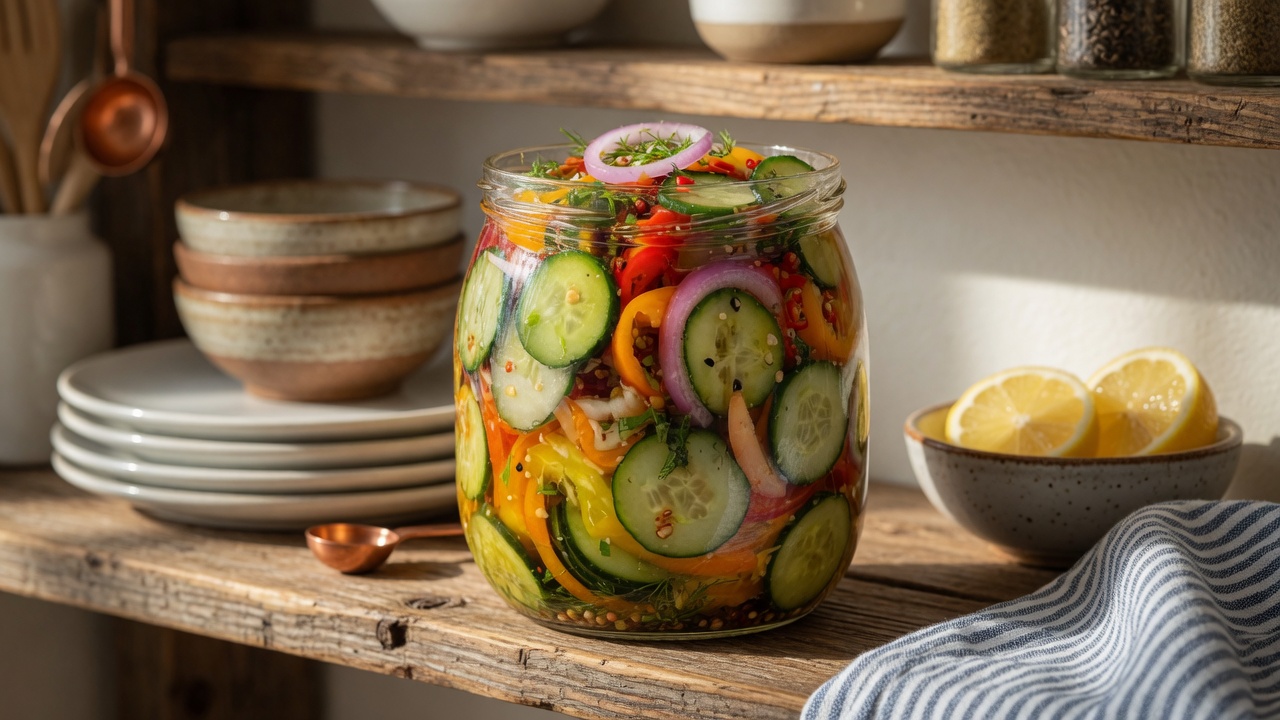
Classic Pickled Vegetable Slaw
Sweet and tangy vinegar-based slaw with shredded cabbage, carrots, onions, and cucumbers that stays crisp for weeks in the refrigerator and develops better flavor over time.
20
minutes10
minutes30
minutesIngredients
- Vegetables:
1 medium green cabbage, finely shredded
2 large carrots, peeled and thinly sliced
1 medium onion, thinly sliced
2-3 cucumbers, thinly sliced
- Brine:
2 cups white vinegar
1½ cups granulated sugar
1 tablespoon salt
1 teaspoon ground black pepper
1 teaspoon mustard seeds (optional but recommended)
½ teaspoon celery seeds (optional)
1 cup water
Directions
- Prepare vegetables: Remove outer leaves from cabbage, cut into quarters, and remove core. Shred cabbage thinly and place in a large mixing bowl. Add thinly sliced carrots, onion, and cucumbers. Toss vegetables together until evenly mixed.
- Make brine: Combine white vinegar, water, sugar, salt, black pepper, mustard seeds, and celery seeds in a medium saucepan. Heat over medium heat, stirring continuously until sugar and salt dissolve completely. Bring to a gentle simmer, then remove from heat and let cool for 5-10 minutes.
- Fill jars: Pack vegetable mixture firmly into clean glass jars, leaving about ½ inch of space at the top. Press down gently without crushing the vegetables.
- Add brine: Pour warm brine over packed vegetables, ensuring all vegetables are completely submerged. Run a clean knife around the inside edges to release air bubbles. Top off with additional brine if needed.
- Seal and refrigerate: Wipe jar rims clean, seal with tight-fitting lids, and let cool completely at room temperature. Refrigerate for 2-3 days before serving for best flavor development.
Notes
- Slice all vegetables thinly and evenly for consistent texture and flavor absorption
- Allow 2-3 days in refrigerator for flavors to fully develop before serving
- This is a refrigerator slaw, not shelf-stable; must be kept refrigerated at all times


