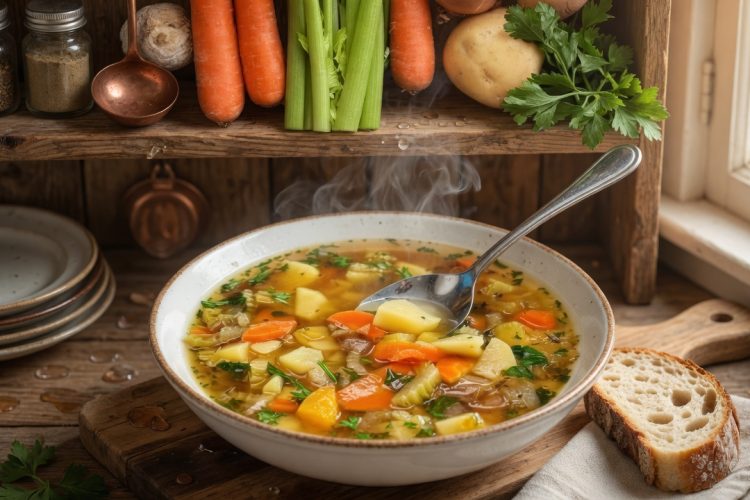
Making vegetable soup at home gives you control over what goes into your bowl. This recipe uses fresh vegetables, aromatic herbs, and a savory broth to create a meal that tastes better than anything from a can. The soup comes together in about an hour using ingredients you can find at any grocery store. You don’t need special cooking skills or expensive equipment, just a large pot and basic chopping ability. The result is a hearty soup that works as a main dish for lunch or dinner, and it costs much less per serving than restaurant meals or takeout options.
What Makes This Soup Taste So Good
The secret to great vegetable soup starts with building layers of flavor. Cooking onions, carrots, and celery first creates a base that French cooks call mirepoix, which adds depth to countless dishes. Adding garlic near the end of this step prevents it from burning while releasing its smell throughout your kitchen. The vegetables then simmer in broth with dried herbs, allowing all the flavors to blend together naturally. Unlike creamy soups that rely on dairy for richness, this recipe gets its satisfying taste from the vegetables themselves as they release their natural sugars and starches into the liquid. Each ingredient contributes something different, creating a balanced soup that tastes complete.
Choosing Your Vegetables
This recipe includes a mix of vegetables that provide different textures and flavors. Carrots add sweetness and hold their shape during cooking. Celery brings a subtle savory note and pleasant crunch. Potatoes make the soup more filling and release starch that naturally thickens the broth. Zucchini cooks quickly and adds moisture without overpowering other ingredients. Green beans contribute a fresh snap and bright green color. Corn kernels provide bursts of sweetness. Peas finish the soup with vibrant color and a tender texture. Together these vegetables create variety in every spoonful, so the soup never tastes boring or one-dimensional.
The Right Broth Makes All the Difference
Vegetable broth forms the foundation of this soup, so quality matters. Store-bought vegetable broth works perfectly fine and saves time. Look for versions labeled low-sodium so you can control the salt level yourself. Some brands taste more flavorful than others, so try a few to find one you like. You can also make your own broth by simmering vegetable scraps like onion peels, carrot tops, celery leaves, and herb stems with water for about an hour. Homemade broth costs almost nothing and uses parts of vegetables you might otherwise throw away. Either option works, just avoid broths that taste too salty or have artificial flavors that compete with the fresh vegetables.
How to Cut Vegetables for Soup
The way you cut vegetables affects how the soup cooks and looks. Aim for pieces that are roughly the same size, which helps everything cook evenly. Carrots should be sliced into rounds or half-moons about a quarter inch thick. Celery gets cut into similar-sized pieces. Potatoes need to be cubed into chunks about half an inch across, small enough to become tender in the cooking time but large enough to maintain their shape. Dice the zucchini into pieces slightly smaller than the potatoes since it cooks faster. Cut green beans into one-inch lengths. Taking time to cut vegetables properly makes the finished soup look better and ensures you get a good mix of ingredients in each serving.
Building Flavor Step by Step
Great soup happens in stages rather than dumping everything into a pot at once. Start by heating olive oil over medium heat, which allows the first vegetables to cook gently without burning. The onions, carrots, and celery need about six minutes to soften, stirring them occasionally so they cook evenly. You’ll notice the onions become clear and the harder vegetables start to give when you press them with a spoon. Adding garlic at this point gives it just enough time to cook and smell wonderful without turning bitter. Next come the potatoes, zucchini, and green beans, which get a few minutes to start cooking before the liquid goes in. This layered approach develops more flavor than adding everything at once.
Getting the Simmer Right
Once you add the broth, tomatoes, and seasonings, the soup needs to come to a boil before you reduce the heat. A rolling boil means big bubbles breaking the surface across the whole pot. When you see this, turn the heat down to low so the soup barely bubbles. This gentle simmer cooks the vegetables through without making them fall apart. Cover the pot loosely, which holds in heat while allowing some steam to escape. The soup should simmer for about 25 to 30 minutes, giving the potatoes time to become tender and the flavors time to blend. Check the soup occasionally and adjust the heat if it’s bubbling too hard or not bubbling at all.
When to Add Quick-Cooking Vegetables
Some vegetables turn mushy if you cook them too long. Corn and peas only need about five minutes in hot soup to heat through while staying sweet and colorful. Adding them at the very end preserves their texture and bright appearance. Frozen peas work just as well as fresh ones for soup since they were frozen at peak freshness. The same goes for corn, whether you use fresh kernels cut from the cob, frozen corn, or even drained canned corn. These vegetables don’t need much cooking time, so patience pays off. Waiting to add them until the end makes your soup look and taste fresher.
Adjusting Seasoning to Your Taste
Recipes provide guidance, but your taste buds make the final decision. After the soup finishes cooking, remove the bay leaf and taste a spoonful. Think about what it needs. If it tastes flat, add more salt a little at a time, tasting after each addition. Black pepper adds a subtle heat that wakes up other flavors. Dried herbs can be increased if you want a stronger herbal note. Some people like adding a splash of lemon juice at the end, which brightens all the other flavors. Others prefer a pinch of red pepper flakes for gentle heat. Make the soup yours by adjusting it until it tastes exactly how you want.
Serving Your Soup
Presentation makes soup feel more special even though it’s simple food. Ladle the hot soup into bowls, making sure each serving gets a good mix of vegetables and broth. Fresh chopped parsley sprinkled on top adds color and a fresh herb flavor. Grated Parmesan cheese melts slightly into the hot soup and adds savory richness. Homemade or store-bought croutons provide a satisfying crunch. A few cracks of fresh black pepper from a mill tastes more complex than pre-ground pepper. Serve the soup with good bread on the side for dipping and soaking up every last drop. These small touches turn everyday soup into something that feels like a proper meal.
Making Soup Ahead of Time
Vegetable soup actually improves when made in advance. The flavors continue blending together as the soup sits, making it taste even better the next day. Let the soup cool to room temperature before transferring it to storage containers. Putting hot soup directly in the refrigerator raises the temperature inside, which can affect other foods. Once cooled, the soup keeps well in the refrigerator for up to five days. Make a big batch on Sunday and you have ready-made lunches or quick dinners throughout the week. Just reheat individual portions as needed, adding a splash of water or broth if the soup has thickened during storage.
Freezing Soup for Later
A freezer full of homemade soup means you always have a healthy meal ready. This vegetable soup freezes beautifully for up to three months. Use freezer-safe containers or heavy-duty freezer bags, leaving about an inch of space at the top since liquids expand when frozen. Label each container with the date so you know how long it’s been stored. Freeze in portion sizes that make sense for your household, whether that’s single servings or family-sized amounts. Thaw frozen soup overnight in the refrigerator, then reheat it gently on the stove or in the microwave. Having homemade soup in the freezer feels like a gift to your future self on busy or tired days.
Ways to Change This Recipe
The basic recipe works as written, but variations keep things interesting. For an Italian version, add a can of white beans like cannellini and finish with fresh basil and Parmesan. This makes the soup more filling and adds plant-based protein. If you want a heartier soup, stir in some cooked pasta or rice during the last few minutes. Barley makes the soup thick and satisfying, though it needs extra cooking time and additional broth. For a completely different flavor, go Southwestern by adding black beans, cumin, chili powder, and smoked paprika, then serve with avocado and cilantro. Each variation uses the same basic technique while creating a new taste experience.
Reducing Carbs in Your Soup
Some people prefer lower carbohydrate meals for health or diet reasons. You can easily adapt this soup by leaving out the potatoes and corn. Replace the potatoes with extra zucchini, cauliflower florets, or sliced mushrooms. These vegetables add bulk and texture without as many carbs. The soup will be slightly thinner without the starch from potatoes, but it still tastes delicious. Cauliflower especially works well because it becomes tender and mild, soaking up the flavors around it. Adding extra vegetables like bell peppers, cabbage, or spinach increases the nutrition and fiber while keeping carbohydrates lower. The soup remains filling because of all the fiber and the volume of food.
Understanding What’s in Your Bowl
This soup delivers solid nutrition without trying to be a superfood. Each serving contains about 145 calories, making it a light main dish or substantial side. The six grams of fiber in each bowl helps you feel full and supports digestive health. You get significant amounts of vitamin A from the carrots and tomatoes, which helps maintain healthy vision and immune function. Vitamin C from various vegetables acts as an antioxidant and supports skin health. The soup naturally contains very little fat and no saturated fat, which fits into heart-healthy eating patterns. Most of the carbohydrates come from vegetables and provide energy along with vitamins and minerals.
What to Serve Alongside Soup
Vegetable soup works as a complete meal by itself, but adding a few items makes it more substantial. Crusty bread is the classic pairing because it’s perfect for soaking up broth. Garlic bread adds extra flavor, while whole grain bread contributes more fiber and nutrients. A grilled cheese sandwich turns soup into a classic comfort food combination that kids and adults both enjoy. A simple green salad with light vinaigrette adds freshness and crunch. For extra protein, serve the soup with a slice of quiche, a hard-boiled egg, or some hummus with vegetables. These combinations create a balanced meal that satisfies different appetites and nutritional needs.
Common Questions About Vegetable Soup
People often wonder if they can use different vegetables than the recipe lists. The answer is absolutely yes. Vegetable soup is one of the most flexible recipes you can make. Use what you have on hand or what looks good at the market. Bell peppers, cabbage, spinach, kale, cauliflower, butternut squash, and mushrooms all work well. Just pay attention to cooking times since harder vegetables like squash need longer than leafy greens. Another question involves making the soup vegan, which it already is if you skip the Parmesan garnish. The recipe contains no animal products in the base. Some people ask about using chicken broth instead of vegetable broth, which works fine if you’re not vegetarian and changes the flavor slightly.
How Soup Fits Into Healthy Eating
Including soup in your regular meal rotation supports several health goals. The high water content helps with hydration, which many people struggle to maintain. The variety of vegetables means you’re getting different vitamins, minerals, and plant compounds in one dish. Starting a meal with soup can help you eat more slowly and feel satisfied with less food overall. The fiber from all the vegetables supports steady blood sugar rather than spikes and crashes. Making soup at home means you control the sodium level, unlike restaurant versions or canned soups that often contain excessive salt. These benefits make vegetable soup a smart choice for anyone trying to eat better without feeling deprived.
Getting Kids to Eat Vegetable Soup
Children sometimes resist eating vegetables, but soup can help. The familiar broth makes vegetables less intimidating than serving them plain on a plate. Cutting vegetables into fun shapes or letting kids help with simple tasks like measuring makes them more interested in eating what they helped create. Some kids prefer their soup blended smooth, which you can do partially or completely with an immersion blender. Others like finding specific vegetables like corn or peas and eating those first. Serving soup with bread for dipping makes it interactive and fun. Being patient and offering soup repeatedly without pressure helps children develop a taste for it over time.
The Money You Save Making Soup
Homemade vegetable soup costs significantly less per serving than buying lunch out or ordering takeout. The ingredients for eight servings total around ten to twelve dollars depending on where you shop, making each portion about a dollar and fifty cents. Compare that to restaurant soup at six to eight dollars per bowl or canned organic soup at four dollars for two servings. The cost drops even more if you buy vegetables on sale, shop at discount grocers, or use vegetables from your garden. Making a big batch and freezing portions means you’re creating your own healthy convenience food for a fraction of store-bought prices.
Why One Pot Makes Everything Easier
Single-pot cooking saves time and effort in ways that matter. You dirty fewer dishes, which means less cleanup after cooking. Everything cooks together, so you’re not managing multiple burners or appliances. The pot can go from stovetop to refrigerator once the soup cools, eliminating the need to transfer food between containers. One pot also means simpler cooking since you’re building everything in the same place rather than coordinating different components. This simplicity makes vegetable soup realistic for busy weeknights when you want homemade food without spending hours in the kitchen or facing a sink full of dishes afterward.
Using Your Leftovers
Leftover vegetable soup has uses beyond reheating it in a bowl. Blend it smooth and use it as a sauce for pasta or grain bowls. Add cooked chicken, beans, or lentils to transform it into a more protein-rich meal. Serve it over rice or quinoa to make it heartier. Use it as a cooking liquid for grains instead of plain water, which adds flavor. Pour it over roasted vegetables for extra moisture and taste. Freeze it in ice cube trays, then pop out the cubes to use for adding flavor to other dishes. These creative uses mean nothing goes to waste and you get more variety from your cooking efforts.
Vegetable Healthy Soup
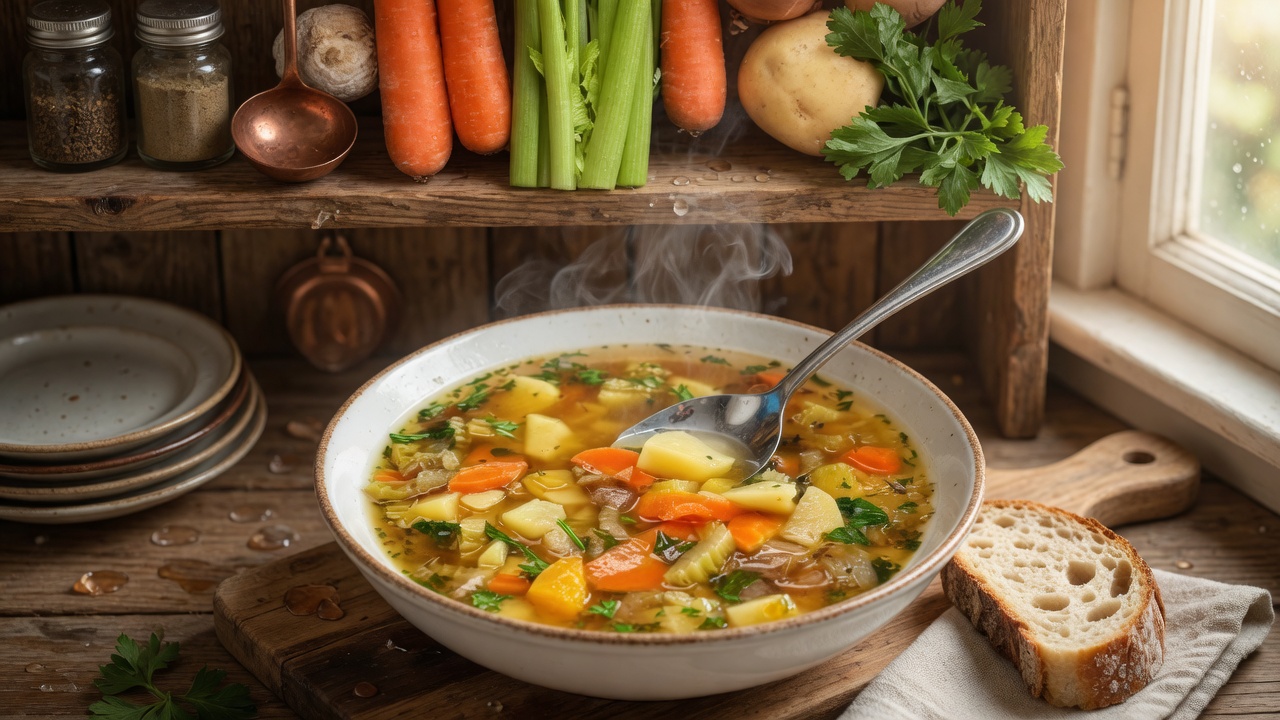
A hearty, healthy vegetable soup made with fresh carrots, celery, potatoes, zucchini, green beans, corn, and peas in a savory herb-infused broth. Perfect for meal prep, family dinners, or anyone wanting more vegetables in their diet.
8
servings20
minutes40
minutes145
kcal1
hourIngredients
2 tablespoons extra virgin olive oil
1 medium yellow onion, diced
3 garlic cloves, minced
3 medium carrots, sliced
3 celery stalks, sliced
2 medium potatoes, peeled and cubed
1 medium zucchini, diced
1 cup green beans, cut into bite-sized pieces
1 can (14.5 ounces) diced tomatoes
8 cups vegetable broth
1 cup corn kernels
1 cup frozen peas
1 teaspoon dried thyme
1 teaspoon dried oregano
1 bay leaf
1 teaspoon salt
½ teaspoon black pepper
Directions
- Cook the aromatics: Heat olive oil in a large pot over medium heat. Add diced onion, sliced carrots, and sliced celery. Cook for 6 minutes, stirring occasionally, until vegetables soften. Add minced garlic and cook 1 minute more until fragrant.
- Add main vegetables: Stir in cubed potatoes, diced zucchini, and green beans. Cook together for 3 minutes, stirring occasionally to combine everything.
- Add liquids and seasonings: Pour in vegetable broth and diced tomatoes with their juices. Add thyme, oregano, bay leaf, salt, and black pepper. Stir well and bring to a boil over high heat.
- Simmer the soup: Once boiling, reduce heat to low. Cover pot loosely and simmer for 25 to 30 minutes until potatoes are tender and vegetables are cooked through.
- Finish and season: Add corn kernels and frozen peas. Simmer for 5 minutes more. Remove bay leaf. Taste and adjust salt and pepper as needed.
- Serve: Ladle hot soup into bowls. Top with fresh parsley, Parmesan cheese, or croutons if desired. Serve with crusty bread.
Notes
- Cutting Vegetables: Cut all vegetables into similar-sized pieces so they cook evenly. Uniform pieces also make the soup look better and ensure you get a good mix in each spoonful.
- Cutting Vegetables: Cut all vegetables into similar-sized pieces so they cook evenly. Uniform pieces also make the soup look better and ensure you get a good mix in each spoonful.
- Make Ahead: The flavor improves when made a day in advance as herbs continue to infuse the broth overnight.
- Variations: Add canned white beans and Italian seasoning for Italian vegetable soup. Add cooked barley with extra broth for a heartier version. Add black beans, cumin, and chili powder for Southwestern flavor.
Nutrition Facts
- Calories: 145kcal
- Fat: 3g
- Carbohydrates: 28g
- Fiber: 6g
- Sugar: 7g
- Protein: 4g


