
Easy vegetable gratin is a comforting oven-baked dish made with tender vegetables, a creamy garlic and herb sauce, and melted cheese. This simple vegetable casserole is a practical choice for a family dinner because it uses familiar ingredients and requires only a few basic cooking steps. Potatoes, carrots, cauliflower, and peas create a colorful mixture that becomes tender and flavorful beneath a golden cheese topping.
Why This Vegetable Gratin Works
This easy vegetable gratin works because each ingredient brings something useful to the finished dish. Potatoes make it filling, carrots add natural sweetness, cauliflower provides a mild vegetable flavor, and peas bring color and a slightly sweet taste. The creamy sauce coats everything, while the cheese forms a golden layer on top. Together, these elements create a warm and satisfying casserole.
A Good Weeknight Dinner
A busy evening often calls for a recipe that is simple without feeling plain. This vegetable casserole fits that need because the vegetables require only brief preparation before being combined with the sauce. Once the casserole is assembled, the oven takes care of the final cooking. That makes it a useful option when you want a homemade dinner without spending hours preparing several separate dishes.
Potatoes Add Heartiness
Potatoes are an important part of this vegetable gratin because they make the dish more substantial. Cutting them into bite-sized pieces allows them to cook evenly and makes them easy to serve. They are briefly cooked before baking so they have a head start. This helps prevent the potatoes from remaining firm while the cheese topping becomes fully melted and golden in the oven.
Carrots Add Natural Sweetness
Carrots provide a gentle sweetness that balances the rich creamy sauce. They also give the casserole an attractive color. Thinly sliced carrots are useful because they cook relatively quickly and can become tender at the same time as the other prepared vegetables. Their mild flavor works particularly well with potatoes, cauliflower, cream cheese, and melted cheese.
Cauliflower Absorbs the Sauce
Cauliflower is especially suitable for a creamy vegetable bake because its florets hold onto the sauce. Cut the cauliflower into reasonably even pieces so they cook consistently. Once baked, the cauliflower becomes tender while retaining enough structure to give the casserole texture. Its mild taste allows the garlic and herb cream cheese sauce to provide much of the flavor.
Frozen Peas Add Color
Frozen peas make this casserole even easier to prepare because they do not require separate cooking in the supplied method. They can be added to the prepared vegetables before the sauce is mixed through. The peas warm during baking and contribute a fresh green color. Their mild sweetness also provides a pleasant contrast to the creamy and savory ingredients.
Making the Creamy Sauce
The creamy sauce brings the vegetables together and gives the gratin its rich texture. It begins with butter and flour, which form a simple roux. Vegetable broth is then incorporated gradually while stirring. This creates a smooth base that can coat the vegetables. Garlic and herb cream cheese adds both creaminess and seasoning, helping the sauce develop its characteristic flavor.
Using a Simple Roux
A roux is made by combining melted butter with flour. Cooking these ingredients together creates the base needed to thicken the sauce. The vegetable broth should be added gradually while stirring so the mixture remains smooth. Taking a little care at this stage helps prevent lumps and produces a sauce that spreads evenly through the vegetables.
Adding Garlic and Herb Cream Cheese
Garlic and herb cream cheese makes the sauce convenient because it combines creaminess, garlic flavor, and herbs in one ingredient. Once the broth and roux have formed a smooth mixture, stir in the cream cheese until it is fully incorporated. The result should be creamy enough to coat the vegetables without being overly thick.
Alternative Cream Cheese Options
The supplied source notes that vegan or low-fat cream cheese can also be used. These alternatives may change the texture or richness of the sauce depending on the product. If using an alternative, mix it thoroughly into the sauce and check the consistency before combining it with the vegetables. The goal is still to have enough sauce to coat the vegetables evenly.
Choosing the Cheese Topping
A gratin needs a good cheese topping because it provides the golden finish that makes the dish so appealing. Gouda is recommended because it melts smoothly and develops a pleasant golden surface. Cheddar or another grated cheese can also be used according to preference. The cheese should be spread evenly across the top so that the casserole browns consistently during baking.
Preparing the Vegetables
Begin by preparing the potatoes, carrots, and cauliflower. Peel the potatoes and cut them into bite-sized pieces. Peel and slice the carrots, then divide the cauliflower into florets. The vegetables should be reasonably similar in size where possible. This helps them cook more evenly and makes every serving easier to eat.
Briefly Cooking the Vegetables
The vegetables are briefly cooked in water before they are placed in the casserole. This step is important because it gives the vegetables a head start. They should become partly tender without being completely soft. Overcooking them before baking can cause them to lose their structure, so remove them from the water once they are just tender.
Preparing the Baking Dish
Once the vegetables are ready, place them into a suitable casserole dish. Add the frozen peas and spread everything out evenly. Preparing the vegetables in an even layer makes it easier to distribute the sauce. The baking dish should have enough space for the vegetables and sauce without being filled so high that the cheese topping becomes difficult to spread.
Combining the Sauce and Vegetables
Pour the creamy garlic and herb sauce over the vegetables. Gently mix everything so the sauce reaches the potatoes, carrots, cauliflower, and peas. Avoid stirring too aggressively because the partly cooked vegetables can break apart. Even coating is important because it ensures that the creamy flavor is distributed throughout the casserole rather than sitting only on top.
Adding the Cheese
After the vegetables have been coated with the sauce, sprinkle the grated cheese evenly over the surface. This final layer creates the characteristic gratin topping. During baking, the cheese melts into a smooth layer and develops golden areas around the edges and surface. The contrast between the creamy vegetables and melted cheese is one of the best features of the dish.
Baking the Vegetable Gratin
Place the assembled casserole into the preheated oven and bake until the cheese is melted and golden. The baking stage allows the vegetables to finish cooking while the sauce becomes hot and creamy. Since the vegetables have already been partially cooked, the oven mainly brings the ingredients together and develops the cheese topping.
Serving Vegetable Gratin
Serve the vegetable gratin warm while the sauce is creamy and the cheese topping is still enjoyable. It can be spooned directly from the casserole into bowls or onto plates. The potatoes make it filling enough to work as a vegetarian main dish. The same casserole can also be served in smaller portions as a side dish with a protein.
What to Serve With It
This vegetable bake pairs well with fish, Schnitzel, meatballs, and other protein-based meals. Its creamy texture works particularly well with simple proteins because the gratin provides the vegetables and a rich sauce in the same dish. For a vegetarian meal, it can be served on its own. A simple salad can also provide a fresh contrast to the warm casserole.
A Family-Friendly Vegetable Dish
The creamy sauce and melted cheese make this an approachable way to serve several vegetables together. Potatoes provide a familiar base, while carrots and peas add mild sweetness. Cauliflower becomes tender and blends naturally with the sauce. This combination can be useful when preparing dinner for people who prefer familiar flavors rather than strongly seasoned vegetable dishes.
Preparing the Gratin Ahead
The casserole can be assembled ahead of time, which makes it useful for meal preparation. According to the supplied source, it can be prepared up to two days in advance. Cover the assembled dish tightly and refrigerate it until needed. Preparing the dish ahead means the final baking stage can be completed closer to mealtime.
Baking a Chilled Casserole
A refrigerated gratin needs additional time in the oven because the center starts cold. The supplied source recommends allowing around 10 extra minutes of baking time. If possible, letting the casserole sit at room temperature for about 20 to 30 minutes before baking can help it heat more evenly. Do not leave it unrefrigerated for longer than necessary.
Storing Leftovers
Leftover vegetable gratin can be stored in an airtight container in the refrigerator for up to four days. Proper storage helps maintain the flavor and texture of the cooked vegetables and sauce. The casserole can be reheated when needed for another meal. Because the sauce may thicken after chilling, reheating should be done gently.
Reheating Vegetable Gratin
The oven is a good choice for reheating because it warms the casserole evenly and helps maintain the cheese topping. A microwave can also be used when convenience is more important. If the sauce becomes too thick after refrigeration, the supplied source suggests adding a small splash of milk to help restore moisture and creaminess.
Freezing the Casserole
Freezing is not recommended for this recipe. Cream-based sauces can separate during freezing and thawing, which may affect the smooth texture of the finished gratin. For the best result, prepare the amount you expect to eat within several days and refrigerate leftovers instead. Preparing the casserole ahead for up to two days is a better option than freezing it.
Making a Budget-Friendly Meal
Potatoes, carrots, cauliflower, and peas are practical vegetables for an affordable homemade dinner. Combining several vegetables in one casserole also makes it easier to create a substantial meal without needing many additional dishes. The creamy sauce and cheese provide richness, while the vegetables give the casserole bulk and variety. This makes the recipe useful for everyday family cooking.
Adjusting the Vegetable Selection
The supplied recipe focuses on potatoes, carrots, cauliflower, and peas. These vegetables provide a good combination of textures and colors. When preparing the original recipe, keep the listed ingredients unchanged. If variations are made separately, other vegetables can be considered according to availability, but they should not replace the original ingredients when following the supplied recipe exactly.
Keeping the Vegetables Tender
The vegetables should be briefly boiled rather than fully cooked before baking. This is an important balance. If they are too firm, they may not become tender enough during the baking stage. If they are too soft, they can lose their shape when mixed with the sauce. Removing them from the water when just tender gives them enough structure to finish properly in the oven.
Getting a Smooth Sauce
The smoothness of the sauce depends largely on how the vegetable broth is added. Pour it in gradually while stirring the roux continuously. This helps the flour blend evenly into the liquid. Once the sauce is smooth, add the garlic and herb cream cheese and continue stirring until it has fully melted into the mixture. Season with salt and pepper as specified in the source.
Getting a Golden Cheese Top
Spread the grated cheese evenly over the entire surface of the casserole. A consistent layer helps the top melt and brown evenly. Watch the casserole toward the end of baking because cheese can move from golden to overly dark if left in the oven too long. The ideal topping should be melted with golden areas while the vegetables underneath remain creamy.
Notes for Better Results
Prepare the vegetables in evenly sized pieces, cook them only until just tender, and drain them well before assembling the casserole. Add the broth gradually when making the sauce to reduce the chance of lumps. Mix the cream cheese thoroughly into the sauce before combining it with the vegetables. For make-ahead preparation, refrigerate the assembled casserole and allow extra baking time when starting from cold.
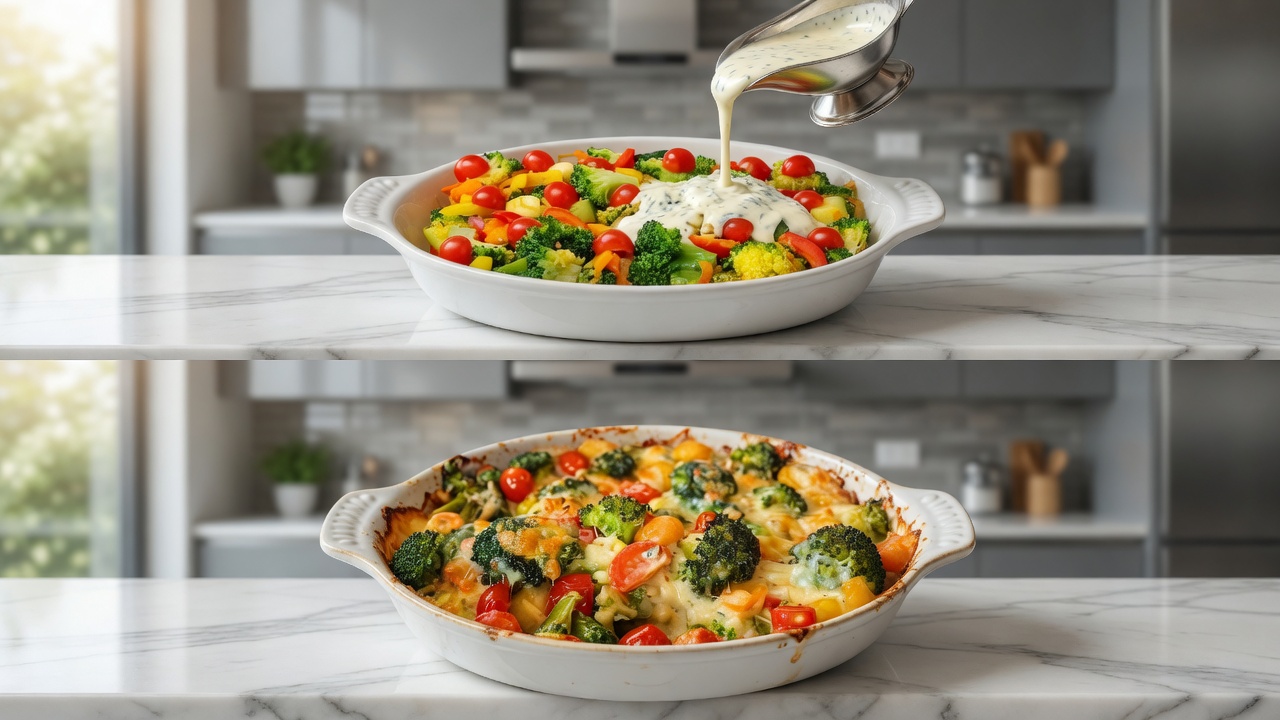
Ultimate Low Calorie Vegetable Bake
This easy vegetable gratin is a comforting German-style vegetable bake made with tender potatoes, carrots, cauliflower, and peas coated in a creamy garlic and herb cheese sauce.
4
servings10
minutes30
minutes386
kcal40
minutesIngredients
500 g (1 lb) potatoes, peeled and cut into bite-sized pieces (waxy or starchy potatoes both work well)
3 carrots (about 200 g / 7 oz), peeled and thinly sliced
500 g (1 lb) cauliflower florets (about ½ head of cauliflower)
150 g (1½ cups) frozen peas
2 tablespoons butter (30 g / 1 oz)
30 g (¼ cup) all-purpose flour
500 ml (2 cups) beef broth
120 g (½ cup) garlic and herb cream cheese
Salt, to taste
Black pepper, to taste
120 g (1 cup) grated cheese (Gouda, cheddar, or your preferred melting cheese)
Directions
- Preheat the oven to 200°C (400°F).
- Boil the potatoes, carrots, and cauliflower in salted water for 10 minutes until just tender. Drain well.
- Melt the butter in a saucepan, stir in the flour, then gradually whisk in the beef broth. Add the garlic and herb cream cheese, and season with salt and black pepper.
- Place the cooked vegetables and frozen peas in a casserole dish. Pour the sauce over and gently mix to coat.
- Sprinkle the grated cheese evenly over the top.
- Bake for 20 minutes, or until the cheese is melted and golden
- Let the gratin rest for a few minutes before serving warm.
Notes
- Garlic and herb cream cheese adds flavor without needing extra herbs.
- Gouda melts beautifully, but cheddar or another favorite melting cheese also works well.
- Frozen peas can be added directly to the casserole without cooking first.
- Avoid overcooking the vegetables during boiling since they will continue cooking in the oven.
- Stir the broth into the roux gradually to keep the sauce smooth.
Nutrition Facts
- Calories: 386kcal
- Fat: 17g
- Saturated Fat: 10g
- Trans Fat: 0.2g
- Polyunsaturated Fat: 1g
- Monounsaturated Fat: 4g
- Cholesterol: 45mg
- Sodium: 792mg
- Potassium: 1239mg
- Carbohydrates: 44g
- Fiber: 9g
- Sugar: 8g
- Protein: 17g
- Vitamin A: 8410mcg
- Vitamin C: 103mg
- Calcium: 290mg
- Iron: 3mg


