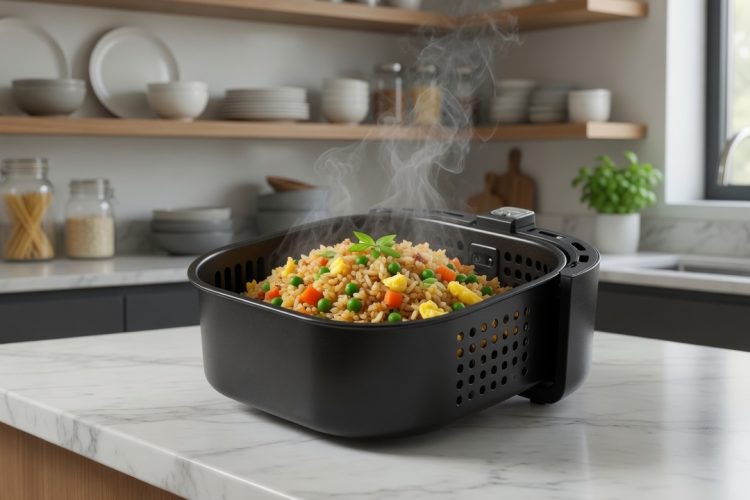
Fried rice in an air fryer is a game changer for busy weeknight dinners. This method creates crispy edges and perfectly separated grains without standing over a hot wok. You only need a handful of simple ingredients and less than 20 minutes total time. The air fryer does all the work while you prepare other parts of your meal. This recipe uses cold leftover rice, which is actually the secret to the best fried rice texture.
Why Cold Rice Makes Better Fried Rice
Using freshly cooked rice leads to mushy, sticky fried rice that clumps together. Cold rice from the refrigerator has dried out slightly, making the grains separate easily. The firm texture of day-old rice holds up better to the heat and stirring. Rice that has been refrigerated overnight develops the ideal consistency for frying. If you only have fresh rice, spread it on a baking sheet and refrigerate for at least an hour before using.
Benefits of Making Fried Rice in an Air Fryer
The air fryer circulates hot air around the rice, creating crispy bits without deep frying. You use much less oil compared to traditional wok-fried rice. There’s no need to stand over the stove stirring constantly to prevent burning. The basket design allows excess moisture to escape, preventing soggy rice. Cleanup is easier since you only use one cooking vessel instead of multiple pans. The high heat creates those delicious crispy edges that everyone loves.
Essential Ingredients for Basic Fried Rice
White rice forms the base of this dish and should always be cooked and chilled beforehand. Sesame oil provides authentic Asian flavor and helps crisp up the rice. Soy sauce adds salty, savory flavor and gives the rice its characteristic brown color. Garlic powder seasons the rice without the need for mincing fresh garlic. Frozen peas and carrots add color, nutrition, and classic fried rice texture. White onion brings sweetness and a slight bite to balance the other flavors.
The Role of Eggs in Fried Rice
Eggs add protein and richness to turn fried rice into a complete meal. The traditional method involves scrambling eggs separately, but this recipe simplifies the process. Cooking the eggs directly in the rice creates ribbons of cooked egg throughout. The egg whites need to set completely before stirring to avoid raw egg mixing in. Breaking up the cooked eggs and mixing them through adds texture and flavor. Two eggs for four servings provides enough protein without overwhelming the rice.
Choosing the Right Type of Rice
Long-grain white rice works best because the grains stay separate and don’t get mushy. Jasmine rice is a popular choice for its slightly sticky texture and fragrant aroma. Basmati rice creates a drier, fluffier fried rice with distinct grains. Medium-grain rice can work but tends to be stickier than long-grain varieties. Avoid short-grain sushi rice as it becomes too sticky for fried rice. Day-old takeout rice is actually perfect for making fried rice at home.
Understanding Sesame Oil Varieties
Toasted sesame oil has a dark color and strong, nutty flavor. A little goes a long way, so two tablespoons is plenty for this recipe. Light sesame oil has a milder flavor and lighter color. Using all sesame oil creates authentic flavor, but you can mix it with vegetable oil if desired. Don’t substitute with olive oil as it has a completely different flavor profile. Store sesame oil in the refrigerator after opening to keep it fresh longer.
Preparing Your Air Fryer Basket
Lining the basket with parchment paper prevents rice from falling through the holes. Use parchment designed for air fryers with pre-cut holes for proper air circulation. You can also use a reusable silicone liner made specifically for air fryers. Skip regular parchment without holes as it blocks airflow and affects cooking. Some people cook directly in the basket, but this can be messy to clean. A liner makes cleanup much faster and easier.
Mixing Ingredients Before Cooking
Combine all the ingredients except the eggs before adding to the air fryer. Tossing everything together ensures even distribution of flavors and seasonings. The sesame oil and soy sauce need to coat all the rice grains. Mix the vegetables throughout so they cook evenly with the rice. Spread the mixture in an even layer to promote uniform cooking. Don’t pile the rice too high or the top won’t cook properly.
Temperature and Initial Cooking Time
Setting the air fryer to 400°F provides enough heat to crisp the rice. The first cooking phase of 6 minutes starts the crisping process. This high temperature evaporates excess moisture and begins browning the rice. Different air fryer models may vary slightly in cooking time. Watch your rice carefully the first time you make this recipe. You can adjust the timing for your specific air fryer after testing.
Stirring and Creating a Well for Eggs
After the first 6 minutes, pull out the basket and stir the rice thoroughly. Stirring redistributes the rice so different grains get exposed to direct heat. Push the rice to the sides to create an empty space in the center. This well is where you’ll pour the whisked eggs. Beat the eggs in a small bowl until the yolks and whites are completely combined. Pour the eggs into the well you created in the rice.
Cooking the Eggs Properly
The eggs need 4 to 5 minutes to set in the hot air fryer. Don’t stir during this time or you’ll end up with raw egg mixed through the rice. The egg whites should be completely opaque and firm before you proceed. The yolks will still be slightly soft, which is fine. Once set, use a spatula to break the cooked eggs into smaller pieces. Stir the egg pieces throughout the rice to distribute evenly.
Final Cooking and Crisping
Cook for another 1 to 2 minutes after mixing in the eggs. This final cooking time allows everything to heat through and crisp up more. The edges of the rice should be golden and slightly crunchy. The vegetables should be tender but not mushy. The eggs should be fully cooked and mixed throughout. Total cooking time is around 13 minutes, making this an incredibly fast meal.
Garnishing with Green Onions
Sliced green onions add fresh flavor and bright color to the finished dish. Use both the white and green parts for the best flavor and appearance. Slice the green onions thinly on a diagonal for a professional look. The fresh onions provide a nice contrast to the cooked ingredients. You can also add sesame seeds for extra texture and nutty flavor. Garnish right before serving for the freshest taste and best appearance.
Adding Protein Options
This basic recipe can be enhanced with various proteins. Cooked chicken, shrimp, or pork can be added with the vegetables. Use pre-cooked protein and dice it into bite-sized pieces. Raw protein should be cooked separately before adding to prevent food safety issues. Tofu works great for vegetarian versions and should be pressed and cubed. Add the protein in the first cooking phase so it heats through completely.
Vegetable Variations You Can Try
Frozen peas and carrots are convenient, but you can use other vegetables. Fresh or frozen broccoli florets add nutrition and interesting texture. Bell peppers in various colors bring sweetness and crunch. Corn kernels add sweetness and pop nicely when cooked. Bean sprouts give authentic Asian texture but should be added in the last few minutes. Edible pea pods or snow peas work well and cook quickly.
Adjusting Seasonings to Your Taste
The basic recipe is mildly seasoned so you can adjust to your preferences. Add more soy sauce for a saltier, darker fried rice. A dash of fish sauce deepens the savory flavor. White pepper adds traditional fried rice spice without changing the color. Ginger powder or fresh grated ginger brings warmth and zing. Chili garlic sauce or sriracha adds heat for those who like it spicy.
Making Fried Rice for Meal Prep
This recipe doubles or triples easily for meal preparation. Cook larger batches and divide into individual portions for the week. Store each portion in an airtight container for grab-and-go lunches. The fried rice stays fresh in the refrigerator for up to 5 days. Reheat individual portions in the microwave for 1 to 2 minutes. The rice may lose some crispness when reheated but still tastes great.
Storing Leftover Fried Rice
Cool the fried rice completely before storing to prevent condensation. Transfer to an airtight container and refrigerate within 2 hours of cooking. Properly stored fried rice lasts 5 days in the refrigerator. You can also freeze fried rice for longer storage. Use freezer-safe containers and freeze for up to 3 months. Thaw overnight in the refrigerator before reheating.
Reheating for Best Results
The microwave is the quickest way to reheat fried rice. Add a tablespoon of water to help steam and rehydrate the rice. Cover the container and microwave in 1-minute intervals, stirring between. The air fryer can also reheat fried rice and restore some crispness. Heat at 350°F for 3 to 4 minutes, stirring once halfway through. Add a tiny bit of oil if the rice seems dry.
Common Mistakes to Avoid
Using fresh, hot rice instead of cold rice creates mushy results. Not spreading the rice in an even layer leads to uneven cooking. Opening the air fryer too often during cooking releases heat and increases cooking time. Adding the eggs too early means they’ll overcook and become rubbery. Overcrowding the basket prevents proper air circulation and crisping. Not stirring between cooking phases results in burnt bottom and undercooked top.
Serving Suggestions
Fried rice works as a complete meal or as a side dish. Serve alongside teriyaki chicken or grilled salmon for a full dinner. Pair with egg rolls or spring rolls for an Asian-inspired meal. Add a simple cucumber salad for freshness and crunch. Miso soup makes a light, complementary starter. The fried rice is filling enough on its own for a quick lunch.
Nutritional Benefits
Each serving contains about 230 calories, making it a reasonable meal option. The dish provides 7 grams of protein from the eggs. Vegetables add fiber, vitamins, and minerals. Using brown rice instead of white increases fiber and nutrients. The recipe is relatively low in saturated fat. You can reduce sodium by using low-sodium soy sauce.
Making It Work for Special Diets
For gluten-free diets, use tamari or gluten-free soy sauce. Vegetarians can keep the recipe as is or add more vegetables. Vegans can skip the eggs and add extra vegetables or tofu. Low-carb dieters can substitute cauliflower rice for regular rice. The cooking method works the same with these substitutions. Adjust cooking times slightly based on the ingredients you use.
Scaling the Recipe
This recipe serves 4 people as a side dish or 2 as a main course. Double the recipe to serve more people or have leftovers. Make sure your air fryer basket is large enough to hold more rice. You may need to cook in batches if doubling or tripling. Keep finished batches warm in a 200°F oven while cooking the rest. For smaller portions, halve the recipe easily.
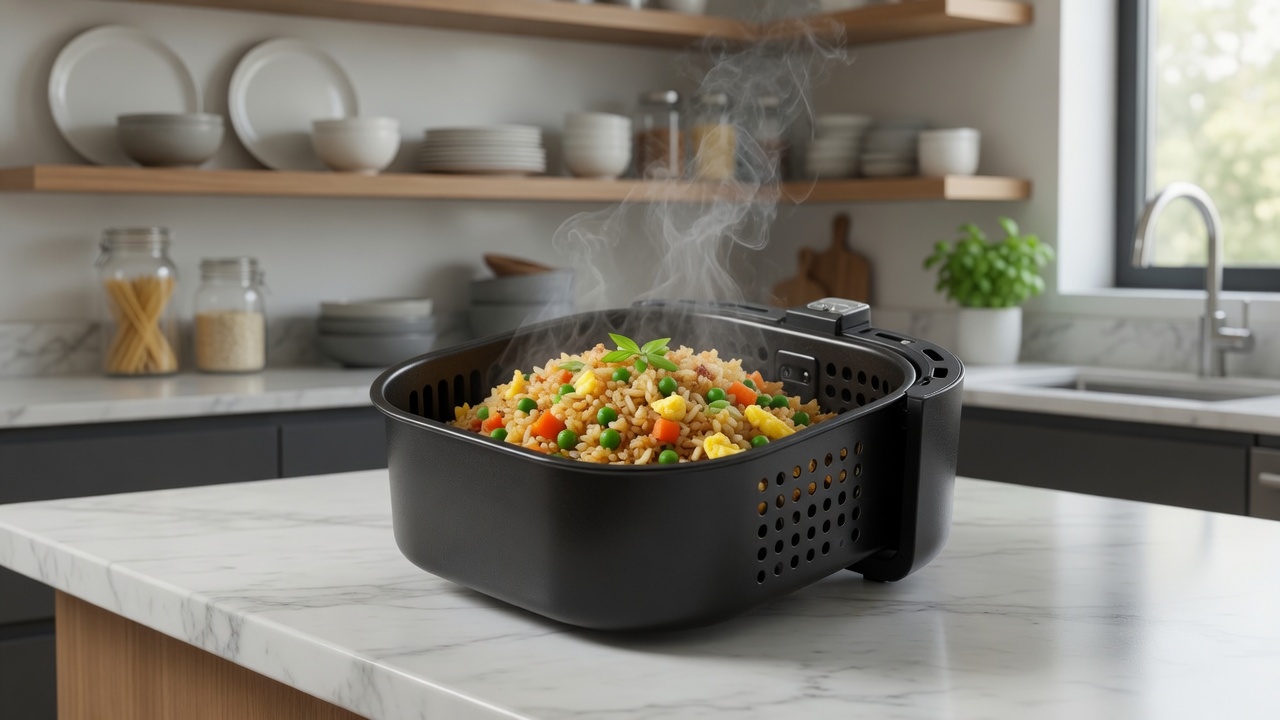
Air Fryer Fried Rice
Quick and easy fried rice made in the air fryer with crispy edges, vegetables, and eggs. Ready in under 20 minutes using simple ingredients and leftover rice.
4
servings5
minutes13
minutes230
kcal18
minutesIngredients
2 cups cooked white rice, cold from refrigerator
2 tablespoons sesame oil
2 tablespoons soy sauce
1 teaspoon garlic powder
1 cup frozen peas and carrots
½ cup diced white onion
2 eggs
sliced green onions for garnish
Directions
- Line air fryer basket and add cold cooked rice, sesame oil, soy sauce, garlic powder, frozen peas and carrots, and diced onion. Toss until evenly mixed and spread into an even layer.
- Air fry at 400°F for 6 minutes. Remove basket, stir the rice, then push rice to sides to create a well in the center.
- Whisk eggs in a small bowl and pour into the well. Air fry for 4 to 5 minutes until egg whites are set.
- Break cooked eggs into pieces and stir throughout the rice. Cook for 1 to 2 more minutes.
- Garnish with sliced green onions and serve immediately.
Notes
- Use cold leftover rice for best texture. Fresh rice becomes mushy and sticky. Make rice a day or two ahead or use leftover takeout rice. Store leftovers in an airtight container in the refrigerator for up to 5 days. Freeze in freezer-safe containers for up to 3 months. Reheat in microwave until heated through or in air fryer at 350°F for 3 to 4 minutes. Line air fryer basket with perforated parchment to prevent rice from falling through holes. Cooking times may vary by air fryer model.
Nutrition Facts
- Calories: 230kcal
- Fat: 10g
- Carbohydrates: 29g
- Fiber: 2g
- Sugar: 1g
- Protein: 7g


