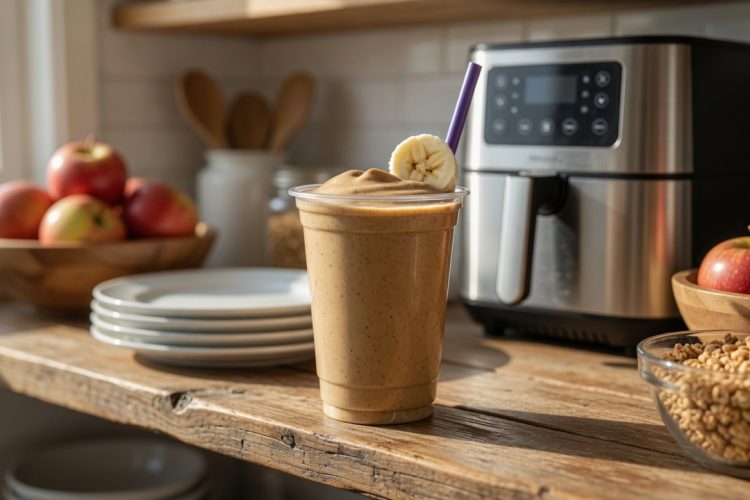
When you need something filling and nutritious but don’t have time to cook a full breakfast, this healthy peanut butter banana smoothie gives you everything you need in one glass. The recipe takes about five minutes from start to finish and requires just a blender and a few simple ingredients that you probably already have in your kitchen. Frozen banana creates a thick, creamy texture similar to a milkshake, while peanut butter adds rich flavor and healthy fats that help you stay full until your next meal. Greek yogurt boosts the protein content, and unsweetened almond milk provides just enough liquid to blend everything smoothly without making the drink watery.
Understanding Why Frozen Bananas Matter
The difference between using frozen bananas versus fresh ones in smoothies is significant and changes the entire texture of your drink. Fresh bananas make smoothies thinner and warmer, which means you need to add lots of ice to get a cold, thick consistency. Ice dilutes the flavor and makes the smoothie taste watery instead of rich and creamy. Frozen bananas, on the other hand, create natural thickness and make the smoothie cold without any dilution. The freezing process also makes bananas blend into a texture very similar to soft-serve ice cream. To prepare bananas for freezing, peel them first, slice them into chunks, and store them in freezer bags so they’re ready whenever you want to make a smoothie.
How Peanut Butter Adds More Than Flavor
Peanut butter does several important things in this smoothie beyond just making it taste good. The healthy fats in peanut butter slow down how quickly your body digests the natural sugars from the banana, which prevents energy crashes and keeps you feeling satisfied longer. These same fats also help your body absorb fat-soluble vitamins from the other ingredients. Peanut butter contributes protein as well, which works together with the protein from Greek yogurt to make this smoothie much more filling than fruit smoothies that contain only carbohydrates. The creamy texture of peanut butter also blends beautifully with frozen banana to create that thick, milkshake-like consistency that makes this drink feel indulgent.
Why Greek Yogurt Makes This Smoothie Special
Plain Greek yogurt transforms this from a simple fruit smoothie into a balanced meal replacement or substantial snack. Greek yogurt contains about twice as much protein as regular yogurt because of the straining process that removes excess liquid. This extra protein helps build and maintain muscle, especially important if you’re drinking this smoothie after exercise. The thick, creamy texture of Greek yogurt also contributes to the overall richness of the smoothie without requiring cream or ice cream. Using plain yogurt instead of flavored varieties keeps added sugars out of the recipe while still providing that slight tanginess that balances the sweetness of the banana.
Choosing the Right Milk
Unsweetened almond milk works perfectly in this recipe because it has a mild, neutral flavor that doesn’t compete with the peanut butter and banana. It also keeps the calorie count lower than using dairy milk or sweetened plant-based alternatives. The unsweetened version is important because the banana already provides plenty of natural sweetness, and sweetened milk would make the smoothie taste too sugary. However, you can substitute any milk you prefer or have available. Regular dairy milk makes the smoothie richer and adds more protein and calcium. Oat milk creates extra creaminess with a slightly sweet taste. Soy milk provides additional protein similar to dairy milk. Coconut milk adds tropical flavor and richness.
The Secret Role of Cinnamon
While cinnamon might seem like a minor ingredient that you could skip, it actually plays an important role in bringing all the flavors together. The warm spice notes in cinnamon complement both the nutty taste of peanut butter and the sweet flavor of banana beautifully. Just a quarter teaspoon is enough to add depth and complexity without making the smoothie taste obviously spiced. Cinnamon also has some health benefits, including helping to stabilize blood sugar levels, which works well in a breakfast drink. Some studies suggest that cinnamon may help reduce inflammation and improve heart health, though you’d need to consume it regularly to see these benefits.
Blending in the Right Order
The order you add ingredients to your blender actually affects how well everything blends together and how smooth your final smoothie becomes. Adding the liquid first is the most important step because it allows the blender blades to move freely right from the start. If you put the frozen banana in first, it can get stuck on the blades and create air pockets that prevent proper blending. Starting with almond milk, then adding frozen banana, peanut butter, yogurt, and cinnamon in that order ensures everything moves through the blades efficiently. This layering technique works for almost any smoothie recipe and helps you avoid the frustration of stopping to stir and scrape down the sides multiple times.
Getting the Perfect Thickness
Some people prefer thinner smoothies they can drink quickly through a straw, while others like them thick enough to eat with a spoon. This recipe creates a medium-thick consistency that works well for drinking but still feels substantial and filling. If you want your smoothie thicker, you can add a handful of ice cubes after blending the main ingredients and pulse a few more times. Using less almond milk also makes the smoothie thicker, so you might start with just half a cup and add more as needed. For a thinner smoothie, simply add extra almond milk a little at a time until you reach your preferred consistency.
Making Your Smoothie More Filling
While this smoothie is already quite satisfying thanks to the protein and healthy fats, adding certain ingredients can make it even more substantial if you need it to replace a full meal. A half scoop of protein powder increases the protein content significantly, which is especially helpful after workouts when your muscles need extra protein for recovery. Adding a tablespoon of rolled oats blends in completely and provides additional fiber and complex carbohydrates that digest slowly for longer-lasting energy. Chia seeds or ground flaxseed contribute omega-3 fatty acids, extra fiber, and a small amount of protein while barely affecting the flavor. These additions transform the smoothie from a hearty snack into a complete meal replacement.
Creating Flavor Variations
Once you’ve made this basic peanut butter banana smoothie a few times, experimenting with different flavors keeps things interesting and prevents breakfast boredom. Adding a tablespoon of unsweetened cocoa powder creates a chocolate peanut butter version that tastes like a healthy dessert. Throwing in a handful of frozen berries gives you a mixed berry banana smoothie with extra antioxidants and a beautiful purple color. Replacing half the frozen banana with frozen mango chunks creates a tropical twist. For coffee lovers, adding a shot of cold espresso or a tablespoon of instant coffee powder makes a coffee-flavored smoothie that provides caffeine along with nutrition. A small handful of fresh spinach blends in completely without changing the taste while adding vitamins and minerals.
Turning Your Smoothie into a Bowl
Smoothie bowls have become popular because they turn a drinkable breakfast into something you can eat with a spoon and top with crunchy ingredients. To make a smoothie bowl from this recipe, use slightly less almond milk so the mixture becomes very thick, almost like soft-serve ice cream. Pour the thick smoothie into a wide bowl instead of a glass. Then arrange toppings across the surface in an attractive pattern. Good topping options include sliced fresh banana, granola, chopped peanuts or almonds, coconut flakes, chia seeds, hemp seeds, fresh berries, or a drizzle of honey. Eating your smoothie from a bowl with toppings makes breakfast feel more substantial and takes longer to eat, which can help with satisfaction.
Preparing Smoothies in Advance
Making smoothies fresh is ideal, but you can save time by doing some preparation ahead. Preparing smoothie freezer packs makes busy mornings even easier. Measure out the frozen banana, peanut butter, and any other solid ingredients into individual freezer bags or containers. When you’re ready to make a smoothie, dump one pack into the blender, add the yogurt and milk, and blend. This method means you don’t have to measure anything in the morning. You can also blend the entire smoothie and freeze it in portions, then thaw overnight in the refrigerator or blend a frozen portion with a little extra milk to bring it back to the right consistency.
Understanding the Nutritional Benefits
This smoothie provides a balanced combination of macronutrients that work together to fuel your body properly. The carbohydrates from the banana give you quick energy to start your day or recover after exercise. The protein from Greek yogurt and peanut butter helps build and repair tissues while keeping you full. The healthy fats from peanut butter slow digestion and help you absorb vitamins. The smoothie also provides important micronutrients including potassium from the banana, which supports muscle and nerve function, calcium from the yogurt for bone health, and vitamin E from the peanut butter, which acts as an antioxidant. The combination of nutrients makes this much more balanced than sugary breakfast options or coffee drinks.
Adjusting Sweetness to Your Taste
The natural sugars in a ripe banana usually provide enough sweetness for most people, but taste preferences vary. If you find the smoothie not sweet enough, resist the urge to add refined sugar. Instead, try using a very ripe banana with lots of brown spots, which contains more developed sugars and tastes sweeter. A small drizzle of honey or pure maple syrup adds sweetness along with trace minerals. A couple of pitted dates blended in provide natural sweetness plus extra fiber. Vanilla extract, though not actually sweet, enhances the perception of sweetness without adding sugar or calories. If your smoothie tastes too sweet, adding a squeeze of fresh lemon juice balances the sweetness with acidity.
Solving Common Smoothie Problems
Sometimes smoothies don’t turn out quite right, but understanding what went wrong helps you fix the problem quickly. If your smoothie is too thick to blend properly, add more liquid a tablespoon at a time until the blades can move freely. If it’s too thin and watery, add more frozen banana or a handful of ice cubes. When the smoothie separates after sitting for a few minutes, that’s natural because the ingredients have different densities, so just stir it before drinking. If it tastes too banana-forward and you want more peanut butter flavor, add another tablespoon of peanut butter. A smoothie that’s not cold enough probably used fresh banana instead of frozen, so add ice to chill it down.
Using This Smoothie for Different Goals
This versatile smoothie recipe can be adapted to support various health and fitness goals. For weight loss, use the recipe as written because the protein and healthy fats help control appetite while keeping calories reasonable. If you’re trying to gain weight or build muscle, add extra peanut butter, a full scoop of protein powder, and use whole milk instead of almond milk to increase calories and protein. For endurance athletes, adding oats or an extra banana provides more carbohydrates for energy. People managing diabetes can reduce the banana to half and add more Greek yogurt for protein, which helps prevent blood sugar spikes. Always talk to a healthcare provider about major dietary changes if you have specific health conditions.
Best Times to Drink This Smoothie
This peanut butter banana smoothie works well at different times throughout the day depending on your schedule and needs. As a breakfast option, it provides balanced nutrition to start your day with steady energy that lasts until lunch. Mid-morning or mid-afternoon, it makes a perfect snack that’s more satisfying than chips or cookies but still quick and convenient. After exercise, the combination of protein and carbohydrates supports muscle recovery and helps replenish energy stores. Some people even enjoy it as a light dinner on hot summer evenings when they don’t want heavy food. The key is that it provides good nutrition whenever you need a quick, easy option.
Storing and Food Safety
While this smoothie tastes best fresh, understanding proper storage helps prevent waste and allows you to prepare ahead. A freshly blended smoothie can be stored in the refrigerator in an airtight container for up to 24 hours. Natural separation will occur, so shake it well before drinking. The banana may oxidize slightly and turn a bit brown, which is harmless but not as visually appealing. For longer storage, freeze the smoothie in portions using ice cube trays, mason jars with room for expansion, or freezer-safe containers. Frozen smoothies keep for up to three months. To use frozen smoothie cubes, blend them with a splash of fresh almond milk until smooth again.
Why Homemade Beats Store-Bought
Making smoothies at home instead of buying them from shops or using bottled versions offers several advantages. You control exactly what goes into your drink, which means no hidden sugars, artificial flavors, or preservatives. Store-bought smoothies often contain fruit juice as the base, which adds a lot of extra sugar without the fiber that whole fruit provides. They may also use frozen yogurt or ice cream instead of Greek yogurt, which increases sugar and decreases protein. Making smoothies at home costs less per serving than buying them prepared, especially if you buy bananas and freeze them yourself when they’re on sale. You can also customize the recipe to your exact preferences rather than settling for what’s available.
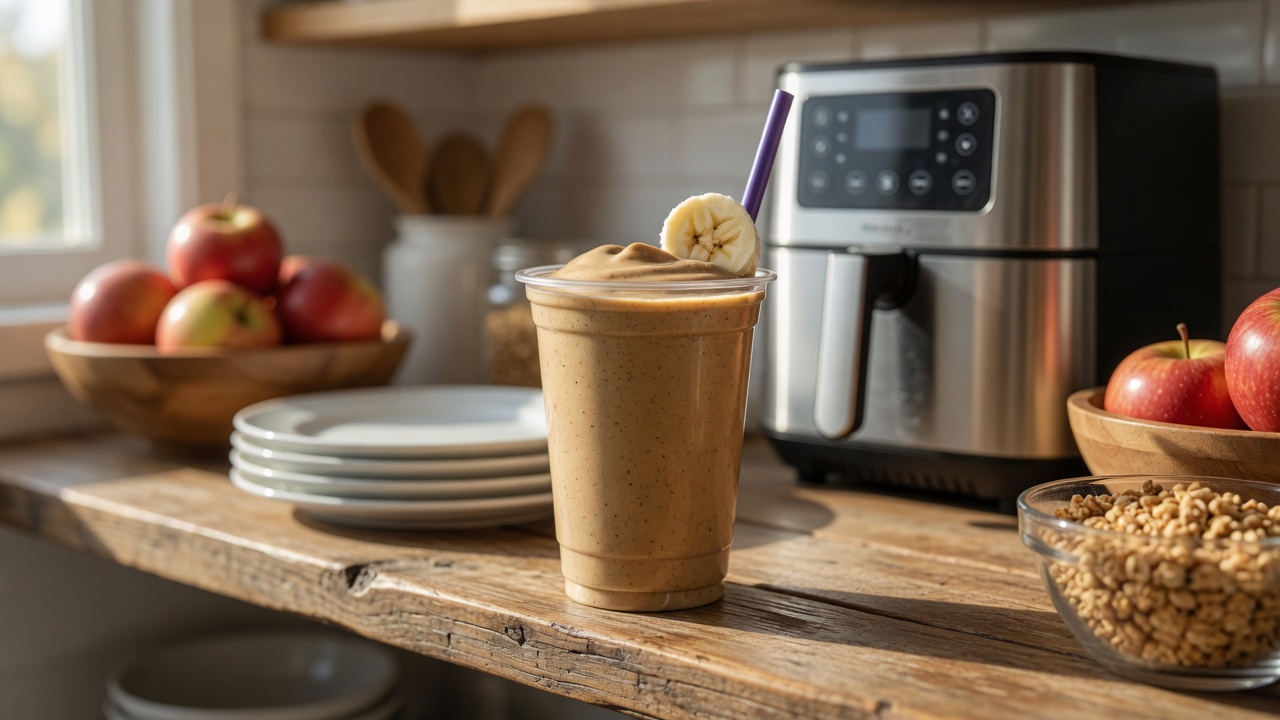
Healthy Peanut Butter Banana Smoothie Recipe
Thick, creamy smoothie made with frozen banana, peanut butter, Greek yogurt, and almond milk for a quick, protein-rich breakfast or snack.
1
servings5
minutes0
minutes385
kcal5
minutesIngredients
¾ cup unsweetened almond milk
1 large frozen banana
2 tablespoons creamy peanut butter
½ cup plain nonfat Greek yogurt
¼ teaspoon ground cinnamon
Ice (optional, for thicker texture)
- Optional Add-Ins:
½ scoop vanilla or chocolate protein powder
1 tablespoon chia seeds
1 tablespoon flaxseed meal
1 tablespoon rolled oats
1 teaspoon cocoa powder
Directions
- Add liquid first: Pour almond milk into blender to help blades move freely and prevent ingredients from sticking.
- Add frozen banana: Place frozen banana chunks in blender. Smaller pieces blend more easily for smoother consistency.
- Add remaining ingredients: Add peanut butter, Greek yogurt, and cinnamon to blender. Include any optional add-ins if desired.
- Blend until smooth: Blend for 45-60 seconds until completely smooth and creamy. If mixture is too thick, add a splash of additional almond milk.
- Adjust texture: Add a handful of ice cubes and blend again if you prefer an extra-thick smoothie.
- Serve immediately: Pour into a tall glass and enjoy right away while cold and creamy.
Notes
- Always use frozen bananas instead of fresh for the creamiest, thickest texture without dilution from ice
- Peel and slice ripe bananas before freezing in bags for easy blending
- Substitute any milk you prefer including dairy milk, oat milk, soy milk, or coconut milk
Nutrition Facts
- Calories: 385kcal
- Fat: 19g
- Carbohydrates: 39g
- Fiber: 5g
- Sugar: 21g
- Protein: 20g


