
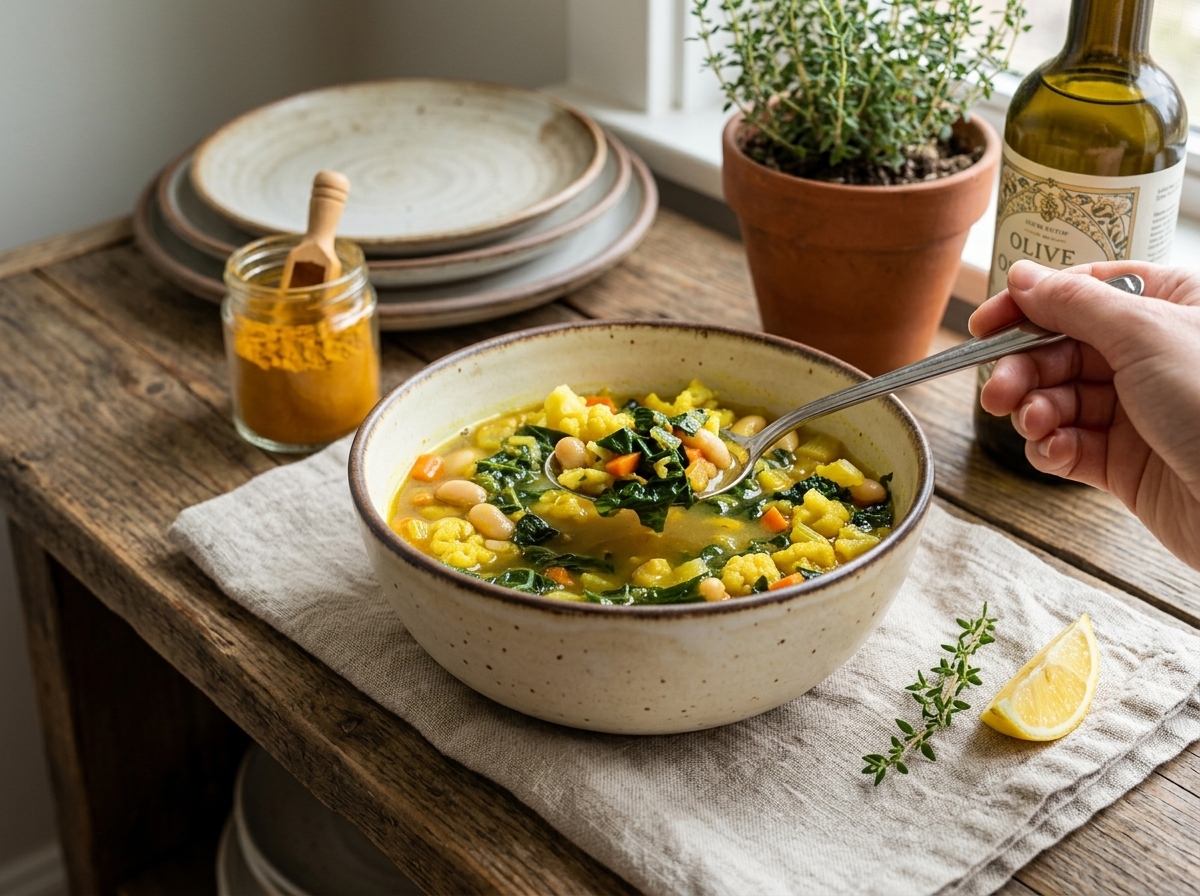
When you want a meal that feels light, comforting, and full of fresh vegetables, this anti-inflammatory vegetable soup is a wonderful choice. It is a flavorful brothy soup made with onion, carrot, celery, cauliflower, kale, ginger, turmeric, garlic, and a savory broth. The combination creates a warm and satisfying bowl without relying on cream, cheese, or heavy ingredients. It is especially suitable for days when you want something simple and nourishing after several rich meals.
This vegetable soup is built around a fragrant combination of ginger and turmeric, two ingredients that have long been used in traditional cooking and wellness practices. Fresh ginger gives the broth a warm, slightly spicy flavor, while turmeric adds an earthy taste and golden color. Garlic, black pepper, and fresh vegetables round out the flavor, creating a soup that tastes much more developed than its short cooking time might suggest. Whether served for lunch or a light dinner, it makes an easy addition to a balanced meal plan.
What Makes This Vegetable Soup Special?
A good brothy vegetable soup does not need complicated preparation to taste satisfying. The key is building flavor in stages. In this recipe, the onion is gently cooked first, allowing it to soften and develop a slightly sweet flavor. Carrots and celery are then added before the ginger, garlic, and turmeric go into the pot. This simple process creates a flavorful base before the broth is added.
The soup also combines several different textures. Soft onions, tender carrots, celery, cauliflower, and leafy kale make every spoonful interesting. White beans can be included when you want additional substance, while they can easily be left out if you prefer the soup without beans. The finished broth remains light, but the vegetables make it filling enough for a simple everyday meal.
Ginger and Turmeric for Flavor
Ginger and turmeric are the defining ingredients in this recipe. Ginger has a naturally warm and slightly peppery flavor that works especially well in soups and broths. Freshly minced ginger gives the strongest fresh flavor, while ground ginger provides a convenient alternative. Even a relatively small amount can noticeably brighten the broth.
Turmeric contributes a deep golden color and an earthy, mildly bitter flavor. Fresh grated turmeric root can be used when available, while ground turmeric makes the recipe much easier to prepare with pantry ingredients. Black pepper is included in the recipe alongside turmeric, adding a gentle heat and helping balance turmeric’s earthy character.
A Simple Brothy Vegetable Base
The broth is an important part of this soup because it carries the flavors of the vegetables and spices throughout the dish. The original recipe allows turkey broth, chicken broth, vegetable broth, or water, making the soup flexible for different eating preferences. Vegetable broth or water keeps the recipe plant-based, while turkey or chicken broth gives the soup a deeper savory character.
Bone broth can also be used when it fits your meal plan. Traditional bone broth is made by simmering bones and connective tissue for an extended period, resulting in a rich liquid containing gelatin and other naturally occurring nutrients. For this recipe, however, the broth is primarily there to provide flavor and create the comforting liquid base of the soup.
Why Cauliflower Works So Well
Cauliflower is an excellent addition to brothy soups because it becomes tender without completely falling apart during a relatively short simmer. Cutting the cauliflower into small florets helps it cook evenly and makes the pieces easy to eat with a spoon. It also adds mild flavor without overpowering the ginger, turmeric, and garlic.
The cauliflower is added after the broth reaches a boil. The heat is then reduced and the pot is covered while the soup simmers. Cooking the cauliflower for around 10 to 15 minutes allows it to become fork tender while retaining enough structure to provide texture in the finished soup.
The Role of Kale
Kale is added toward the end rather than at the beginning. This keeps the cooking time short and allows the leaves to soften without becoming excessively cooked. Removing the stems and chopping the leaves into manageable pieces makes the kale easier to incorporate into the soup.
Only a few minutes are needed after adding the kale. The leaves should become slightly wilted while still contributing their fresh green color and texture. This finishing step also keeps the soup visually appealing, with the golden broth contrasting against the green kale and colorful vegetables.
White Beans Are Optional
White beans are included as an optional ingredient, so you can easily adjust the recipe according to your preference. They add a soft, creamy texture and make the soup more substantial. If you are looking for a vegetable soup with a little more staying power, adding the beans is a simple way to make the bowl feel heartier.
The recipe calls for half of a 15-ounce can of white beans. Drain and rinse them before adding them to the soup. Because canned beans are already cooked, they only need a few minutes in the hot broth. If you prefer a lighter soup or do not eat beans, simply leave them out.
How to Make Anti-Inflammatory Vegetable Soup
Start by heating the ghee in a large soup pot over medium-low heat. Once warm, add the diced onion and cook it for approximately five to seven minutes. Stir occasionally as the onion softens and begins to brown slightly. This first step is important because it gives the soup a sweeter and more developed base than simply boiling all the ingredients together.
Next, add the diced carrot and celery. Continue cooking for another three to five minutes, allowing the vegetables to soften. They do not need to be completely cooked at this stage because they will continue cooking in the broth. Keeping the heat moderate helps prevent the vegetables from browning too aggressively.
Add the grated turmeric or ground turmeric, minced garlic, and fresh or ground ginger. Stir thoroughly so the seasonings coat the vegetables. Cook the mixture for about one minute, just until the garlic and ginger become fragrant. This short step releases their aroma and allows the spices to blend with the vegetable base before the liquid is introduced.
Pour in the turkey, chicken, or vegetable broth, or use water if preferred. Add the Celtic sea salt and black pepper, then stir everything together. Increase the heat and bring the soup to a boil. Once it reaches a boil, add the cauliflower florets and cover the pot.
Reduce the heat and let the soup simmer for approximately 10 to 15 minutes. The exact cooking time depends on the size of the cauliflower pieces. Check the vegetables toward the end of the cooking time by piercing a piece of cauliflower with a fork. It should be tender but not completely falling apart.
Once the cauliflower is fork tender, add the drained and rinsed white beans if using them, followed by the chopped kale. Allow everything to cook for another two to three minutes. The kale should become slightly wilted and the beans should be heated through. Taste the broth if desired and serve the soup hot with chopped cilantro as an optional garnish.
How to Get the Best Flavor
The most important technique is not rushing the first few cooking steps. Giving the onion, carrot, and celery enough time to soften creates a more flavorful foundation. The one-minute cooking period for the ginger, garlic, and turmeric is also worthwhile because it helps release their aroma before they are diluted by the broth.
Another useful tip is to avoid overcooking the cauliflower and kale. The cauliflower should be tender enough to eat comfortably but still retain its shape. Kale only needs a few minutes to wilt. Cooking both vegetables for too long can make the soup lose some of its fresh character.
If you are using fresh ginger and turmeric, finely mince or grate them so their flavors distribute evenly throughout the broth. Fresh ingredients can have a more pronounced flavor than their dried alternatives, so adding them according to the recipe provides a balanced result without making the soup overwhelmingly spicy.
Choosing the Right Broth
The broth you select can change the overall character of the soup. Vegetable broth provides a clean, plant-based foundation and works particularly well when serving the soup as a vegan option. Chicken broth creates a more traditional savory flavor, while turkey broth is especially suitable when you have leftover turkey broth available after a holiday meal.
Water can also be used when you want the vegetables and spices to provide most of the flavor. In that case, the onion, garlic, ginger, turmeric, salt, and pepper become particularly important because there is no broth adding additional savory notes.
Easy Ways to Customize the Soup
One of the advantages of this recipe is that it can be adapted without changing its basic character. If you want additional protein, the notes suggest adding chicken or turkey instead of the white beans. This turns the soup into a more substantial meal while keeping the brothy vegetable base.
For a lighter bowl, leave out the white beans and serve the soup with the vegetables and kale. If you prefer a more filling version, keep the beans in the recipe. You can also select vegetable broth when you want a completely plant-based preparation.
The cilantro garnish is optional, but it adds a fresh finish that contrasts nicely with the earthy turmeric and warm ginger. Add it immediately before serving so its flavor remains fresh and noticeable.
Serving Suggestions
This soup is suitable for lunch, a light dinner, or a simple meal when you want something warm without a heavy sauce or creamy base. Serve it on its own in a large bowl, or pair it with a side of gluten-free bread, a simple salad, or another vegetable-based side dish.
For meal preparation, allow the soup to cool appropriately before storing it in an airtight container. Keep the soup refrigerated and reheat individual portions as needed. The flavors can continue to blend after cooking, making it convenient for preparing meals ahead of time.
Dietary Considerations
The recipe can be adapted to several dietary preferences depending on the ingredients you select. Using vegetable broth or water and coconut oil rather than ghee can make the soup suitable for a vegan meal plan. The vegetables, herbs, and spices also make it naturally free from dairy when coconut oil is selected.
For a gluten-free version, use a gluten-free broth and verify the labels of packaged ingredients. If you are following a paleo-style eating plan, the white beans can be omitted, as noted in the original recipe. The soup can then be enjoyed primarily as a vegetable and broth-based dish.
Because individual dietary requirements can vary, packaged broth and other prepared ingredients should always be checked for ingredients that may not fit your particular diet.
Notes for Making the Soup
The white beans are completely optional and can be omitted without affecting the basic cooking method. If you want more protein, cooked chicken or turkey can be added instead of the beans. Fresh turmeric and ginger provide a particularly vibrant flavor, but the recipe includes ground alternatives for convenience.
For the best texture, cut the vegetables into relatively similar sizes. Smaller cauliflower florets will cook more quickly, while larger pieces may require additional simmering time. Keep an eye on the pot during the final stage because kale only needs a few minutes to wilt.
If using ghee, the soup will have a slightly richer flavor. Coconut oil provides an alternative and works particularly well with the earthy turmeric and ginger. The choice between broth and water also gives you control over how rich and savory the finished soup tastes.
Frequently Useful Questions
Can I make this soup without white beans?
Yes. White beans are listed as optional, so they can simply be omitted. The soup will remain a flavorful combination of vegetables, ginger, turmeric, garlic, and broth. If you want a more substantial protein source, the original notes suggest using chicken or turkey instead.
Can I use ground turmeric instead of fresh turmeric?
Yes. The recipe specifically provides both options. Use one tablespoon of fresh grated turmeric root or one teaspoon of ground turmeric. Ground turmeric is convenient and easy to keep in the pantry, while fresh turmeric provides a more pronounced fresh flavor.
What can I use instead of bone broth?
The ingredient list provides several choices, including turkey broth, chicken broth, vegetable broth, or water. For a vegan preparation, vegetable broth or water is the appropriate choice.
How long should the cauliflower cook?
After the broth comes to a boil and the cauliflower is added, cover the pot and simmer for approximately 10 to 15 minutes. The cauliflower is ready when it can be easily pierced with a fork.
Can I add chicken or turkey?
Yes. The recipe notes that chicken or turkey can be added instead of white beans for additional protein. This is a practical way to turn the vegetable soup into a more substantial meal.
Healthy Vegetable Soup With Turmeric
A flavorful anti-inflammatory brothy vegetable soup made with ginger, turmeric, garlic, cauliflower, kale, carrots, celery, and a savory broth. White beans are optional, and chicken or turkey can be added for extra protein.
4
servings20
minutes30
minutes192
kcal50
minutesIngredients
1 tablespoon ghee or coconut oil
1 large onion, diced
1 medium carrot, diced
2 stalks celery, diced
1 tablespoon fresh grated turmeric root or 1 teaspoon ground turmeric
2 teaspoons garlic, minced (3-4 cloves)
1 tablespoon fresh ginger, minced or ½ teaspoon ground ginger
6 cups turkey or chicken broth or vegetable broth or water
1 teaspoon Celtic sea salt
½ teaspoon black pepper
2 cups cauliflower, cut into small florets
½ of 15-ounce can white beans, drained and rinsed (optional)
2 cups kale, stems removed, chopped
cilantro, chopped for garnish (optional)
Directions
- Heat the ghee in a large soup pot over medium-low heat.
- Add the diced onion and stir. Cook for 5-7 minutes, until the onions begin to brown.
- Add the diced carrots and celery. Cook for another 3-5 minutes, until the vegetables begin to soften.
- Add the turmeric, garlic, and ginger. Stir well so the seasonings coat the vegetables.
- Cook for approximately 1 minute, until the mixture becomes fragrant.
- Pour in the broth or water. Add the salt and black pepper, then stir to combine.
- Bring the soup to a boil. Add the cauliflower florets and cover the pot.
- Reduce the heat and simmer for 10-15 minutes, or until the cauliflower is fork tender.
- Add the drained and rinsed white beans and chopped kale.
- Cook for another 2-3 minutes, until the kale is slightly wilted and the beans are heated through.
- Serve the soup hot and garnish with chopped cilantro if desired.
Notes
- White beans are optional.
- Chicken or turkey can be added instead of beans for additional protein.
- Use vegetable broth or water for a plant-based version.
- Fresh turmeric and ginger can be replaced with the ground alternatives specified in the ingredient list.
Nutrition Facts
- Calories: 192kcal
- Fat: 6.4g
- Carbohydrates: 24.7g
- Fiber: 5.9g
- Sugar: 5.6g
- Protein: 12.6g


