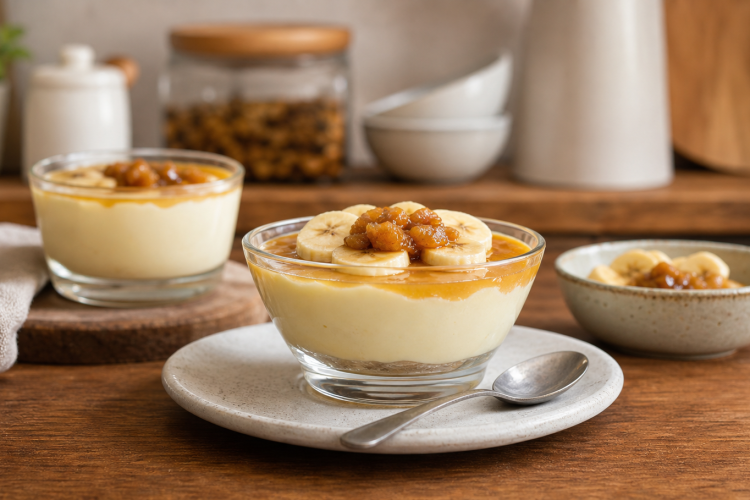
Homemade Banana Foster Pudding is a rich and creamy dessert inspired by the famous New Orleans bananas foster dessert. It combines a smooth homemade vanilla banana custard with warm caramelized bananas for a delicious contrast of flavors and temperatures. Unlike instant pudding, this recipe uses real egg yolks, fresh bananas, whole milk, vanilla, and cornstarch to create a silky homemade custard. The chilled pudding becomes thick and creamy in the refrigerator, while the warm buttery banana topping adds a soft caramel flavor just before serving. It is an elegant dessert for dinner parties but simple enough to prepare for a weekend treat.
Why Make Banana Foster Pudding From Scratch?
Homemade pudding has a noticeably different texture and flavor from pudding made with an instant mix. Instead of relying on prepared starches and artificial flavors, this recipe builds its flavor from fresh ingredients. Egg yolks provide richness, ripe bananas add natural sweetness, whole milk creates a creamy base, and vanilla brings everything together. The cornstarch helps the custard thicken without making it overly firm.
The extra cooking time is worthwhile because the finished pudding has a smooth, luxurious texture that feels more like a traditional custard. When topped with warm caramelized bananas, it becomes much more than an ordinary banana pudding. The combination of cold custard and warm fruit makes every serving especially satisfying.
The Homemade Banana Custard
The custard is the foundation of this banana foster pudding. Six egg yolks provide richness and help create the characteristic creamy texture of a cooked custard. The yolks are whisked with sugar and vanilla before the bananas and milk are added. This creates a smooth base that can gradually thicken when heated.
The key to a successful homemade custard is gentle cooking. Egg yolks can become scrambled if exposed to excessive heat, so the mixture should be cooked over low to medium-low heat while being stirred continuously. Patience during this stage helps create a smooth pudding instead of a grainy or curdled one.
Choosing the Right Bananas
The bananas used in the pudding should be very ripe. Look for bananas with plenty of brown spots on the peel because they contain more natural sweetness and have a softer texture. Very ripe bananas are easy to mash and blend naturally into the custard, giving the pudding a stronger banana flavor without depending on artificial extracts.
The bananas for the topping are slightly different. Choose ripe but firmer bananas that can be sliced and cooked without falling apart. If the topping bananas are overly soft, they may break down quickly in the hot caramel. Using firmer fruit allows the slices to remain recognizable and attractive when spooned over the chilled pudding.
Building the Flavor With Egg Yolks, Sugar, and Vanilla
Egg yolks, sugar, and vanilla create the first layer of flavor in the custard. Whisking the yolks thoroughly with the sugar helps create a smooth mixture before the remaining ingredients are incorporated. Vanilla extract adds a warm, familiar flavor that complements both the banana and caramel.
Sugar is important not only for sweetness but also for balancing the richness of the egg yolks. Once the mashed bananas are added, their natural sweetness becomes part of the custard as well. The result is a balanced banana dessert with a creamy vanilla background and a naturally fruity flavor.
Using Whole Milk for a Creamy Texture
Whole milk gives this pudding a richer and creamier texture than lower-fat milk. The milk should be added gradually while whisking so that it combines evenly with the egg yolk and banana mixture. Adding it slowly helps create a consistent custard base before cooking begins.
Cold milk can be used because the entire mixture is heated together in the saucepan. There is no need to heat the milk separately. Once everything is combined, the mixture is transferred to the stove and cooked slowly until it thickens.
How Cornstarch Thickens the Pudding
Cornstarch gives the pudding additional structure and helps create the soft, spoonable consistency that develops after chilling. It should be dissolved completely in a portion of the milk before being incorporated into the main mixture. Creating this slurry helps prevent small pockets of dry cornstarch from forming lumps.
As the custard heats, the cornstarch thickens along with the egg yolks. The mixture should become thick enough to coat the back of a spoon while remaining smooth and pourable. Remember that the pudding will become noticeably firmer after several hours in the refrigerator.
How to Cook the Custard Properly
Transfer the combined ingredients to a saucepan and cook over low to medium-low heat. Stir constantly throughout the cooking process, making sure to scrape the bottom and corners of the pan. A figure-eight motion is useful because it keeps the entire mixture moving.
Cooking slowly is one of the most important steps in this recipe. High heat can cause the egg yolks to cook too quickly, producing scrambled pieces and an uneven texture. Gentle heat allows the custard to thicken gradually while keeping the mixture smooth.
The custard will generally take around ten minutes to reach the desired consistency. It should noticeably thicken and coat the back of a spoon. A temperature of approximately 170 to 175°F is a useful guide, but visual consistency is also important.
How to Prevent Lumpy Custard
Several simple techniques can help you achieve smooth homemade pudding. First, whisk the egg yolks and sugar thoroughly before adding the other ingredients. Second, dissolve the cornstarch completely before cooking. Third, maintain gentle heat and stir continuously while the custard cooks.
If a few lumps appear despite careful preparation, there is an easy solution. Pour the finished custard through a fine-mesh sieve before transferring it to serving glasses. This removes small cooked egg particles or undissolved pieces and gives the pudding a smoother final texture.
Cooling and Chilling the Pudding
Once the custard is ready, divide it between four dessert glasses, ramekins, or serving dishes while it is still warm. Allow the portions to cool toward room temperature before placing them in the refrigerator. Covering the surface directly with plastic wrap helps prevent a skin from developing.
The pudding needs at least three hours in the refrigerator to fully set. Overnight chilling is also a good option, especially if you are preparing dessert for guests. During this time, the custard becomes thicker and creamier, and the banana and vanilla flavors have time to blend together.
Making the Warm Caramelized Banana Topping
The caramelized banana topping is what gives this dessert its bananas foster-inspired character. It is best prepared shortly before serving so the bananas remain fresh and maintain their shape.
Begin by melting butter in a small pan over medium heat. Add the sugar and allow it to cook until it becomes a deep golden caramel. Watch the pan carefully because caramel can darken quickly. Have the sliced bananas ready before the caramel reaches the desired color.
Once the caramel is ready, carefully add the banana slices. Gently toss or turn them so they become coated in the warm caramel. Cook them for only about a minute or two, just until they are warmed through and slightly softened. Avoid overcooking because the banana pieces can quickly become mushy.
The Best Way to Serve Banana Foster Pudding
The ideal way to serve this dessert is with cold pudding and warm caramelized bananas. Spoon the warm banana topping directly over each chilled portion just before serving. This creates a wonderful contrast between the cool, creamy custard and the warm, buttery caramel.
For extra presentation, add whipped cream, a light sprinkle of cinnamon, or crushed vanilla wafers. Clear dessert glasses are especially attractive because they allow guests to see the creamy pudding underneath the caramelized banana topping.
Tips for the Best Homemade Pudding
Use Very Ripe Bananas for the Custard
Brown-spotted bananas are best for the pudding because they are naturally sweeter and easier to mash. They blend into the custard more smoothly and provide a stronger banana flavor.
Choose Firmer Bananas for the Topping
Use bananas that are ripe but still firm enough to hold their shape. They will soften slightly during caramelization without turning into banana puree.
Cook the Custard Slowly
Avoid high heat. Gentle cooking gives the egg yolks and cornstarch time to thicken the milk without scrambling the eggs. Constant stirring is essential.
Strain if Necessary
If the custard is not perfectly smooth, pass it through a fine-mesh sieve before chilling. This simple step can significantly improve the final texture.
Make-Ahead and Storage Tips
The pudding base is well suited to make-ahead preparation. You can prepare the custard, divide it among serving dishes, cover the surfaces directly with plastic wrap, and refrigerate until needed. This makes the recipe convenient for dinner parties because the main dessert component is finished before guests arrive.
The caramelized bananas are best prepared close to serving time. Once cooked, bananas gradually become softer and darker. For the freshest appearance and best texture, prepare the topping shortly before serving and spoon it over the cold pudding while still warm.
The pudding base can be stored in the refrigerator for several days when properly covered. However, once the banana topping has been added, the dessert is best enjoyed the same day.
Flavor Variations
Add Warm Spices
Cinnamon is a natural match for banana and caramel. A small amount can be added to the custard or sprinkled over the finished topping. Nutmeg can also add a subtle warm flavor.
Add a Rum-Inspired Flavor
Classic bananas foster is traditionally associated with rum, so dark rum extract can be used to give the custard a deeper flavor. Dark rum can also be added to the caramel topping according to the variation being prepared.
Add Pecans
Chopped pecans provide a crunchy contrast to the soft pudding and bananas. Their naturally buttery flavor works particularly well with caramel.
Use Brown Sugar
Replacing white sugar with brown sugar in the caramel topping creates a deeper, richer flavor with a noticeable molasses-like character. This is a simple way to make the topping taste even more caramel-forward.
Dairy-Free Adaptation
A dairy-free version can be made by replacing whole milk with full-fat coconut milk and using a suitable vegan butter alternative for the caramel topping. The flavor and texture will differ somewhat from the traditional egg-based pudding, but the banana and caramel combination can still create a satisfying dessert.
Because the original custard relies on egg yolks for its characteristic richness, simply replacing the dairy ingredients does not make the traditional recipe vegan. A fully vegan version would require a different thickening method and plant-based ingredients.
Lower-Sugar Option
If you want a less-sweet dessert, the sugar in the custard can be reduced while still allowing the ripe bananas to contribute natural sweetness. Very ripe bananas are particularly useful when reducing added sugar because their natural flavor is stronger.
The caramel topping can also be adjusted, although reducing sugar too much may affect the texture and caramelization process. For the most reliable results, make small adjustments rather than removing a large portion of the sugar.
Presentation Ideas
Individual parfait glasses make this banana pudding look elegant with very little extra effort. For additional texture, layer the pudding with crushed vanilla wafers and whipped cream before adding the caramelized bananas.
For a larger gathering, serve the dessert in a trifle-style glass bowl. Alternate layers of pudding, cookies, and whipped cream, then finish with the warm caramelized banana topping shortly before serving.
For a dinner party, small ramekins, coupe glasses, or vintage-style dessert cups can make the presentation feel more refined. A small mint leaf, light cinnamon dusting, or a few chopped pecans can provide a simple finishing touch.
Frequently Asked Questions
Can I Use Instant Pudding Instead?
Instant pudding can be used for convenience, but it will not have the same homemade custard texture. Real egg yolks, whole milk, bananas, and cornstarch create a richer and smoother dessert with a more natural flavor.
Why Did My Pudding Become Lumpy?
Lumps usually result from undissolved cornstarch, excessive heat, or insufficient stirring. Always dissolve the cornstarch before cooking and keep the custard moving over gentle heat. Straining the finished pudding can remove small lumps.
How Do I Prevent a Skin From Forming?
Press plastic wrap directly against the surface of the warm pudding while it cools. This prevents air from reaching the surface and forming a skin.
Can I Make This Dessert Ahead?
Yes. The pudding can be made ahead and refrigerated. For the best results, prepare the caramelized bananas separately and add them shortly before serving.
How Long Does It Stay Fresh?
The pudding base can be refrigerated for several days when properly covered. The caramelized banana topping is best consumed the same day because the fruit gradually softens and darkens.
Can Banana Foster Pudding Be Frozen?
Freezing is not recommended. Custard can become watery or grainy after thawing, while caramelized bananas can lose their pleasant texture. Refrigeration provides much better results.
Is This Recipe Gluten-Free?
Yes, the recipe as described does not contain wheat flour or other obvious gluten-containing ingredients. If serving someone with celiac disease or a strict gluten-free diet, check packaged ingredients and optional toppings for gluten-free labeling.
What Should I Do With Leftover Egg Whites?
The leftover egg whites can be saved for another recipe. They work well in meringues, pavlova, angel food cake, macarons, and egg white omelets. They can also be frozen for later use.
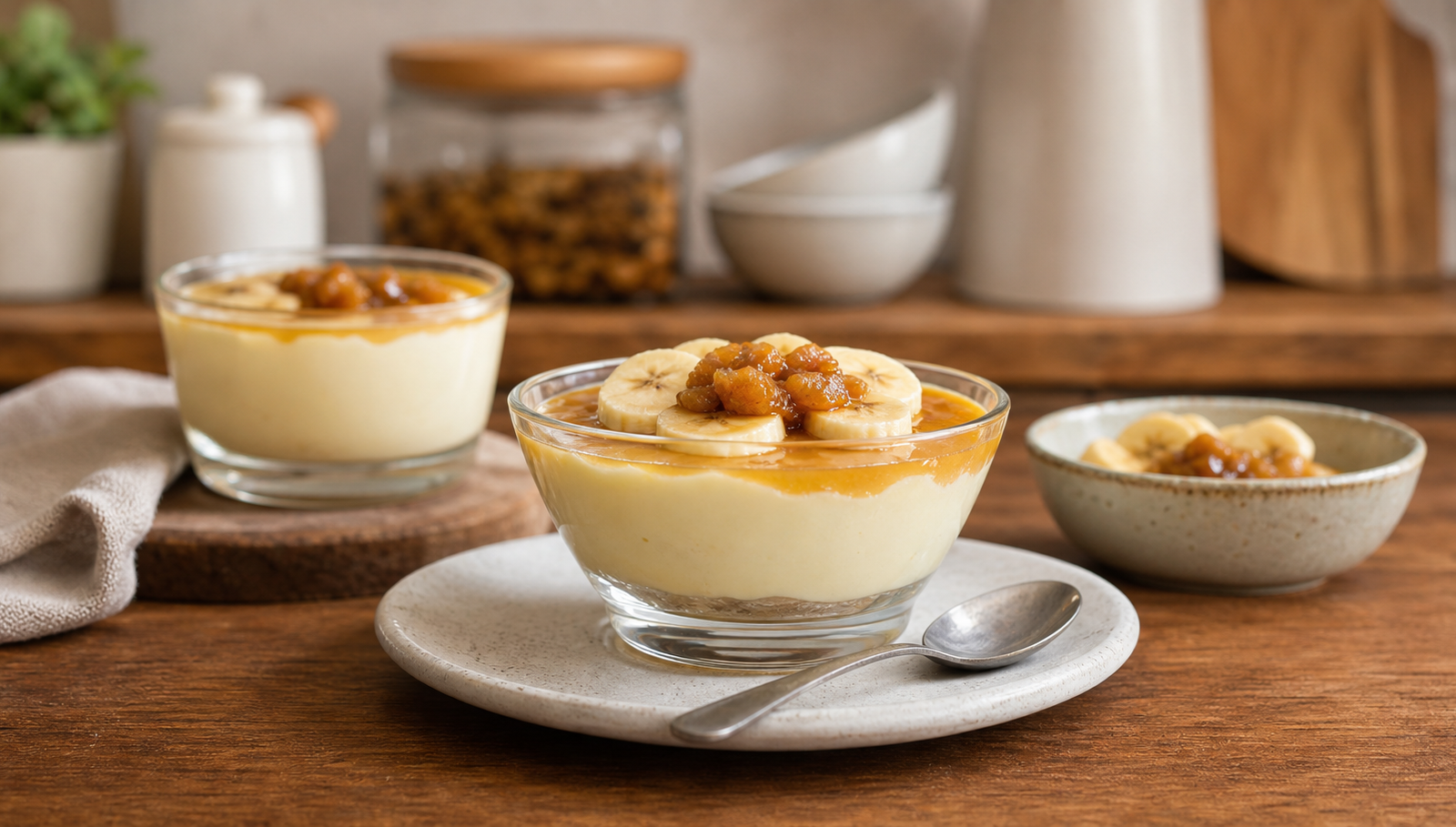
Homemade Banana Foster Pudding Recipe
A luxurious, custard-based dessert made with real egg yolks, fresh bananas, and whole milk, topped with a warm, buttery caramelized banana foster sauce. This French-inspired New Orleans-style treat balances rich vanilla custard with warm caramel flavor, made entirely from scratch.
15
minutes15
minutes3
hours3
hours30
minutesIngredients
- For the Banana Pudding (Custard Base):
Egg yolks — 6 (large eggs, room temperature)
Sugar — 125 g (about ⅔ cup granulated white sugar)
Vanilla extract — 1 teaspoon (pure vanilla recommended)
Ripe bananas — 2 (medium-sized, spotty yellow)
Milk — 1 liter (whole milk, about 4¼ cups)
Cornstarch — 3 tablespoons (cornflour)
Milk — 20 ml (for dissolving cornstarch, about 1½ tablespoons)
- For the Bananas Foster Topping:
Butter — 10 g (unsalted, about 2 teaspoons)
Sugar — 50 g (granulated, about ¼ cup)
Banana — 1 (firm but ripe, sliced)
- Optional Garnishes:
Whipped cream
Crushed vanilla wafers
Toasted pecans
Cinnamon dusting
Fresh mint leaves
Directions
- Separate 6 egg yolks from the whites and place the yolks in a large mixing bowl.
- Add 125 g sugar and 1 teaspoon vanilla extract to the yolks.
- Whisk vigorously for 2–3 minutes until the mixture becomes pale yellow and slightly thick.
- Mash 2 ripe bananas in a medium bowl until mostly smooth with a few small chunks.
- Combine the mashed bananas into the egg yolk mixture and mix until fully incorporated.
- Gradually pour in 1 liter of milk while whisking continuously until fully combined with no lumps.
- In a small bowl, dissolve 3 tablespoons cornstarch in 20 ml milk, stirring until smooth.
- Add the slurry to the egg-milk-banana mixture and whisk to combine.
- Transfer the mixture to a medium-large saucepan and cook over low to medium-low heat.
- Stir constantly in a figure-8 pattern, reaching all corners of the pan, for about 10 minutes, until the mixture thickens and coats the back of a spoon (170–175°F / 77–80°C).
- Divide the hot pudding among 4 dessert glasses, parfait cups, or ramekins.
- Let cool to room temperature (30–45 minutes); press plastic wrap directly on the surface to prevent skin.
- Refrigerate for at least 3 hours or overnight.
- Melt 10 g butter in a small pan or skillet over medium heat.
- Sprinkle 50 g sugar evenly over the melted butter and cook, stirring constantly, for 2–3 minutes until it turns into a golden caramel sauce.
- Slice 1 banana into ¼-inch rounds or diagonal slices.
- Add the banana slices to the caramel and toss gently to coat; cook for 1–2 minutes until warmed through and slightly softened.
- Spoon the warm bananas foster topping over each chilled pudding.
- Garnish as desired with whipped cream, cinnamon, or crushed cookies, and serve immediately.
Nutrition Facts
- Calories: 380kcal
- Fat: 10g
- Carbohydrates: 65g
- Fiber: 2g
- Sugar: 52g
- Protein: 10g


