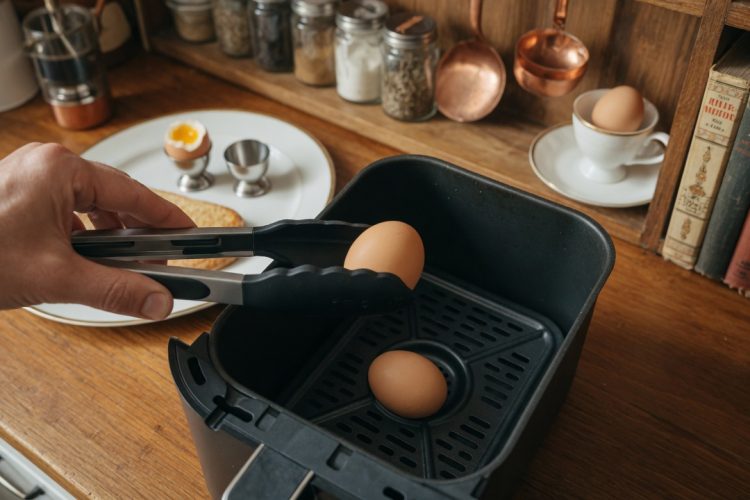
Cooking eggs in an air fryer gives you perfectly cooked results every single time. This method works better than traditional stovetop boiling because you have more control over the final texture. You can make soft boiled eggs with runny yolks, jammy eggs with creamy centers, or fully hard boiled eggs. The air fryer uses hot circulating air to cook the eggs evenly without water. This technique saves time and eliminates the guesswork that comes with watching a pot of boiling water.
Why Air Fryer Eggs Are Better Than Boiled Eggs
Traditional egg boiling requires watching the stove and timing everything perfectly. Air fryers eliminate this hassle by providing consistent heat all around the eggs. You don’t need to wait for water to boil or worry about eggs cracking in hot water.
The dry heat method also makes the eggs easier to peel once they cool down. Many people find that air fryer eggs have shells that practically fall off compared to regular boiled eggs. The method also uses less energy than heating a large pot of water on the stove.
Understanding Air Fryer Temperature Settings
Different air fryer models have different temperature ranges and heating patterns. Most air fryers can be set between 270°F and 275°F, which is the ideal range for cooking eggs. Some models only go as low as 300°F, which still works but requires shorter cooking times. The lower temperature setting gives you more control and prevents the eggs from cooking too quickly.
Higher temperatures can cause the egg whites to become rubbery or the shells to crack during cooking. Always check your air fryer manual to understand its specific temperature capabilities.
Finding the Right Cooking Time for Your Preferences
Egg doneness is a personal choice that ranges from very soft to completely firm. Soft boiled eggs with liquid yolks need about 9 to 11 minutes at 270°F. Jammy eggs with thick, creamy yolks require 12 to 13 minutes of cooking time.
Hard boiled eggs with fully set yolks need 13 to 15 minutes in the air fryer. These times work for large eggs at the recommended temperature. Testing one egg first helps you figure out the exact timing for your specific air fryer model.
Adjusting Time Based on Egg Size
Egg size makes a real difference in how long they need to cook. Small and medium eggs cook faster than large eggs by about 1 to 2 minutes. Jumbo or extra-large eggs need an additional 1 to 2 minutes beyond the standard timing.
The size difference affects how heat penetrates to the center of the egg. Always use eggs that are similar in size when cooking a batch together. This ensures they all finish cooking at the same time with the same texture throughout.
The Importance of Preheating Your Air Fryer
Preheating creates a stable cooking environment before the eggs go in. Five minutes of preheating time allows the air fryer basket to reach the proper temperature. Starting with a preheated air fryer gives you more consistent results every time you cook. Without preheating, the eggs take longer to cook and may have uneven textures. This step only adds a few minutes to your total time but makes a big difference. Think of it like preheating an oven before baking cookies or cakes.
Spacing Eggs Properly in the Basket
Leaving space between eggs allows hot air to circulate around each one. Crowding the basket can lead to uneven cooking with some eggs more done than others. A standard air fryer basket comfortably holds 4 to 6 large eggs with proper spacing. You can cook more eggs if your air fryer has a larger capacity. Just make sure air can flow freely around all sides of every egg. Single layer cooking works best rather than stacking eggs on top of each other.
Preparing the Ice Bath While Eggs Cook
An ice bath stops the cooking process immediately when eggs come out of the air fryer. Fill a medium bowl halfway with ice cubes, then add cold water to fill it three-quarters full. The ice bath should be ready and waiting when your timer goes off. This quick temperature change makes the eggs much easier to peel later. Skipping the ice bath can result in overcooked eggs and difficult-to-remove shells. The contrast between hot eggs and cold water also helps separate the membrane from the shell.
How Long to Keep Eggs in Ice Water
Four to five minutes in the ice bath brings eggs to a temperature that’s cool but not ice cold. Eggs that are too cold can be harder to peel and less pleasant to eat right away. You want them cool enough to handle comfortably with your hands. The ice bath firms up the whites and stops the yolks from cooking further. After this cooling period, the eggs are ready to peel and eat or store. You can leave them in the ice bath a bit longer if you’re not ready to peel them immediately.
The Best Way to Peel Air Fryer Eggs
Gently tap the egg on a hard surface to create the first crack. Roll the egg slightly while applying gentle pressure to create cracks all over the shell. Start peeling from the wider end where the air pocket is located. The shell should come off in larger pieces rather than tiny fragments. Running the egg under cool water while peeling can help remove any stubborn shell bits. Fresh eggs are typically harder to peel than eggs that are a week or two old.
Storing Cooked Eggs Safely
Peeled eggs should be stored in a covered container in the refrigerator. They stay fresh for up to one week when kept at proper refrigerator temperature. Unpeeled eggs last slightly longer, up to one week as well. Always refrigerate cooked eggs within two hours of making them. Eggs left at room temperature longer than this can develop harmful bacteria. For meal prep, cook a batch on Sunday to have ready-to-eat protein throughout the week.
Common Mistakes When Making Air Fryer Eggs
Setting the temperature too high is the most frequent error people make. High heat causes the eggs to cook too fast and can crack the shells. Not preheating the air fryer leads to longer cook times and inconsistent results. Skipping the ice bath results in eggs that continue cooking from residual heat. Using eggs straight from the refrigerator versus room temperature can affect cooking time slightly. Overcrowding the basket prevents proper air circulation and creates unevenly cooked eggs.
Testing Your First Egg
Making one test egg helps you learn how your specific air fryer works. Every air fryer brand and model cooks slightly differently due to heating element placement. Your first test egg shows you if you need to adjust time up or down. Take notes on the exact time and temperature you use for future reference. Cut the test egg open to see if the yolk is cooked to your liking. Add or subtract a minute or two for your next batch based on these results.
Using Air Fryer Eggs in Recipes
These eggs work perfectly in any recipe that calls for boiled eggs. Chop hard boiled eggs for egg salad sandwiches or potato salad. Slice jammy eggs to top ramen, rice bowls, or salads. Soft boiled eggs are wonderful with toast soldiers for dipping. The eggs peel cleanly, making them look nice for deviled eggs at parties. You can also meal prep egg bites by making several batches at once.
Energy Efficiency of Air Fryer Cooking
Air fryers use less electricity than heating your oven or stovetop. The smaller cooking chamber heats up faster and maintains temperature more efficiently. You’re not heating gallons of water that then need to stay boiling. This method is especially useful during hot weather when you don’t want to heat up your kitchen. The air fryer also turns off automatically when the timer ends on most models. Over time, this cooking method can save money on your energy bills.
Comparing Soft, Jammy, and Hard Boiled Textures
Soft boiled eggs have whites that are just set and yolks that are still runny. These work great for breakfast with toast or adding to soup at the last minute. Jammy eggs have fully cooked whites and yolks that are thick and creamy but not dry. This texture is perfect for topping grain bowls, salads, and Asian noodle dishes. Hard boiled eggs are cooked all the way through with firm, fully set yolks. These are best for making egg salad, deviled eggs, or eating as a snack.
Troubleshooting Undercooked Eggs
If your eggs are too runny after the recommended cooking time, add one minute for your next batch. Make sure you preheated the air fryer fully before adding the eggs. Check that your air fryer is actually reaching the temperature you set it to. Some older models may not heat as accurately as newer ones. The altitude where you live can also affect cooking times slightly. Keep testing and adjusting until you find the perfect time for your preferences.
Troubleshooting Overcooked Eggs
Eggs with chalky, dry yolks and rubbery whites have been cooked too long. Reduce your cooking time by one to two minutes for the next batch. Make sure you’re using the ice bath immediately after cooking to stop the cooking process. Eggs continue cooking from residual heat even after you remove them from the air fryer. Using a lower temperature setting can also help prevent overcooking. Remember that every air fryer model is different and may need personalized timing adjustments.
Making Eggs for Meal Prep
Cooking a dozen eggs at once requires cooking them in batches. Make sure each batch has the same number of eggs for consistent cooking. Label containers with the date you cooked the eggs for easy tracking. Store peeled and unpeeled eggs separately if you’re making both types. Keep a variety of textures on hand for different meals throughout the week. Hard boiled eggs work for snacks while jammy eggs are great for lunch bowls.
Seasoning and Serving Ideas
Plain air fryer eggs are delicious with just a sprinkle of salt and pepper. Everything bagel seasoning adds flavor and crunch to halved eggs. Smoked paprika gives eggs a beautiful color and subtle smoky taste. Drizzle soft or jammy eggs with good olive oil and flaky sea salt. Serve eggs alongside avocado toast, fresh fruit, or a simple salad. The possibilities are endless once you have perfectly cooked eggs ready to go.
Air Fryer Soft Egg
Perfectly cooked eggs made in the air fryer with your choice of soft, jammy, or hard boiled texture. This method is easier than traditional boiling and produces eggs that peel cleanly every time.
4
eggs5
minutes15
minutes72
kcal5
minutes25
minutesIngredients
4 large eggs
Directions
- Preheat air fryer to 270°F to 275°F for 5 minutes. If your air fryer only goes to 300°F minimum, use that temperature and reduce cooking time by 1 to 2 minutes.
- Place eggs in air fryer basket with space between each egg. Cook at 270°F for 9 to 11 minutes for soft boiled, 12 to 13 minutes for jammy eggs, or 13 to 15 minutes for hard boiled eggs.
- While eggs cook, fill a bowl halfway with ice and add cold water until bowl is three-quarters full.
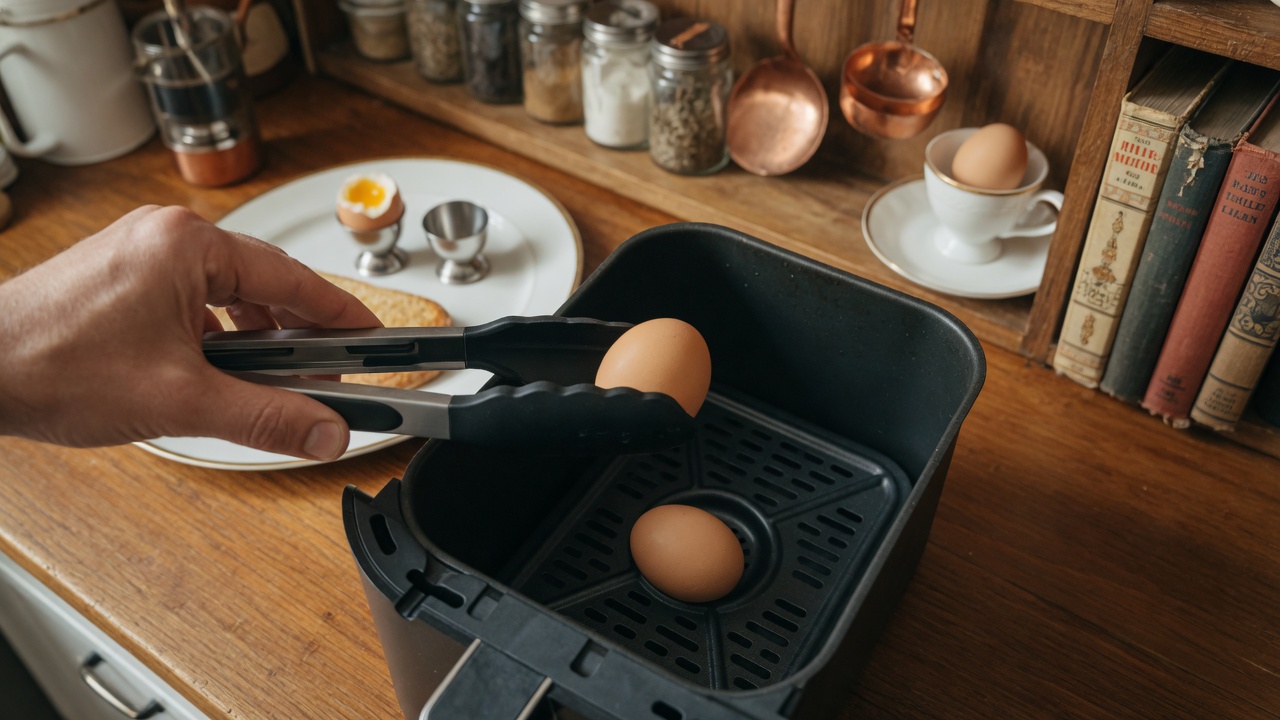
- Remove cooked eggs with tongs and place in ice bath for 4 to 5 minutes until cool enough to handle.
- Crack egg shells gently and roll on hard surface to create cracks all over. Peel eggs and eat right away or refrigerate within 2 hours.
Notes
- Test one egg first to find the exact cooking time for your air fryer model. Small or medium eggs need 1 to 2 minutes less cooking time while jumbo eggs need 1 to 2 minutes more. Always preheat your air fryer for consistent results. Don’t skip the ice bath as it stops cooking and makes eggs easier to peel. Store cooked eggs in the refrigerator for up to one week. Eggs that are one to two weeks old peel easier than very fresh eggs.
Nutrition Facts
- Serving Size: 60 g
- Calories: 72kcal
- Fat: 5g
- Carbohydrates: 0.4g
- Sugar: 0.2g
- Protein: 6g


